
Generation focus shifted from hydro to thermal, solar power
Shillong, July 4: The Meghalaya Energy Corporation Limited (MeECL) has shifted its focus from hydro to thermal and solar power generation, following Meghalaya recording worst monsoon rainfall in the North East.
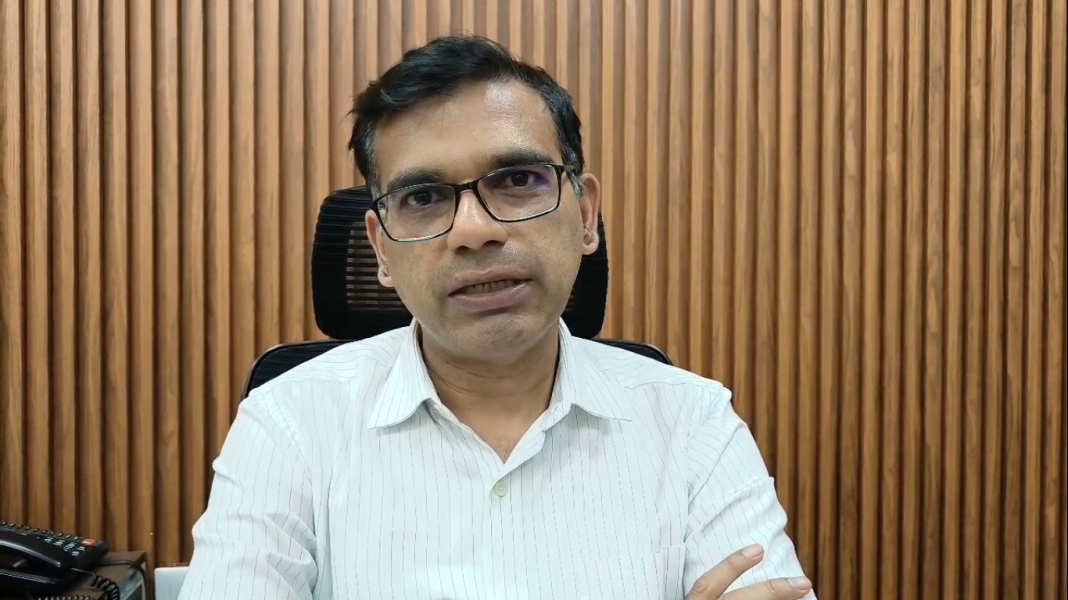
Disclosing the plan, Commissioner & Secretary in charge of Power, Sanjay Goyal on Friday assured of stable power supply through July and August despite the deficit in hydro power generation.
Noting the less rainfall this year, as confirmed by the IMD, Goyal said, “MeECL has reworked its entire strategy for power generation.”
“We have activated our requirement from our long-term thermal procurement agreements as well as the power we are procuring from solar generators,” he said.
“So, we have slightly ramped that up in view of the rainfall deficit.”
The weak monsoon has hit the Umiam reservoir system, which anchors much of Meghalaya’s hydel capacity.
“In the Umiam basin, unfortunately, the rainfall has been less,” Goyal said.
“What we planned in the month of June, keeping in mind a certain amount of rainfall, did not work out. So we have reworked the plan.”
Umiam Stage I, which usually runs at its full 36-megawatt capacity this time of year, is operating below capacity.
“We are not doing that because the replenishment of water we expected in June through inflows did not happen,” he explained.
“That has slightly brought down our production from Umiam Stage I and, accordingly, all the stages up to Stage IV and New Umtru downstream.”
Despite lower hydro output, Goyal said there is no risk of a power shortage.
“Overall, our situation remains quite comfortable in the sense that we have already tied up for the months of July and August by managing our power production and managing energy procurement from outside the state through various agencies,” he said.
“I don’t foresee any shortfall as far as power availability is concerned,” he added.
Deal on first in-house thermal plant
The state government is weighing proposals for its first in-house thermal power plant amid record less rainfall taking a hit on hydro power generation in the state, Commissioner & Secretary in charge of Power, Sanjay Goyal, said Friday.
Informing about talks with potential developers, he said, “We are exploring the possibility and we have received some expressions of interest from a few players.”
He added that current thermal needs are being met through outside tie-ups.
“As far as our procurement is concerned, because of the availability of power from NTPC Bongaigaon, we are okay as far as thermal availability is concerned,” he said.
“As far as an in-house thermal power plant is concerned, things are in the pipeline and I expect at least one project should be closed in the days to come,” Goyal said.
The Power department’s focus is on total availability rather than generation from any single source, he said.
The state averages 180 to 200 megawatts in demand, with generation calibrated to rainfall patterns.
Run-of-the-river stations are prioritized first.
“We plan our power production based on rainfall availability, especially for the run-of-the-river projects, which are Leshka and, to some extent, Ganol,” Goyal explained.
“So, we utilise those power stations first in terms of production, keeping Umiam as a reservoir and filling up the reservoir.”
Leshka’s output has fallen short of usual levels.
“The previous month’s data, as far as Leshka is concerned, is more or less comfortable — not to the extent we normally get, but it is not that bad either. We are getting about 70 to 80 percent of the production,” he said.
The shift to costlier sources may impact the budget, though the final figure is pending.
“It might have a slight implication in terms of the cost of procurement, but I will not be in a position to say that now because it is a daily exercise,” he said.
“We will be able to work it out maybe by the end of the month or quarter to say what the impact has been.”
Even with added costs, Goyal said there will be no power cuts.
“This is our commitment: in spite of a maybe slightly higher cost in procurement, we will not go in for any kind of regulation of power or any kind of load shedding. Our commitment is for 24 hours of power supply to the state.”
On renewable energy, he said rooftop solar uptake remains sluggish due to weather conditions.
“Unfortunately, the demand under the individual rooftop solar scheme has not picked up in the way we would have wanted,” he said.
“Meghalaya has a longer monsoon period and rainy season. Of course, we cannot compare the production with the mainland or western states like Rajasthan or Gujarat, where the availability of solar power is high and more reliable than ours.”
The department now plans to sweeten the scheme.
“It is slowly picking up here, and I expect that in the days to come, we will work out some strategy on how to make it slightly more attractive for the common people to apply for the scheme,” he said.