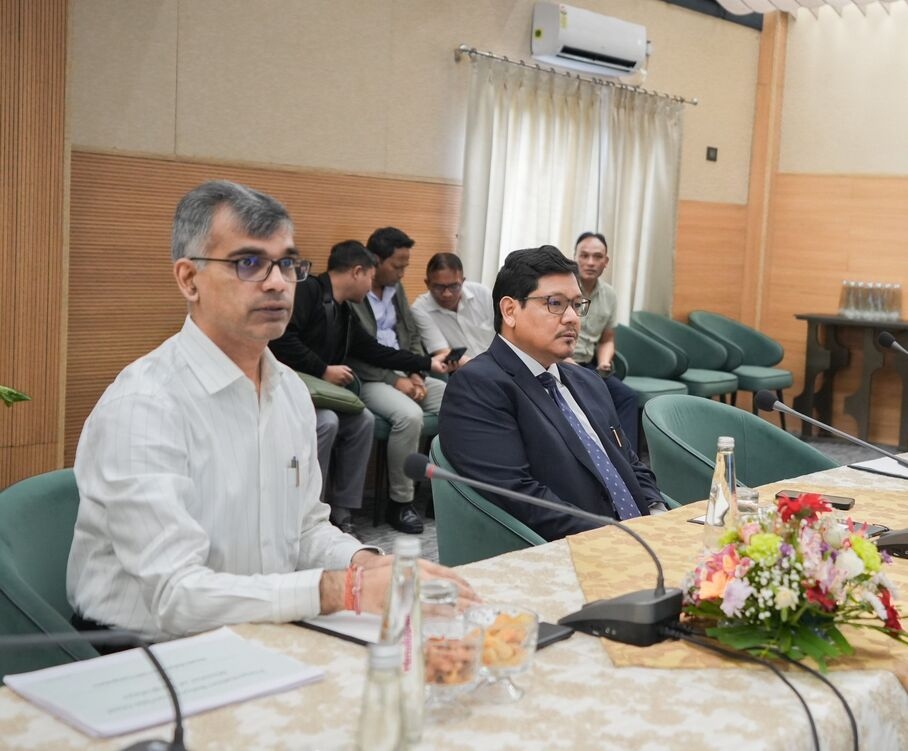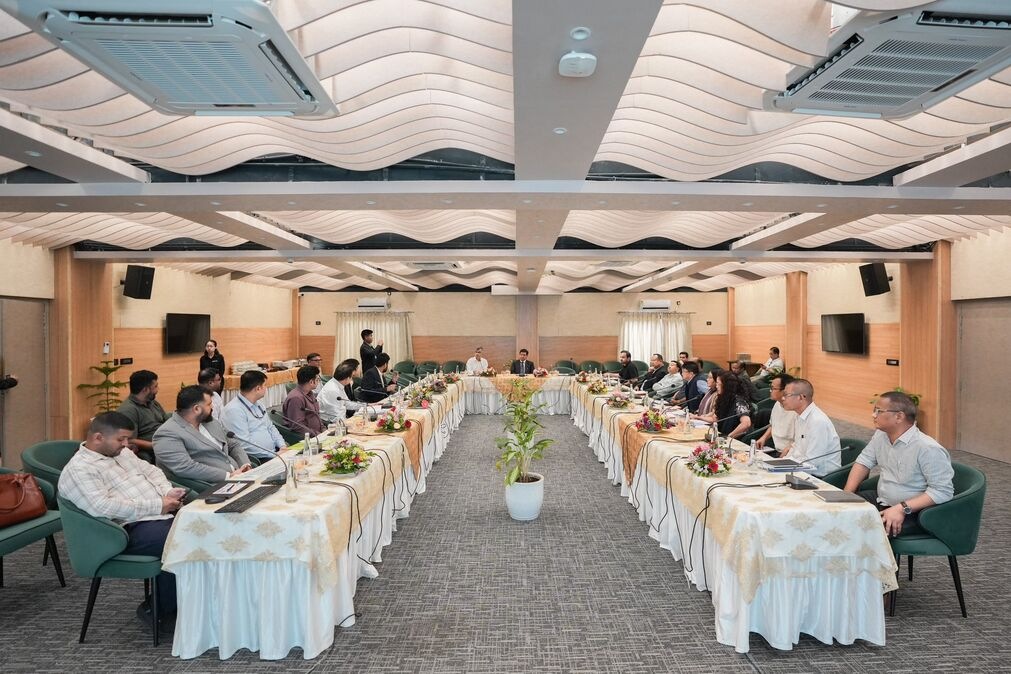

Shillong, June 23: Rooftop solar panels may soon become a far more common sight across Meghalaya’s hills and valleys, if Chief Minister Conrad K. Sangma has his way. During Tuesday’s meeting at the State Guest House in Shillong, He called for a comprehensive and integrated renewable energy strategy for the State, even as officials flagged persistent hurdles slowing down the adoption of the Central Government’s flagship PM Surya Ghar: Free Electricity Scheme.
The meeting brought together officials from the Power Department, Meghalaya Power Distribution Corporation Limited (MePDCL), Meghalaya Energy Corporation Limited (MeECL) and other stakeholders to take stock of where the scheme stands in Meghalaya — and what it will take to make it truly work for the State’s people.
What the Scheme Offers
Launched by the Government of India, the PM Surya Ghar scheme promises up to 300 units of free electricity per month to ten million households across the country through rooftop solar installations. Eligible households can avail central financial assistance of up to ₹78,000 for the installation of rooftop solar systems. Consumers can also export surplus electricity back to the grid through net metering arrangements, earning additional savings on their bills.
On paper, it is a compelling proposition. On the ground in Meghalaya, the picture is more complicated.
The Meghalaya Challenge
Officials at the meeting apprised the Chief Minister that despite the substantial Central subsidy, consumers in Meghalaya continue to face relatively higher upfront costs compared to other States. The reasons are specific to the region — transportation costs to remote and hilly terrain, logistical challenges in installation, and the limited scale of solar deployment in the State, which keeps per-unit costs elevated.
The meeting reviewed findings from pilot rooftop solar projects already undertaken in the State and discussed measures to close the gap between what the scheme offers and what consumers are actually able to afford. Discussions centred on enhancing consumer benefits, cutting down payback periods and exploring additional State-level support mechanisms to bring more households into the fold.
Battery Storage: The Missing Piece
A significant portion of the meeting was devoted to the question of battery storage — identified as a critical enabler that could transform the scheme’s impact. Officials presented proposals to integrate battery storage solutions with rooftop solar systems, which would allow households to store power generated during the day and use it during peak demand hours or outages, reducing dependence on the conventional grid.
The Chief Minister directed departments to explore this integration actively, particularly in the context of aligning the PM Surya Ghar Scheme with the State’s own Chief Minister’s Solar Mission, creating a unified push rather than parallel programmes working at cross-purposes.
Solar for Schools, Offices and Anganwadis
Beyond individual households, the meeting also examined opportunities to significantly expand rooftop solar installations across government institutions — schools, anganwadi centres and public offices were specifically identified as priority sites. The Chief Minister directed departments to identify and fast-track solar adoption across government infrastructure, leveraging central assistance wherever available.
On awareness, Sangma struck an optimistic note, suggesting that educational institutions and youth groups be actively roped in as ambassadors for rooftop solar adoption and energy conservation — a recognition that behaviour change is as critical as financial incentives.
Efficiency, Demand and Decentralisation
The meeting also turned its attention to the demand side of the energy equation. Officials discussed measures to improve energy efficiency in government offices and public utilities, including optimising electricity consumption patterns, promoting responsible energy use and managing peak-hour demand through better planning.
Equally, the Chief Minister underlined the need to look beyond solar panels and explore a broader suite of decentralised renewable energy solutions suited to Meghalaya’s unique geography. Biomass and biogas-based power generation, micro-hydel systems and solar-powered community infrastructure were all discussed as technologies with potential for rural and remote areas of the State where grid extension remains difficult.
A Roadmap in the Making
Concluding the meeting, Chief Minister Sangma directed officials to prepare a comprehensive roadmap for expanding renewable energy adoption across Meghalaya — one that improves consumer participation, strengthens awareness, integrates existing solar initiatives and builds in emerging technologies to meet the State’s future energy needs.