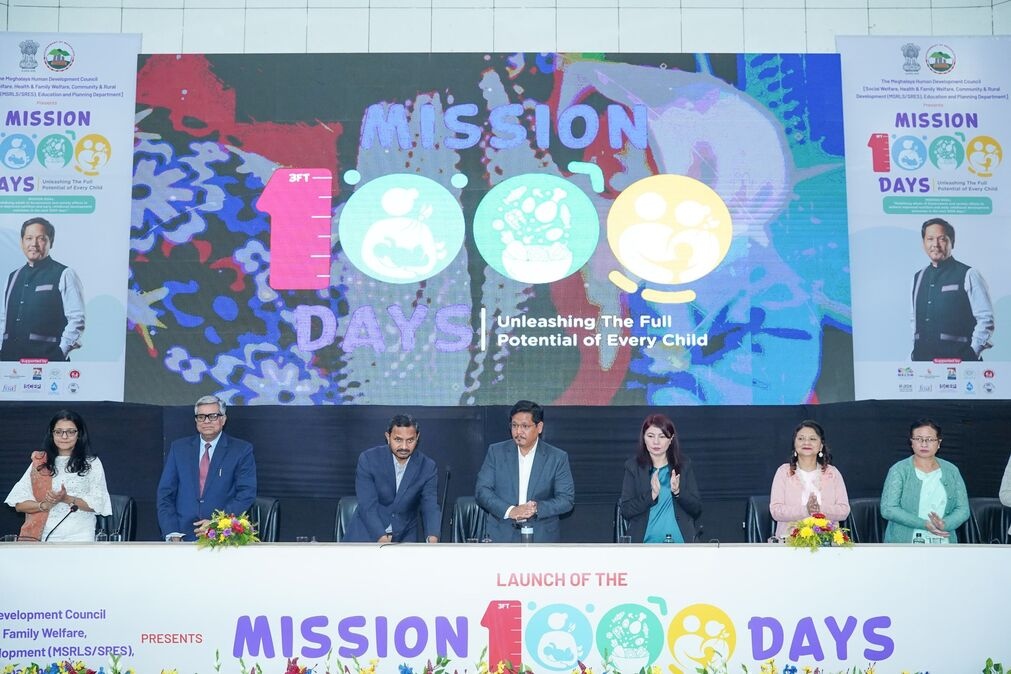

Shillong, March 31: Meghalaya Chief Minister Conrad K. Sangma today launched a special flagship programme of his government “Mission 1000 days,” that aims to improve nutrition and early childhood development across the state.
The initiative focuses on the critical period from conception to a child’s first two years, widely regarded as essential for physical growth and brain development. It will provide comprehensive support to mothers, including nutrition, healthcare access, awareness programmes, and essential kits for newborns.
This flagship initiative of the Chief Minister will be implemented through multiple departments led by the Meghalaya Human Development Council in convergence with the Departments of Social Welfare, Health & Family Welfare, Community & Rural Development (MSRLS/SRES), Education, and Planning.
Addressing the gathering at the launch of the programme at State Convention Centre Shillong, the Chief Minister emphasised that the initiative is part of a broader effort to address core human development challenges through a focused and evidence-based approach.
“When I took office in 2018, one of the first issues that deeply concerned me was the high maternal mortality rate in Meghalaya. It troubled not only me but the entire team, and we resolved to do everything possible to bring it down,” he said.
Drawing from past experience, he noted that targeted interventions and improved access to services played a key role in achieving results. “Through sustained efforts over three years, we were able to significantly reduce maternal mortality—by nearly 50%,” he said.
The Chief Minister stated that governance requires prioritisation, particularly when addressing complex and widespread challenges. “What we are trying to do instead is focus on resolving 60–70% of the most critical issues,” he said, noting that addressing issues at scale can lead to broader improvements in overall indicators, even as some complex challenges remain.
Highlighting socio-economic realities, he pointed out that vulnerability in rural areas continues to be a major concern. Many mothers, he noted, are compelled to return to work shortly after childbirth due to financial constraints. “Many mothers, due to extreme poverty, are forced to return to work within a month or two after childbirth. They do not want to leave their infants, but they have no choice,” he said, adding that the government is exploring mechanisms to support such mothers.
Placing the initiative within the state’s broader development vision, he referred to the economic growth roadmap under Mission 10, noting the state’s progress from a $4.4 billion economy in 2018 to nearly $7 billion today, with future growth targets already outlined. He emphasised, however, that economic progress must be balanced with social outcomes. “As we pursue economic growth, we must ensure that it is balanced and sustainable. Our progress will mean nothing if we fail to protect our environment, care for our mothers and children, and provide basic services at the grassroots level,” he said.
He also spoke about the importance of building a “happy society,” including efforts to transform Anganwadi centres into community-oriented “Happiness Centres” that promote early learning and intergenerational engagement. Raising concerns over changing food habits, he stressed the need for greater awareness on nutrition. “We must understand what to eat, when to eat, and how to eat. Every snack, every processed food item we consume has an impact on our health,” he said.
On Mission 1000 Days, the Chief Minister informed that ₹127 crore has been earmarked for the programme, which will provide financial and institutional support to mothers, additional nutrition, training and awareness programmes, and essential kits for newborns and mothers. He noted that the provision of kits was based on feedback from frontline health workers in remote areas. “This is a mission mode programme. We will continue to refine and improve it based on feedback, with the goal of eliminating stunting and malnutrition,” he said.
Emphasising the need for collective action, he called upon all stakeholders to contribute actively. “This mission cannot succeed through the efforts of a single department or individual. It requires collective participation from the entire society,” he said.
Encouraging wider engagement, he added, “Do not think that you cannot contribute. Every individual can make a difference. This must become a people’s movement.”
On the role of fathers, he highlighted their importance in caregiving and child development. “Fathers must participate actively in caregiving,” he said, adding from personal experience, “Spending 20–30 minutes a day with a child—talking, playing, simply being present—can significantly influence their development.”
Addressing frontline workers, he urged them to view their role beyond routine responsibilities. “Do not treat this as a job or duty. Measure your success by the lives you improve—by every mother saved and every child given a healthier future,” he said.
Sampath Kumar, Additional Chief Secretary and Development Commissioner, Government of Meghalaya, described Mission 1000 Days as a flagship initiative focused on the critical period from conception to two years of age. He highlighted that nearly 75–80 per cent of brain development occurs by the age of two, with children achieving almost half of their adult height during this phase, underlining the long-term importance of early interventions.
He pointed to key findings from state assessments, noting that stunting often develops after birth due to gaps in nutrition and care rather than at birth itself.
He also raised concerns over the increasing consumption of low-nutrient, processed foods among young children, emphasising the need for behaviour change and greater awareness among families. Highlighting the importance of early stimulation, he noted that activities such as talking, playing, and engaging with children are critical for cognitive and emotional development, with current assessments indicating gaps in developmental outcomes.
Kumar outlined the mission’s structured approach, including capacity building of frontline workers, large-scale engagement with mothers for behaviour change, community-based nutrition demonstrations using local foods, supplementary nutrition support, and targeted interventions for children with growth faltering.
He also highlighted the role of technology in tracking mothers and children for real-time monitoring and timely intervention, supported by a multi-tier implementation framework from the state to the village level.
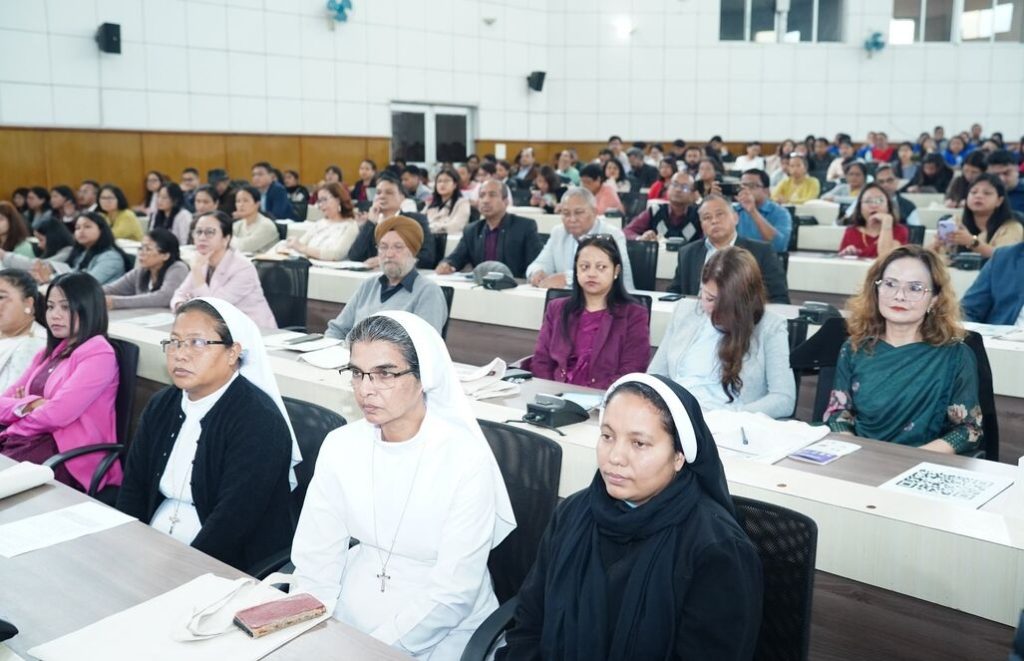
The programme also featured a technical session by Dr. Rupal, who highlighted the severity of child nutrition challenges in Meghalaya, including high levels of stunting among children under five. She pointed to critical gaps in breastfeeding practices, including a sharp decline in exclusive breastfeeding by six months and the early introduction of complementary feeding.
She explained the importance of breast milk as a complete source of nutrition, essential for brain development, immunity, and overall growth, and emphasised that improper feeding techniques often result in inadequate milk transfer, leading to early growth faltering.
Dr. Rupal highlighted patterns of malnutrition, including high levels of stunting and the presence of severe acute malnutrition among infants. She noted that some children gain weight without corresponding height growth, increasing long-term risks of metabolic diseases.
She outlined the intervention model being implemented, including training of healthcare workers through digital modules, in-person sessions, and field mentoring, with a focus on breastfeeding techniques, maternal nutrition, complementary feeding, and early identification of growth faltering. She noted that each trained worker supports pregnant women, newborns, and young children to ensure continuous care.
She also highlighted the use of technology platforms for real-time tracking of growth data, identification of at-risk children, and improved monitoring and accountability across all levels.
She noted that where correct practices are followed, children show rapid improvements in growth, while the absence of timely intervention leads to early and sustained growth faltering.
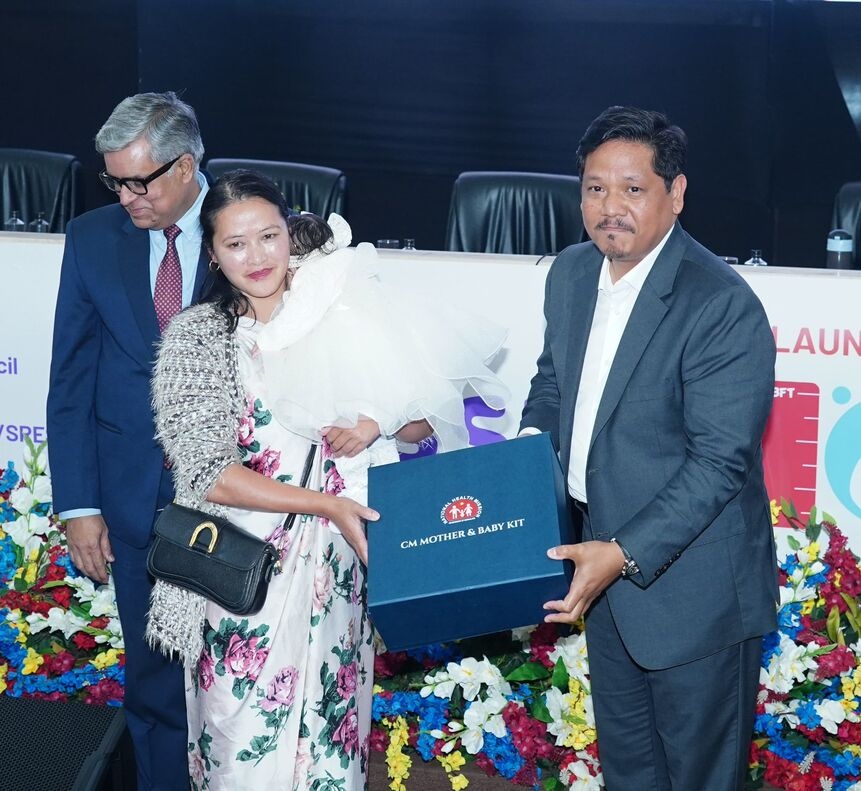
The formal launch of Mission 1000 Days was followed by the distribution of mother and baby kits and the dissemination of Chief Minister Headman Fellowship flyers.Participants also took the Mission Pledge, reaffirming their commitment to the goals of the initiative, while an interactive poll conducted by the MECDM team encouraged engagement and feedback from stakeholders.
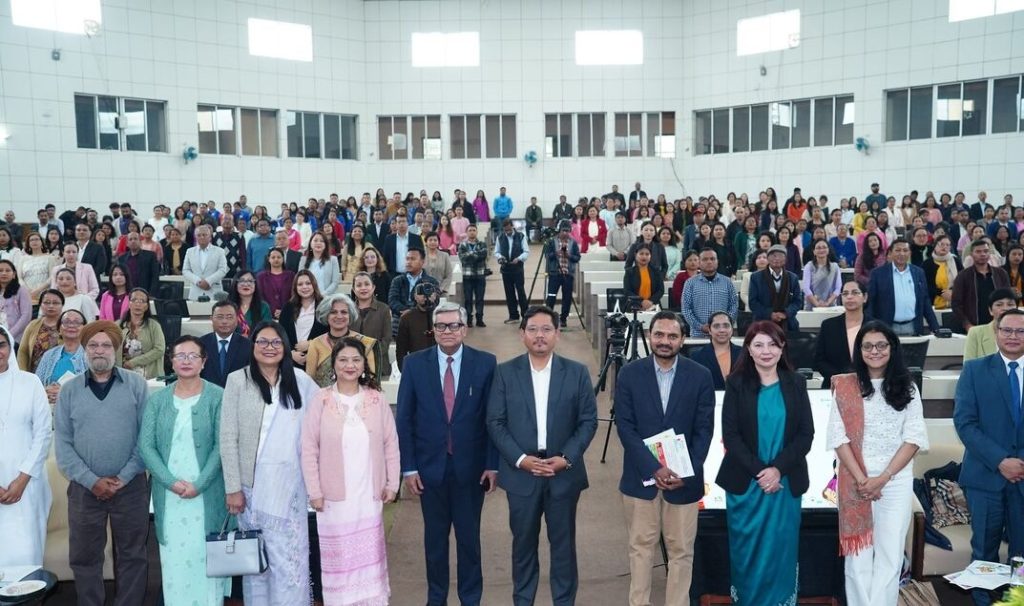
The programme concluded with a vote of thanks by Camelia Doreen Lyngwa, Director, Social Welfare Department, Government of Meghalaya, followed by a group photograph and pledge wall signing.
Mission 1000 Days is supported by multiple partners, including the Meghalaya Early Childhood Development Mission (MECDM), Meghalaya State Rural Livelihoods Society (MSRLS), National Health Mission, Food Safety and Standards Authority of India (FSSAI), State Capability Enhancement Project (SCEP), Har Ghar Jal – Jal Jeevan Mission, and other collaborating institutions.
The initiative is expected to significantly improve nutrition, health, and developmental outcomes for children across Meghalaya through focused interventions during the most critical stages of early life.