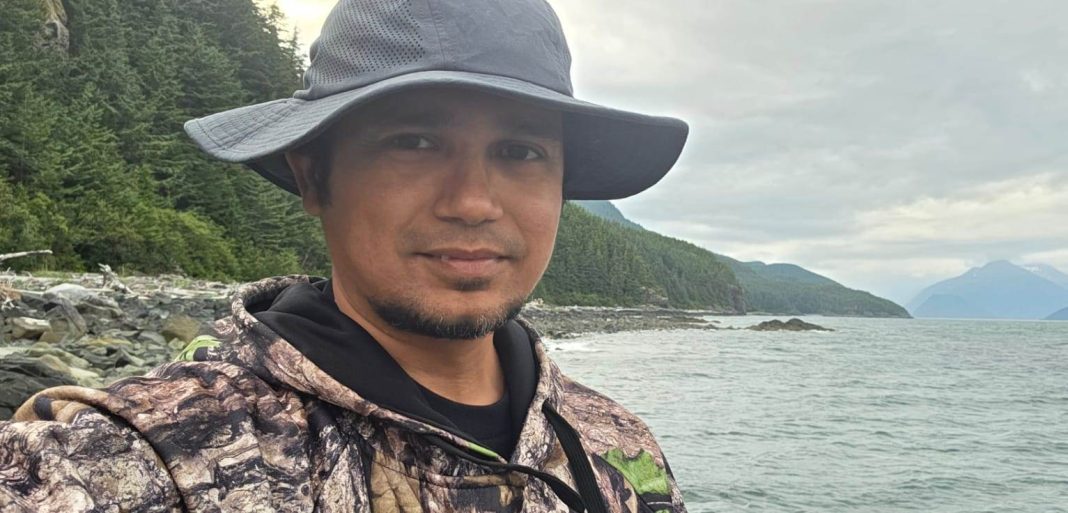

His association with wolves goes back to his doctoral research at the Wildlife Institute of India.
Shillong, Sep 27: Along with humans, the entire animal world too has to pay a huge price when temperatures rise and the climate changes.
As a response, animals migrate and changes happen to their bodies as well. Wildlife scientist Dr Salvador Lyngdoh seeks an answer as to the latter.
Lyngdoh, Scientist E and Associate Professor, is currently at the University of Idaho in the United States on a Fulbright-Kalam Fellowship for Academic and Professional Excellence.
His current research is looking at wolves and the physiological costs they face as temperatures change.
One part of the work focuses on thermoregulation — the energy an animal has to use to cope with heat and cold. Lyngdoh and his collaborators are also looking at wolf predation and prey behaviour to understand whether climate-related changes could affect the way predators and prey interact.
“Climate change is real, and this study helps us understand its effects so that we can plan for the future protection of wildlife species,” Lyngdoh said.
The question is important because a change in temperature does not affect wildlife only through habitat loss or changes in food availability. Animals also have to cope with the physical stress caused by changing temperatures.
If an animal has to spend more energy dealing with heat or cold, that can potentially affect other activities, including movement and hunting. Changes in prey behaviour can add another layer to the problem.
Lyngdoh’s research is therefore looking at the animal as well as the landscape around it.
His association with wolves goes back to his doctoral research at the Wildlife Institute of India, his home institute. His work has since covered a range of wildlife, including Himalayan wolves, dholes, snow leopards, pangolins, clouded leopards and gibbons.
He is currently also working on snow leopards, Tibetan foxes and small cats.
His work has taken him across the Himalayas and into research on carnivores, animal movement, habitat conservation and human-wildlife interactions. He is a member of several IUCN specialist groups dealing with cats, canids, pangolins and small carnivores.
Lyngdoh was born in Guwahati and studied at Borjhar Airport School before moving to Shillong. He completed Class 10 at St Mary’s School, Dum Dum, Kolkata, and Class 12 at St Edmund’s College, Shillong.
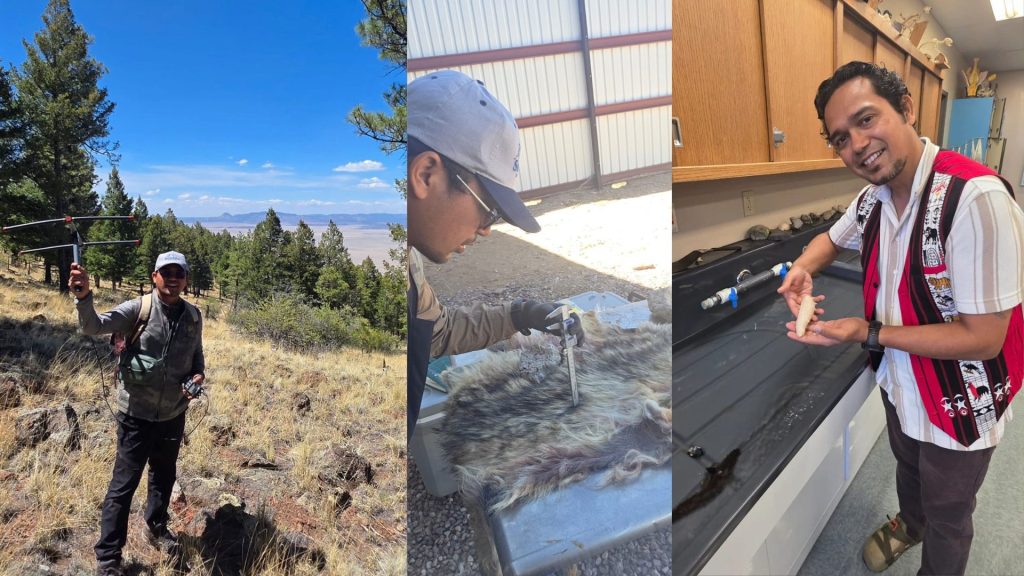
His current stint in the US is also aimed at developing scientific collaboration between researchers in the United States and India.
“I focus on wildlife work in the US and build collaboration with India,” he said.
For Lyngdoh, the research also has a direct connection with the Northeast.
Meghalaya and the wider Northeast have a large variety of wildlife, ranging from birds and reptiles to mammals and fish. But he believes there are still too few opportunities for young people in the region who want to take up wildlife science as a career.
“Meghalaya is a land of tremendous diversity with so much wildlife around, from birds to reptiles to mammals and even fish. High-end research and long-term focus should be encouraged through dedicated specialised centres or experts,” he said.
He also pointed to a wider gap in the region. Despite its biodiversity, most Northeastern states do not have dedicated wildlife conservation master’s programmes or specialised wildlife research centres outside the traditional government departments.
More such institutions and specialised expertise, he said, could help build a stronger base for long-term wildlife research in the region.
At the same time, wildlife habitats are facing pressure from unscientific and unplanned development and illegal activities. Changes to land, water and air can have consequences for wildlife as well as people.
Development, Lyngdoh said, needs to be based on scientific understanding and should not come at the cost of nature.
His current research brings the issue back to something much more basic — the animal itself.
Climate change can alter landscapes, but animals also have to physically deal with the changes. Understanding that stress, and how animals respond to it, could help researchers work out better ways of preparing wildlife for a warmer and more uncertain future.