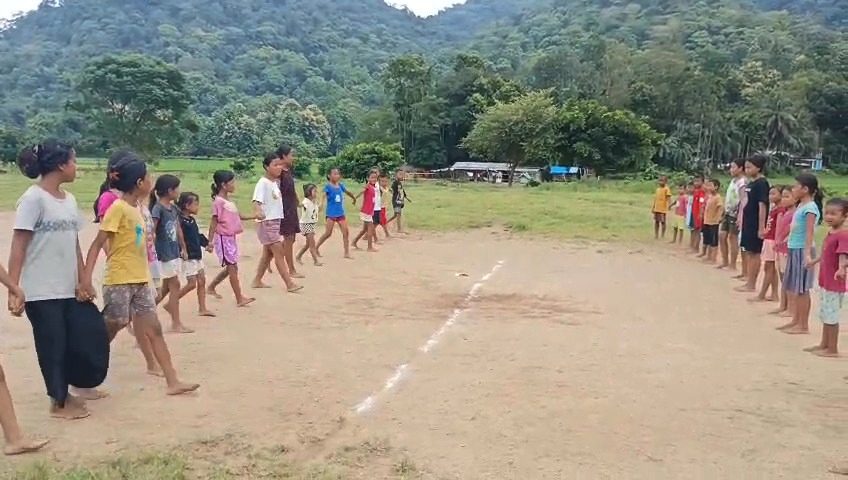

Researchers found an encouraging response when some of the old games were demonstrated to children.
ROOPAK GOSWAMI
Shillong, Sep 27: Games once played by Garo children with bamboo sticks, stones, seeds and other materials found around their villages are slowly disappearing as childhood itself changes, a new study has found.
The study, conducted under the Chief Minister’s Research Grant (CMRG) 2024-25, has identified more than 70 traditional Garo games and documented their cultural significance.
The research was carried out in the Chisak and A·we areas of the Garo Hills and adjoining Garo-inhabited areas of Assam.
The report, Vanishing Traditional Games of the Garos, by Melkior Ch Sangma, found that while some games continue to be played, several others are now known mainly through the memories and accounts of older members of the community.
The games were not only forms of entertainment. According to the study, they helped children develop physical skills, learn cooperation and discipline, understand competition and become familiar with their surroundings.
One of the games that has survived relatively well is Wa·pong Sika, a bamboo pole-pushing game. Another, An·ding Oka, is a test of strength between two players seated opposite each other. They press their feet together and pull against each other using a short bamboo stick.
Both games, traditionally popular among boys and young men, have now found a place in organised Indigenous sports and have been featured in the Meghalaya Games.
Several other games have not fared as well.
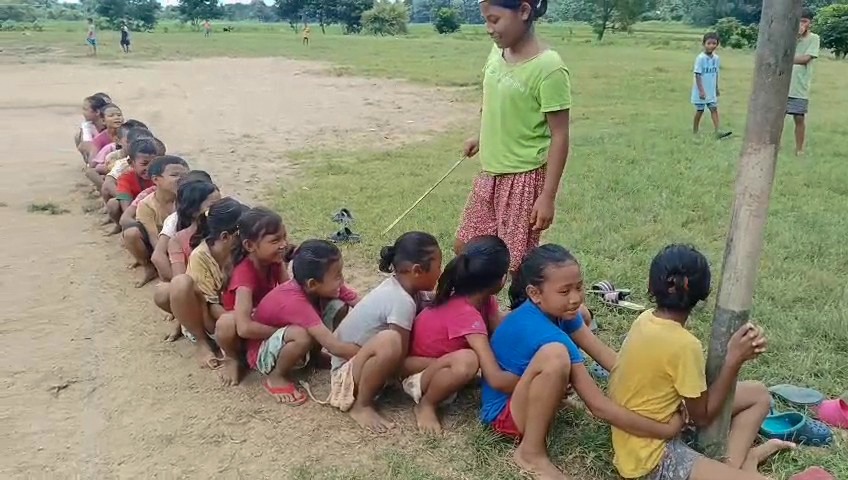
Sue Goa, a throwing game played with the hard seeds of the wild sea bean (Entada rheedii), is now rarely played. Wiwi, or Booka, involves breath control, running and group rescue, while Sarongkol is played with seven small stones.
The study attributes the decline to changes in children’s daily lives.
Children now spend more time in school and private tuition, while mobile phones and digital entertainment have reduced the time available for outdoor games. The opportunities children once had to gather informally after school have also declined.
In some villages, the open spaces used for games have become smaller or less accessible.
But the researchers also found an encouraging response when some of the old games were demonstrated to children.
Children showed interest, learnt the games and enjoyed playing them. In some cases, they repeated movements and chants that had not been used for years.
This, the study suggests, indicates that the decline may not simply be because children have lost interest in traditional games. They may not be getting enough opportunities to learn and play them.
Many of the games also carried elements of Garo social and cultural life.
Strut, for example, required boys and girls to work together, observe each other’s movements and coordinate their actions.
Some games incorporated singing, dialogue and role-playing.
Deram Deram combines song, movement, dialogue and a pulling contest. In Bao Bao Te·kangkang, children imitate pumpkins growing on a vine, while another child takes the role of an old woman trying to pluck them.
The study notes that such games carried ideas related to harvest, food storage and sharing, making them a means through which children learnt aspects of community life.
Fieldwork in Rongjeng, Nisangram, Damas and Rajasimla also showed interest among community members in reviving the games and teaching them to children.
The report recommends community-led programmes, school-based teaching, cultural activities and seasonal events to bring the games back into regular use. It also calls for documentation of the games, protection of the natural materials used in them and preservation of open spaces for children’s play.
The study argues that preserving the games is also about retaining knowledge passed from one generation to another through participation rather than formal teaching.
For a growing number of Garo children, however, that chain of transmission is becoming weaker.
The research suggests that bringing the games back into schools and community spaces could provide a way for children to learn them before the knowledge survives only in the memories of the generation that played them.