
By Dipak Kurmi
The shadow war between Jerusalem and Tehran, once defined by clandestine assassinations and isolated sabotage, has evolved into a sophisticated, multi-trillion-dollar geopolitical masterstroke that effectively blinded the Islamic Republic before the first kinetic strike was ever launched. Central to this total informational dominance was the collaborative efforts of Mossad and Unit 8200, Israel’s elite signals intelligence operation. By leveraging advanced algorithms to process years of harvested data from hacked Iranian cameras and mobile networks, Israeli intelligence moved beyond simple surveillance to create a comprehensive, living digital map of Iran’s entire security infrastructure. This unprecedented level of access allowed Mossad functionaries to navigate the labyrinthine streets of Tehran with a familiarity that rivaled their knowledge of Jerusalem, turning the Iranian capital into a transparent theatre of operations where every movement of the Islamic Revolutionary Guard Corps (IRGC) was cataloged in real-time.
Intelligence leaks emerging in early 2026 revealed that Mossad had spent the preceding years meticulously compromising nearly every traffic and security camera across the Iranian landscape. This digital traversal of Tehran’s streets provided a universal view of highly sensitive security zones, enabling the agency to map the private home addresses, daily commuting routes, and specific duty hours of high-ranking IRGC personnel. Using complex behavioral algorithms to synthesize billions of data points from these visual feeds and cellular networks, Israel was able to work out intimate patterns in the lives of their adversaries. This granularity of intelligence transformed the city into a digital prison for the Iranian leadership, as the CIA and Mossad switched roles between high-tech surveillance and human intelligence (HUMINT) to ensure that no blind spots remained within the regime’s defensive perimeter.
The sheer audacity of these operations often blurred the lines between reality and science fiction, as evidenced by the high-profile elimination of nuclear scientist Mohsen Fakhrizadeh. In a feat of logistical genius, Mossad agents smuggled the components of a one-tonne automated machine gun into Iran piece by piece, reassembling the weapon on a pickup truck along a rural road. Equipped with artificial intelligence and facial recognition technology, and operated via satellite from over a thousand miles away, the weapon fired with such surgical precision that it neutralized Fakhrizadeh while leaving his wife, sitting mere inches away, completely unharmed. Such operations were complemented by a series of “in-country” interrogations, where Mossad operatives kidnapped IRGC officials from their own neighborhoods, questioned them in safe houses, and released recorded confessions to the global public before vanishing into the urban fabric of Tehran.
The strategic depth of this intelligence campaign was further cemented during a dark night in 2018, when a Mossad team breached a nondescript warehouse in a commercial district of Tehran. Using high-heat torches, the operatives cut through thirty-two safes to extract half a tonne of secret nuclear archives, comprising 55,000 pages and 183 CDs. This massive haul, secured before the Iranian regime even realized the perimeter had been compromised, provided the locations of at least a thousand nuclear and missile sites. Crucially, the documents also detailed the internal security bases used to suppress the domestic protests of December and January 2026. This intelligence served as the foundation for an unprecedented level of cooperation between Mossad and the CIA, as they finalized the parameters for the devastating joint strikes that would eventually follow.
As the intelligence preparations reached their peak in early February 2026, the United States maintained a calculated diplomatic cover by engaging in indirect nuclear talks with Tehran. This dual-track strategy allowed the CIA and Mossad to finalize the decapitation aspect of their campaign while the Iranian leadership remained hopeful of a diplomatic reprieve. The CIA’s robust network of human intelligence assets provided the final, critical piece of the puzzle: the confirmation that Supreme Leader Ayatollah Khamenei would be present at his compound on a specific Saturday morning. By shifting the planned night-time strike to a morning window where the defense top brass would be meeting above ground and exposed, the joint forces ensured that their primary targets were caught in the open, leading to a hit on the “bull’s-eye.”
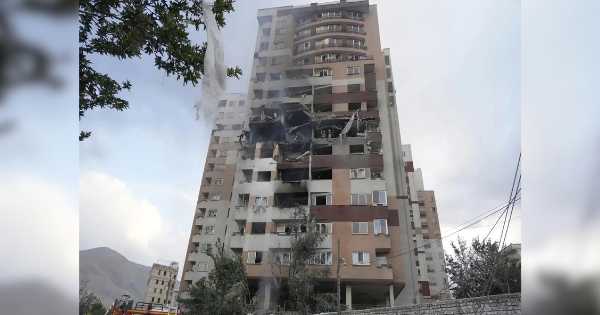
When the twin operations, “Epic Fury” and “Roaring Lion,” were finally unleashed, the groundwork laid by Mossad and Unit 8200 bore immediate fruit. All Iranian military and security communications were silenced by pre-positioned digital triggers, paralyzing the national security apparatus even as the strikes wreaked havoc on physical infrastructure. In a desperate and perhaps anticipated retaliation, Iran closed the Strait of Hormuz, an act that proved to be a geopolitical masterstroke for the Western alliance. Since the 2021 signing of a twenty-five-year strategic treaty with China, Tehran had acted as a primary energy lung for Beijing, with independent Chinese “teapot” refineries absorbing eighty percent of Iran’s oil exports on the grey market to bypass the US dollar. By forcing a situation where Iran choked its own waterway, the US effectively trapped Iranian oil and simultaneously blocked half of China’s total imports and a quarter of its natural gas overnight.
This conflict was, in essence, a multi-trillion-dollar assault on the industrial engine of China, designed to shatter the shadow fleet of ghost tankers and the non-dollar payment systems Beijing had meticulously constructed. While the strikes rendered Iran bankrupt and ruptured the IRGC’s command structure, the secondary objective moved toward stabilizing the regional fallout. The CIA and Mossad have since pivoted toward alleviating domestic instability within South India and the broader South Asian region, working in close coordination with India’s Research and Analysis Wing (RAW). The Union Home Ministry in India issued high-level alerts in early March 2026, based on shared intelligence regarding pro-Iran radicalization and the potential for “sleeper cells” or proxy militias to orchestrate retaliatory strikes against Western or Israeli assets in major hubs like New Delhi, Mumbai, or Islamabad.
The collapse of the Iranian security web marks the end of a thirty-six-year project led by Khamenei to build a “ring of fire” around Israel through armed proxy militias. For decades, the regime funded Hamas in Gaza, Hezbollah in Lebanon, the Houthis in Yemen, and various militias across Iraq and Syria. These proxies were responsible for staggering levels of violence, from the October 7, 2023, attacks that killed 1,200 people to Hezbollah’s attempts to shut down the Red Sea. Khamenei’s support for Syria’s Assad during a civil war that claimed over 500,000 lives further underscored the regime’s role as a regional destabilizer. Today, with the technological and physical dismantling of the Islamic Republic’s power, the world watches as the architectural foundations of this decades-long proxy war are finally pulled from the earth.
(the writer can be reached at dipakkurmiglpltd@gmail.com)