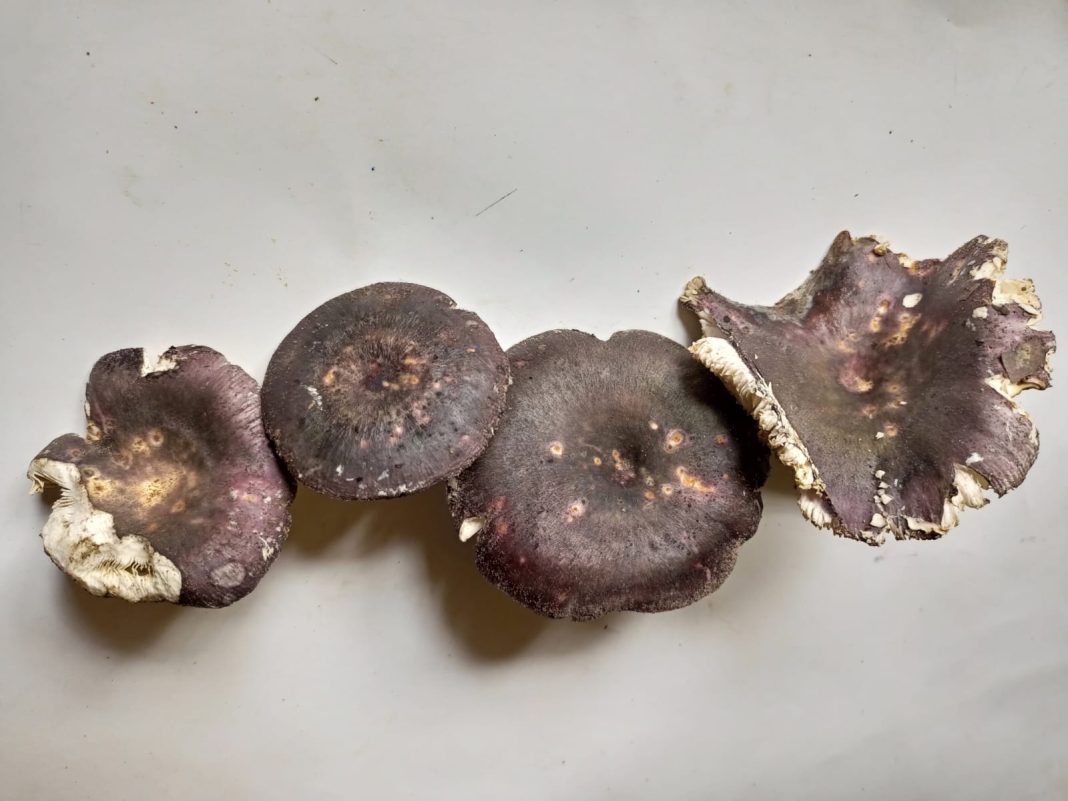

The study examined three specimens of the new species — two from West Bengal and one from Meghalaya.
ROOPAK GOSWAMI
Shillong, Aug 9: A mushroom collected beneath a sal tree in Meghalaya’s Ri Bhoi district in 2022 has been identified as a species new to science.
Named Russula griseopurpurata, the mushroom belongs to the large and diverse Russula genus. The species has so far been recorded from Meghalaya and West Bengal.
The discovery was published in the journal Phytotaxa on August 5 by Gauhati University researchers Dr. Niranjan Roy, Pinaki Chattopadhyay, Dr. Arun Kumar Dutta and Prof. Bhaben Tanti. Dr. Niranjan Roy is currently working as an Assistant Professor, Department of Botany, Moridhal College (Autonomous), Dhemaji, Assam. The work was supervised by Dr. Arun Kumar Dutta and Prof. Bhaben Tanti from the Department of Botany, Gauhati University.
The Meghalaya specimen was collected by Roy at Jirang in Ri Bhoi on July 22, 2022, at an elevation of 320 metres. It was found growing beneath Shorea robusta, commonly known as sal.
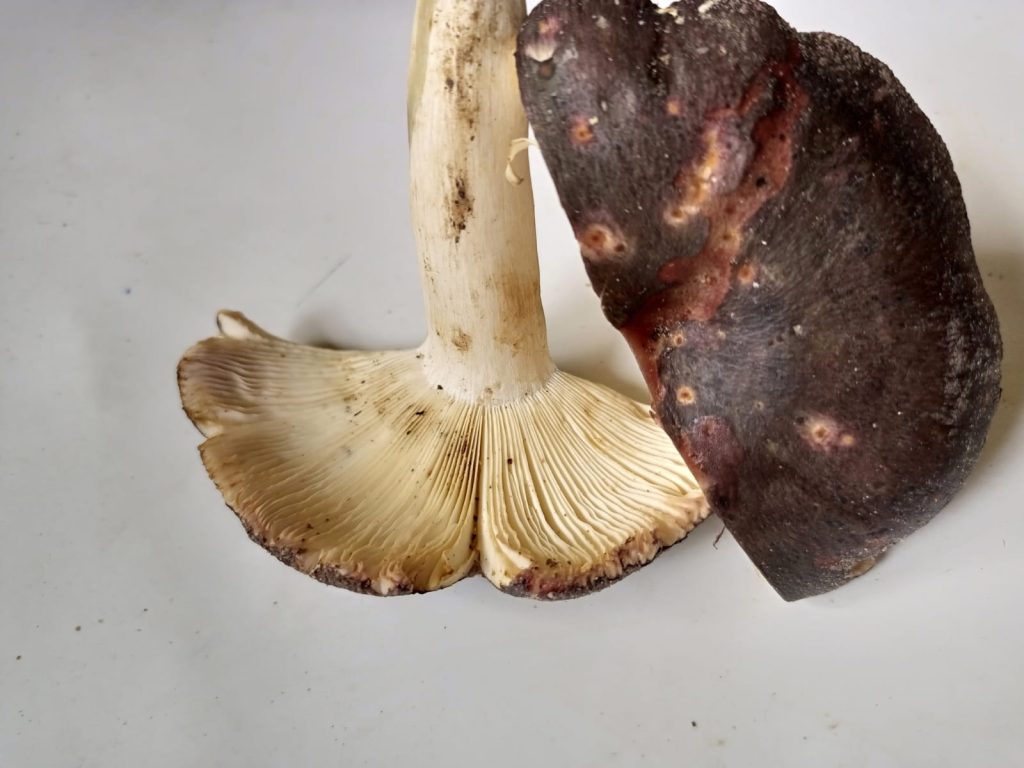
The mushroom has a greyish-purple cap that develops cracks as it matures. Its gills show characteristic forkings near the stalk. Researchers examined these and other microscopic features before using ITS DNA sequencing and phylogenetic analysis to establish its identity.
The study examined three specimens of the new species — two from West Bengal and one from Meghalaya. The Meghalaya specimen, deposited under the number GUBH 20331, generated an ITS sequence recorded as PQ432811 and was included in the phylogenetic analysis.
The three specimens grouped together with strong statistical support, supporting their identification as the same species.
According to the study, R. griseopurpurata has so far been recorded from West Bengal and Meghalaya. The mushrooms were found singly or in scattered groups beneath sal trees.
The species name refers to its greyish-purple colour.
The researchers said the Russula genus comprises about 2,000 species worldwide, with more than 180 species documented in different parts of India.
The field surveys for the study were conducted in West Bengal and Meghalaya between 2021 and 2022. The researchers acknowledged the Meghalaya Department of Forests and Environment and the Meghalaya Biodiversity Board for granting collection permits.
Although some Russula species are edible, the researchers have not established R. griseopurpurata as edible. Its reported mild taste and odour do not constitute a food-safety assessment.