
By Satyabrat Borah
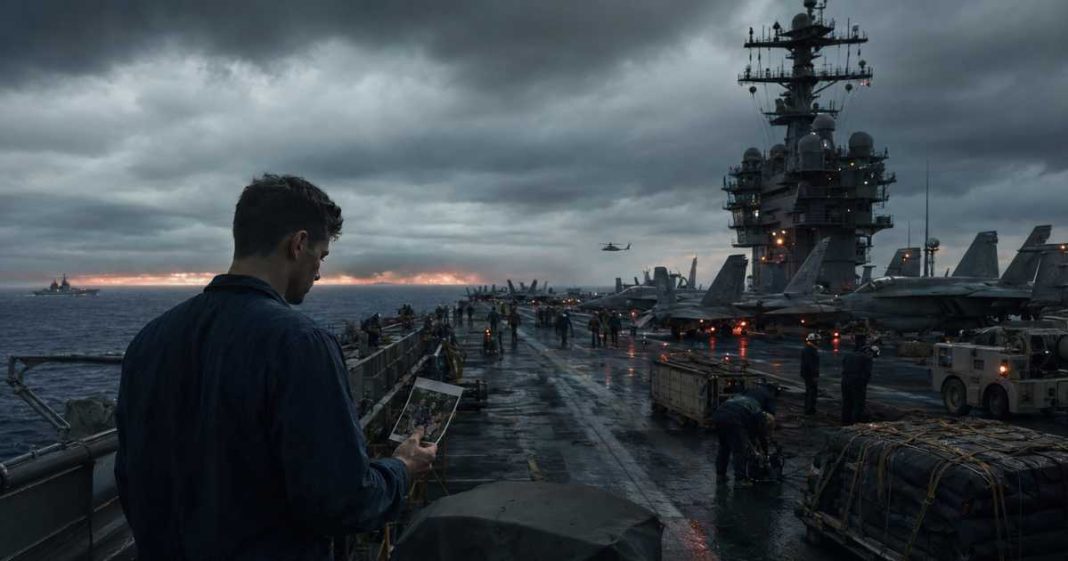
The extended deployment at sea of American aircraft carrier USS Abraham Lincoln has exposed the logistical challenges of the United States war against Iran alongside the ugly realities of war itself. The Lincoln has been almost nine months at sea and is about to break the record for the longest trip away from home port for a US carrier since the Vietnam War. That record was set by another ship USS Gerald R Ford just months ago. Reports have surfaced of low crew morale and suicidal tendencies among crewmen on the Lincoln with family members of the deployed navymen lambasting the military leadership.
The predicament of the Lincoln exemplifies the manner in which the United States has carried out this war without clarity and with constantly shifting goalposts. This approach has completely messed up logistics and left navymen and their families in limbo. The psychological pressure is immense as an open-ended war combined with no port calls for months leads to serious mental health issues. Two sailors on the Lincoln jumped overboard in recent months as a direct consequence of this environment. Former President Donald Trump has batted away criticism because war is fundamentally a matter of old men talking and young men dying. This realization galvanized anti-war protests during the Vietnam War era and compelled Washington to leave that theater of conflict. Old people in power appear unable to learn from history.
Leaders like Trump with Iran or Vladimir Putin with Ukraine continue to send young men to die to satisfy personal egos. In this hyperconnected world it is becoming difficult for authority figures to pull the wool over the eyes of the public. Approval ratings for Trump have plummeted following the Iran war. Putin recently banned the anti-war party Yabloko from upcoming parliamentary polls in Russia. Internal resentment will grow if young men continue to die in senseless wars and folks in authority must course correct or face severe trouble.
Military power relies heavily on human endurance and emotional stability. Long months spent on an isolated vessel in the middle of an ocean strip away the glory often associated with combat operations. Sailors on board the USS Abraham Lincoln face non-stop maintenance routines constant drills and an ever-present fear of sudden attacks. The lack of access to home life creates a disconnect from reality that breeds extreme psychological strain. Navy families back home endure their own parallel struggle with endless waiting and insufficient updates from commanders. The absence of fixed return dates leaves households unable to plan their futures or offer meaningful comfort to loved ones at sea. When military strategies lack clear definitions of victory or exit conditions the burden falls entirely on the service members who must remain stationed in high-stress zones indefinitely.
The historical precedent set during the Vietnam War demonstrates what happens when public patience runs out. Millions of citizens took to the streets decades ago because they saw a disconnect between official government narratives and the human cost on the front lines. Today access to real-time information through digital networks accelerates this process. Families do not have to wait for traditional news outlets to learn about the poor conditions or mental health crises occurring on military ships. Direct communication channels and social platforms allow personal stories to surface quickly. This transparency makes it hard for political architects to maintain domestic support for protracted foreign conflicts.
Geopolitical decisions driven by personal prestige or unchecked executive authority often overlook long-term consequences. In the case of the campaign involving Iran the strategy appears to shift with political convenience rather than clear operational logic. Extending carrier deployments beyond normal rotations strains the hardware of the ships themselves alongside the human crew. Essential maintenance gets delayed and equipment failure risks increase significantly. This mechanical strain mirrors the mental breakdown of the personnel creating an environment where operational readiness is compromised by sheer exhaustion.
International conflicts like the ones in Ukraine and the Middle East highlight a pattern of decision-making among senior leaders. Suppressing political opposition or ignoring public discontent may offer short-term control over domestic policy. Banning opposition parties like Yabloko in Russia reflects a desire to eliminate alternate viewpoints and silence anti-war sentiments. Such measures signal an underlying vulnerability in the political leadership because reliance on force or suppression reveals an inability to maintain popular support through consensus.
The disconnect between political rhetoric and the lived experience of soldiers creates deep social divisions. Young men and women who enlist often do so with expectations of defending their country or fulfilling a duty. Finding themselves trapped in prolonged engagements with uncertain objectives leads to disillusionment. When sailors resort to jumping overboard or experiencing severe depression the military structure faces a fundamental crisis of purpose. Addressing these issues requires more than administrative adjustments or public relations efforts. It demands a fundamental reassessment of why and how nations choose to project military force across the globe.
Public awareness remains a powerful mechanism for holding political figures accountable. Decreasing approval ratings and growing domestic scrutiny show that populations retain the ability to question prolonged military actions. The burden of war ultimately rests on the families who send their children off to serve and the communities that absorb the consequences of returning veterans suffering from trauma. As long as leaders prioritize personal standing or abstract goals over human lives the friction between authority and the public will continue to build. Strategic course corrections are necessary to prevent further loss of life and maintain the stability of national institutions.