
Report flags concern over Meghalaya’s rising fiscal deficit, debt levels
Meghalaya has strengthened its Quality of Expenditure with scores rising from the low 50s a decade ago to 66.6 in 2023–24.
-Fiscal Health Index of NITI Aayog
Shillong, March 31: Capital expenditure in Meghalaya has recorded a sharp rise in the past decade, according to the Fiscal Health Index (FHI) of NITI Aayog, which also flagged concern over the state’s rising fiscal deficit and debt levels.
The latest NITI Aayog report says Meghalaya’s capital expenditure has jumped 64.60% in 2023–24, signalling the state’s strong push towards infrastructure creation and developmental projects.
The state’s capital outlay stood at Rs 4,529.54 crore — 18.83% higher than budget estimates — reflecting an aggressive spending strategy aimed at long-term growth.
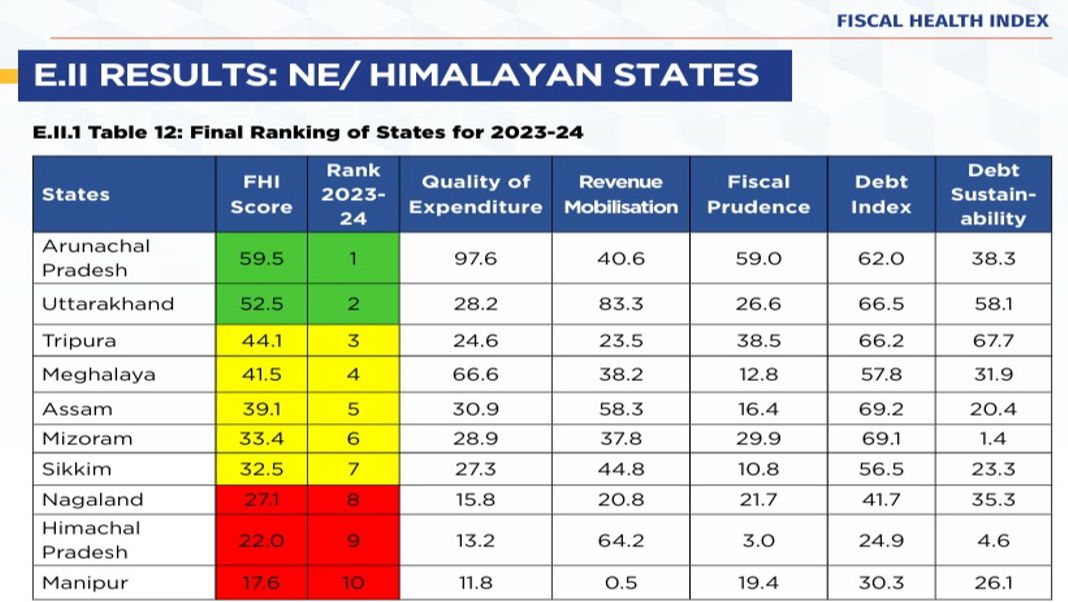
“Meghalaya has strengthened its Quality of Expenditure with scores rising from the low 50s a decade ago to 66.6 in 2023–24,” the report said. Meghalaya has been ranked fourth in FHI among NE/ Himalayan states ahead of Assam.
However, the quality of expenditure remains skewed. Revenue expenditure continues to be dominated by committed costs such as salaries, pensions, and interest payments, which accounted for 44% of total revenue spending in 2023–24, down from 56% in 2019–20.
Despite this moderation, such expenditures still constrain fiscal flexibility, growing at a compound annual rate of 7.86% over five years.
On the revenue front, Meghalaya showed modest improvement. The state’s own tax revenue rose to 6.06% of GSDP in 2023–24, up from 5.69% the previous year. Key contributors included SGST, sales taxes, and state excise duties. Overall, own tax revenue formed 17.89% of total revenue receipts.
In contrast, non-tax revenue remains limited and slightly declining, contributing just 2.91% to total receipts. Within this segment, mining royalties and fees accounted for 61.70%, followed by forestry and wildlife receipts at 20.81%.
Despite maintaining a revenue surplus in line with the Meghalaya Fiscal Responsibility and Budget Management (MFRBM) Act, the state’s broader fiscal indicators reveal stress.
The fiscal deficit rose to 5.94% of GSDP, significantly above the 3.5% target, while the debt-to-GSDP ratio climbed to 40.56%, far exceeding the prescribed 28% limit.
The report further highlights that Meghalaya has missed key fiscal targets in recent years, failing to meet revenue balance targets in three of the last five years and fiscal deficit targets in four.
On a relatively positive note, interest payments have declined as a share of revenue receipts, dropping from 8.06% in 2019–20 to 6.33% in 2023–24, offering some fiscal breathing space.
Overall, the FHI underscores a dual trend in Meghalaya’s public finances — increased investment in development-led spending, but ongoing challenges in fiscal prudence and debt sustainability, which may require tighter financial management going forward.