
Field observations conducted between 2019 and 2020 reveal that the species breeds almost exclusively in temporary, rain-fed ponds formed during the early monsoon.
ROOPAK GOSWAMI
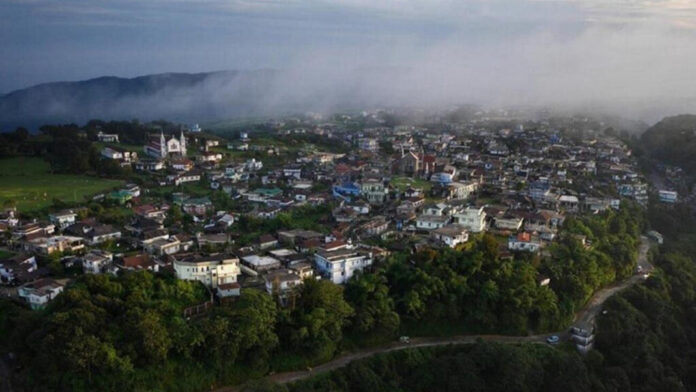
Shillong, Jan 4: A sharp, cricket-like chorus is very familiar on monsoon nights in Meghalaya. It rises from rain-filled depressions and temporary ponds across the state. Although familiar, very few realise that it comes from a little-known frog whose survival is tightly bound to the state’s most fragile seasonal wetlands.
A new study from Mawsynram has, for the first time in Meghalaya, documented the complete breeding behaviour and developmental life cycle of the Nepal cricket frog (Minervarya nepalensis), a species long “heard but overlooked” in the region.
The research was led by Dr P Wankitlang Shangpliang along with Rupa Nylla K Hooroo, Lamang Kyrpang Mawthoh, Annu Kumari, Graham Bakynson Ranee, Mebari Vanessa R. Dorphang, and Eugene Lyngkhoi, drawing contributions from St Edmund’s College, Shillong; North Eastern Hill University; Sankardev College, Shillong; and The Assam Royal Global University.
Field observations conducted between 2019 and 2020 reveal that the species breeds almost exclusively in temporary, rain-fed ponds formed during the early monsoon. Unlike amphibians that rely on permanent water bodies, M. nepalensis must complete its entire development before these shallow pools dry up. From egg to froglet, the process takes about 57 days, leaving little room for error if rainfall patterns turn erratic.
Researchers recorded intense calling activity soon after the first rains, with males clustering around shallow pools, rocky puddles and grassy pond edges. Often calling just centimetres apart, the males produce rapid, repetitive notes that closely resemble cricket chirps—an acoustic mimicry that may explain why the species escaped notice for so long.
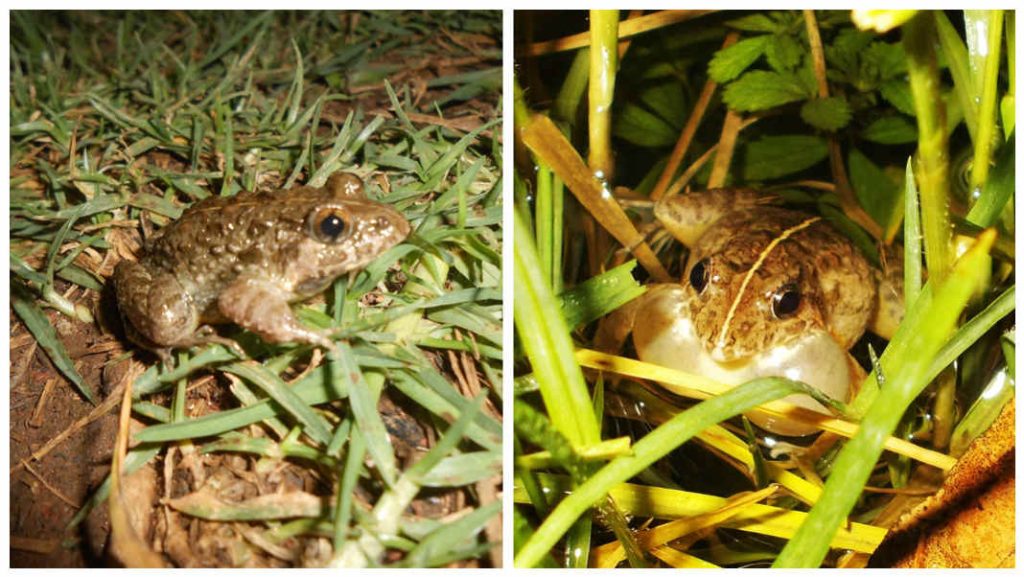
Mating pairs were observed remaining in amplexus for several hours. In a behaviour rarely reported from Indian frogs, some pairs briefly moved onto land before returning to water to lay eggs. Each clutch, containing roughly 300–440 eggs, was attached to submerged vegetation.
The study also documents male guarding of egg clutches and early larvae, an uncommon form of parental care that likely boosts survival in unstable pond conditions.
Laboratory observations showed high reproductive success, with over 80 per cent of eggs hatching. By recording 37 distinct developmental stages, the researchers have produced the first detailed developmental reference for the species in Northeast India.
“This study is crucial for present-day conservation,” said Dr Shangpliang. “It shows how amphibians in Mawsynram—despite extreme rainfall—depend on highly fragile, short-lived seasonal wetlands.” He added that documenting the complete breeding cycle provides a scientific baseline to assess the impacts of climate change and increasingly erratic monsoons on freshwater biodiversity.
According to the researchers, the Nepal cricket frog can serve as an early ecological indicator, as even brief disruptions in rainfall can affect its breeding success. Protecting temporary wetlands in and around Mawsynram, they stress, is therefore essential for safeguarding Meghalaya’s hidden amphibian diversity.
The Nepal cricket frog (Minervarya nepalensis), a small ground-dwelling species of the family Dicroglossidae, is named for its cricket-like call, most noticeable at dusk and after rain. Although first described from Nepal, it was first recorded in Meghalaya in 2014, based on specimens collected from the East Khasi Hills, including Sohra Khliehshnong and Lyniong Sacred Grove, and formally reported in 2017.