
By Satyabrat Borah
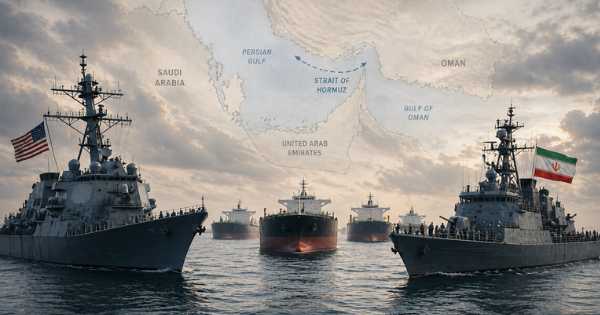
The current geopolitical landscape in the Middle East has evolved into a high-stakes standoff that many observers describe as a pure battle of wills between Washington and Tehran. This tension centers on two of the most vital maritime corridors in the world, the Strait of Hormuz and the Gulf of Oman, where naval maneuvers and economic restrictions have created a stalemate with global consequences. Since the military strikes carried out by the United States and Israel on February 28, Iran has maintained a firm grip on the Strait of Hormuz, effectively limiting the movement of commercial vessels through a passage that carries a significant portion of the world’s oil supply. The United States has responded by maintaining a naval blockade of Iranian ports, creating a cycle of pressure that has so far failed to produce a diplomatic breakthrough. While the White House maintains that these restrictive measures will remain until a comprehensive agreement is reached, the reality on the ground suggests that the current strategy is leading toward a dangerous impasse rather than a resolution.
Diplomatic efforts have been intermittent and fraught with difficulty. Foreign Minister Abbas Araghchi recently visited Pakistan, a nation that has stepped up to serve as a vital intermediary in this conflict. Pakistan hosted the first round of direct discussions on April 11, providing a rare platform for communication in an environment defined by deep suspicion. While there was hope that this channel would expand, Iran has since declined to participate in further direct conversations with American officials. This reluctance became particularly evident when President Donald Trump decided to cancel a planned mission to Islamabad that would have included special envoy Steve Witkoff and Jared Kushner. The cancellation followed the departure of the Iranian Foreign Minister from the Pakistani capital, signaling a breakdown in the immediate scheduling of high-level dialogue. The American administration continues to assert that Iran is eager for a deal because of the economic strain, but Tehran remains firm in its refusal to return to the table while Israeli military actions continue and the naval blockade persists.
The situation is further complicated by the fragile state of regional security. Although an official ceasefire in Lebanon was announced, reports of ongoing air strikes have cast doubt on the stability of that agreement. The American leadership has suggested that Israel is restricted from further operations in Lebanon, but the continued violence provides Tehran with a justification to remain defiant. At the same time, the White House appears to believe that time is on its side, operating under the assumption that sustained economic hardship will eventually compel the Iranian leadership to make significant concessions. This gamble carries immense risk, as it ignores the psychological and political factors that often drive a nation to resist external pressure even at a high domestic cost. The belief that economic pain automatically leads to political surrender is a recurring theme in international relations that frequently overlooks the resilience of a motivated adversary.
There is a small glimmer of hope in the fact that a broader regional ceasefire announced on April 8 is still technically in place. Both sides have shown a degree of uncharacteristic restraint in specific instances. For example, the United States has not launched direct military strikes in response to the seizure of vessels in the Persian Gulf, and Iran has not followed through on every threat of retaliation following the interference with its own tankers. This mutual hesitation suggests that neither side truly desires a full-scale war that would involve direct, sustained combat between their primary forces. They are communicating through Pakistani channels, which remains the most viable path toward preventing a total collapse of order. The consequences of a failure in diplomacy are too great to ignore, as the global economy is already feeling the weight of this conflict. The previous forty days of military action failed to achieve a clear strategic victory for the coalition forces, proving that a purely military solution is likely out of reach.
For any peace process to gain momentum, both sides need to move away from maximalist demands and embrace a phased approach that recognizes the new realities of the region. The United States would benefit from offering real, tangible concessions, such as a partial lifting of the naval blockade, in exchange for Iran easing its control over international shipping lanes. Iran has shown that it possesses the capability to disrupt global trade, establishing a form of deterrence that cannot be ignored. If Tehran continues to block the Strait of Hormuz, it may lose the diplomatic sympathy it has gained from nations that view it as the smaller power resisting a superpower. A reciprocal move where the blockade is lifted and the Strait is reopened would serve as a powerful confidence-building measure. Such a step would strengthen the existing ceasefire and create the necessary space for discussions on more complex topics, including the future of the nuclear program and long-term regional security arrangements. Taking this path requires a shift in mindset from seeking total victory to finding a functional peace that serves the interests of the global community.