
By Satyabrat Borah
The arrival of the full moon in the month of Vaisakha brings with it a quiet stillness that seems to settle over the earth. This specific lunar phase marks Buddha Purnima, a day that carries a profound weight for millions of people across the globe. It is not merely a religious festival or a date on a calendar; it is a celebration of a life that transformed the way humanity understands suffering, existence, and the possibility of peace. The significance of this day is unique because it honors three pivotal moments in the life of Siddhartha Gautama. It is believed that he was born, attained enlightenment, and finally left his physical form on this very same day of the full moon. This triple coincidence lends the occasion an air of sacred completion and reminds us that the journey of a single soul can illuminate the path for countless others.
To understand why this day resonates so deeply even in our modern, fast paced world, one must look at the story of the man behind the title of Buddha. Born as a prince in the Shakya clan, Siddhartha had every luxury imaginable within the walls of his palace. His father sought to protect him from the harsh realities of the world, surrounding him with beauty and comfort. This attempt to shield him from pain only made his eventual encounter with the truth more explosive. When he finally stepped outside the palace gates and witnessed the four sights of an old man, a sick man, a corpse, and an ascetic, the illusion of his sheltered life shattered. He realized that no amount of wealth or power could provide a permanent shield against the inevitability of decay and loss. This realization was the catalyst for his great departure, an act of radical renunciation that continues to inspire those seeking truth over comfort.
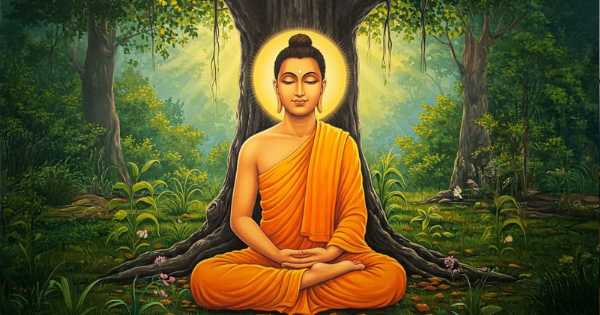
The journey he embarked upon was not one of easy answers. He spent years as a wandering seeker, pushing his body to the absolute limits of endurance through extreme asceticism. He lived on a single grain of rice a day and practiced intense meditation under the harshest conditions. Eventually, he realized that starving the body only clouded the mind. This led him to the discovery of the Middle Way, a path of moderation that avoids the extremes of self indulgence and self mortification. Sitting under the Bodhi tree in Bodh Gaya, he made a vow not to rise until he had found the answer to the problem of human suffering. As the morning star rose on the day of the Vaisakha full moon, he achieved a state of total awakening. He became the Buddha, the one who is awake.
This awakening is the heart of Buddha Purnima. It represents the potential within every human being to break free from the cycles of craving and ignorance. The Buddha did not claim to be a god or a prophet; he presented himself as a guide who had found a way out of the labyrinth of the mind. He taught that suffering is not a punishment from an external force but a result of our own attachments and misunderstandings of reality. By sharing the Four Noble Truths and the Eightfold Path, he provided a practical roadmap for living a life of integrity, mindfulness, and compassion. This message is incredibly human because it places the power of transformation directly in our own hands. It suggests that peace is not something to be found in a distant heaven but something to be cultivated right here in the present moment through our thoughts and actions.
On the day of Buddha Purnima, the atmosphere in Buddhist temples and monasteries is one of serene devotion. Devotees gather to offer flowers, light oil lamps, and burn incense. These offerings are deeply symbolic. The flowers, which are beautiful in the morning and wilt by evening, serve as a reminder of the impermanence of all things. The lamps represent the light of wisdom that dispels the darkness of ignorance. In many traditions, people also engage in the practice of releasing birds or animals from cages as a gesture of compassion and a commitment to the freedom of all living beings. There is a strong emphasis on Dana, or the act of giving. People prepare food for the monks and the poor, reinforcing the idea that our spiritual progress is tied to how we care for the community around us.
The food served on this day is often simple and vegetarian, reflecting the principle of Ahimsa, or non violence. A special dish called Kheer, a sweet rice porridge, is frequently prepared. This tradition stems from the story of Sujata, a village woman who offered a bowl of milk rice to Siddhartha when he was emaciated from his ascetic practices. That simple act of kindness gave him the strength he needed to reach enlightenment. By eating Kheer on Buddha Purnima, followers honor the role of compassion and nourishment in the spiritual journey. It reminds us that even the most profound realizations are supported by humble acts of care from others.
The significance of this day also touches on the concept of the Sangha, the community of practitioners. While the Buddha and his teachings provide the direction, the community provides the support needed to stay on the path. Buddha Purnima is a time for people to come together and listen to discourses on the Dhamma, the universal law. It is a time for collective meditation, where the shared silence of a group creates a powerful field of tranquility. In a world that is often fragmented and polarized, the sight of people from different walks of life sitting together in quiet reflection is a moving testament to the unifying power of the Buddha’s message. He taught that distinctions of caste, race, and status are
irrelevant to the quest for inner freedom.
The final aspect of the day is the commemoration of the Buddha’s Parinirvana, his passing away at the age of eighty. Even in his final moments, his focus remained on the well being of his followers. He told them not to grieve but to be lamps unto themselves. He emphasized that his physical presence was temporary, but the truth he had discovered would endure as long as people practiced it. This final lesson on impermanence completes the circle of his life. It teaches us that while death is a certainty, a life lived with purpose and awareness leaves a legacy that time cannot erode. The celebration of his passing is not a funeral but a celebration of a life that reached its ultimate goal.
The relevance of Buddha Purnima today feels more urgent than ever. We live in an era characterized by high levels of anxiety, consumerism, and conflict. The Buddha’s diagnosis of the human condition seems remarkably modern. He identified greed, hatred, and delusion as the three poisons that infect the human heart. When we look at the state of our environment, our politics, and our personal lives, we can see the shadows of these poisons everywhere. Buddha Purnima invites us to pause and reflect on how we might apply the antidote of mindfulness and compassion to our daily existence. It asks us to consider if we are living in a state of sleepwalking or if we are making an effort to wake up to the reality of our interconnectedness.
The principle of Karuna, or compassion, is a central theme of the day. The Buddha taught that a heart full of compassion has no room for fear or anger. This is not a passive or weak emotion; it is a courageous commitment to alleviate the suffering of others. When we celebrate Buddha Purnima, we are essentially renewing our vow to be more kind. We are reminded that every person we meet is fighting a battle we know nothing about and that our simple presence and empathy can be a source of healing. This focus on kindness extends to all sentient beings, encouraging a lifestyle that is mindful of its impact on the planet and all its inhabitants.
Mindfulness is another pillar of the Buddha’s legacy that takes center stage on this day. In a world of constant distractions and digital noise, the practice of being fully present in the moment is a revolutionary act. The Buddha’s teachings on breath and body awareness offer a way to ground ourselves amidst the chaos. By slowing down on Buddha Purnima and engaging in conscious breathing or walking meditation, we reclaim our time and our attention. We begin to see that most of our stress comes from worrying about a future that hasn’t happened or regretting a past that cannot be changed. The present moment is the only place where life is actually happening, and the Buddha showed us how to inhabit it fully.
The aesthetic of the celebrations also carries a certain weight. In many Asian countries, the streets are decorated with colorful lanterns and flags. In Sri Lanka, massive structures called Pandals are erected, depicting stories from the previous lives of the Buddha. These visual displays are not just for decoration; they are tools for storytelling and education. They bring the complex philosophy of Buddhism down to a level that can be understood and appreciated by everyone, from young children to the elderly. The beauty of the lights reflecting off the water or the temples creates a sense of wonder that opens the heart to the possibility of something greater than the mundane.
It is also a day for self correction and forgiveness. Many people use the occasion to reflect on their mistakes over the past year and make a firm resolution to do better. This is not about guilt but about the recognition that we are all works in progress. The Buddha’s teachings are fundamentally optimistic. They suggest that no matter how much darkness we have carried, it is always possible to turn toward the light. The story of Angulimala, a murderer who became a saintly monk after meeting the Buddha, serves as a powerful reminder that redemption is always within reach if one is willing to change their path.
In many ways, Buddha Purnima is a global celebration of peace. The United Nations recognizes this day as the Day of Vesak, acknowledging the contribution that Buddhism has made to human spirituality for over two and a half millennia. It is a day when the message of non violence is amplified on a global stage. The Buddha’s famous saying that hatred never ceases by hatred but by love alone remains one of the most important insights in human history. As we witness cycles of violence in various parts of the world, the quiet, persistent call of the Buddha for dialogue, understanding, and reconciliation feels like a lifeline.
The significance of the full moon itself should not be overlooked. The moon has long been a symbol of the mind in many eastern philosophies. Just as the moon reflects the light of the sun, a clear and calm mind can reflect the light of truth. On Buddha Purnima, the moon is at its brightest and most complete, symbolizing the fullness of enlightenment. It is a reminder that our own minds, though often clouded by the dust of daily life, have the potential to be just as clear and radiant. The soft, cooling light of the moon is also a metaphor for the Buddha’s personality, which was said to be gentle and soothing rather than harsh or demanding.
As the day draws to a close and the moon rises high in the sky, a sense of peace often lingers in the air. People return to their homes carrying the inspiration of the Buddha’s life with them. The true test of the day’s significance is not found in the rituals performed at the temple but in how people treat each other in the days that follow. If the celebration leads to one less angry word, one more act of generosity, or a few more moments of quiet reflection, then the spirit of Buddha Purnima has been truly honored. It is a yearly reminder that while we are humans bound by the laws of nature, we are also capable of touching the infinite through the power of our own awareness.
The legacy of the Buddha is a gift that keeps on giving. It is a philosophy that does not ask for blind faith but encourages questioning and personal experience. He famously told his followers not to believe something just because he said it, but to test it for themselves as a goldsmith tests gold by burning and cutting it. This spirit of inquiry is what makes his teachings so resilient and adaptable to different cultures and eras. Buddha Purnima is a celebration of this intellectual and spiritual freedom. It is a day to honor the teacher who told us that we are the masters of our own destiny and that the path to peace is paved with the simple bricks of awareness and love.
The quiet power of this day lies in its simplicity. It does not require grand gestures or complex dogmas. It only requires a willing heart and a mind that is ready to be still. Whether it is through a prayer, a meditation, or a simple act of helping a neighbor, the essence of the Buddha’s teaching can be practiced by anyone, anywhere. As the moon shines down on a world that is often weary and troubled, Buddha Purnima stands as a beacon of hope. It reminds us that light is always possible, that suffering has an end, and that the journey toward awakening is the most beautiful adventure a human being can undertake. The blue hills of the Nilgiris and the crowded streets of our cities alike are touched by this same moonlight, suggesting that the peace the Buddha found under a tree so long ago is available to all of us, right here and right now.