
Shillong, Feb 20: Age-old recipes are quietly staging a comeback in the villages of Botegre and Ringrampara in the Garo Hills- this time with a modern twist.
Under an Indian Institute of Millet Research (IIMR–NEH) project titled “Unlocking the ethno-botanical wisdom of millets & potential nutrient management approaches for reviving the ancient grains in Garo Hills of Meghalaya,” a unique training programme has brought millets back into focus — not just as traditional staples, but as future-ready superfoods with income potential.
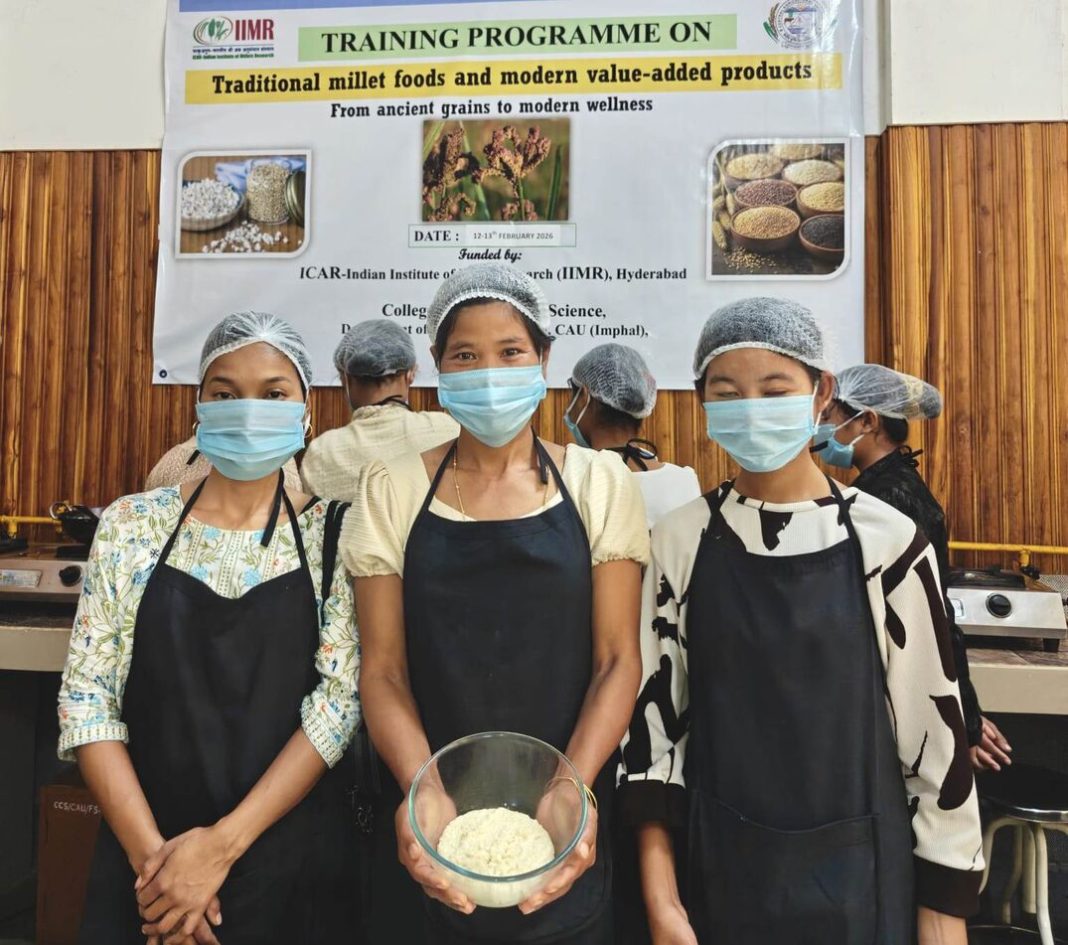
Over two intensive rounds of training held on February 12–13 and 16–17, 30 participants from Botegre and Ringrampara gathered to rediscover what their ancestors always knew: millets are resilient, nutritious, and deeply rooted in Garo food culture.
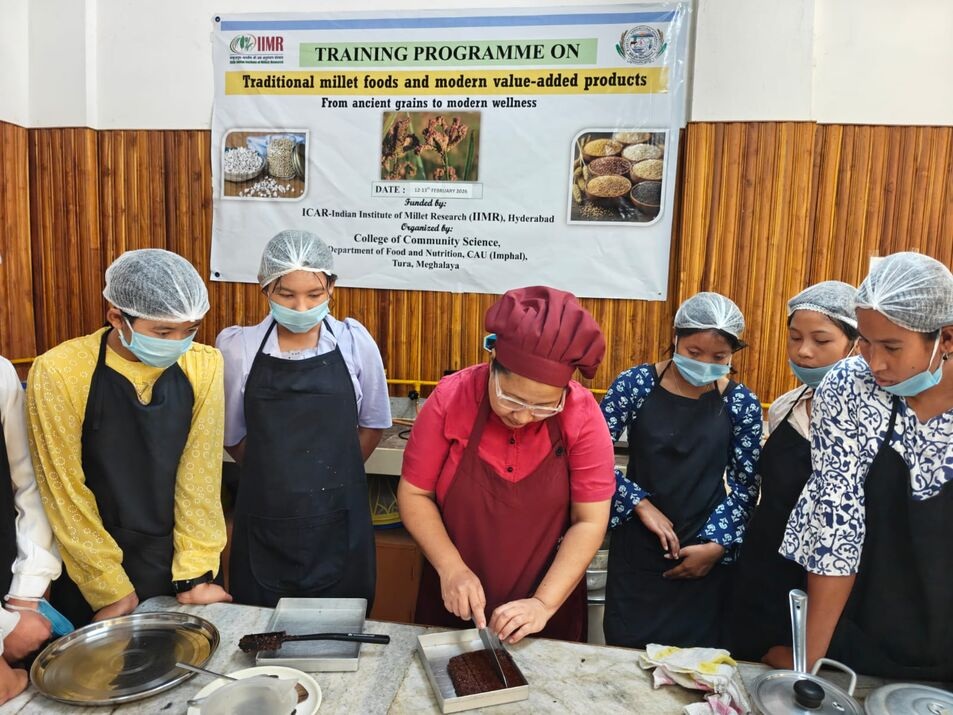
The programme, centred on “Traditional Millet Foods and Modern Value Added Products,” turned community kitchens into lively learning labs. The programme was held at the College of Community Science, Tura.
Participants prepared culturally significant dishes such as hearty millet porridge, steamed foxtail millet with mashed banana, and millet–pumpkin blends. They also experimented with sweet favourites like chikki, halwa and ladoo.
These weren’t just cooking sessions — they were conversations about nutrition. Millets are rich in dietary fibre, essential minerals, and have a low glycemic index, making them ideal for improving dietary diversity and combating lifestyle diseases such as diabetes.
But the training didn’t stop at tradition.
Participants also learned to create market-ready products like millet cookies and cakes. Sessions focused on standardisation, packaging, shelf life, and consumer acceptability — critical steps in transforming household recipes into small-scale enterprises.
Coordinating the initiative, Dr Natasha R. Marak, Associate Professor of Food Science & Nutrition at College of Community Science, Tura, highlighted that the goal is to bridge indigenous wisdom with scientific validation. By documenting traditional knowledge and combining it with improved nutrient management practices, the project aims to restore millets to both plates and markets across Meghalaya.
Addressing participants, Dean Dr Jyoti V. Vastrad emphasised that millets are more than food — they are climate-resilient crops suited for the future. In a region increasingly vulnerable to climate shifts, these hardy grains require less water and adapt well to local conditions, making them critical for sustainable agriculture.
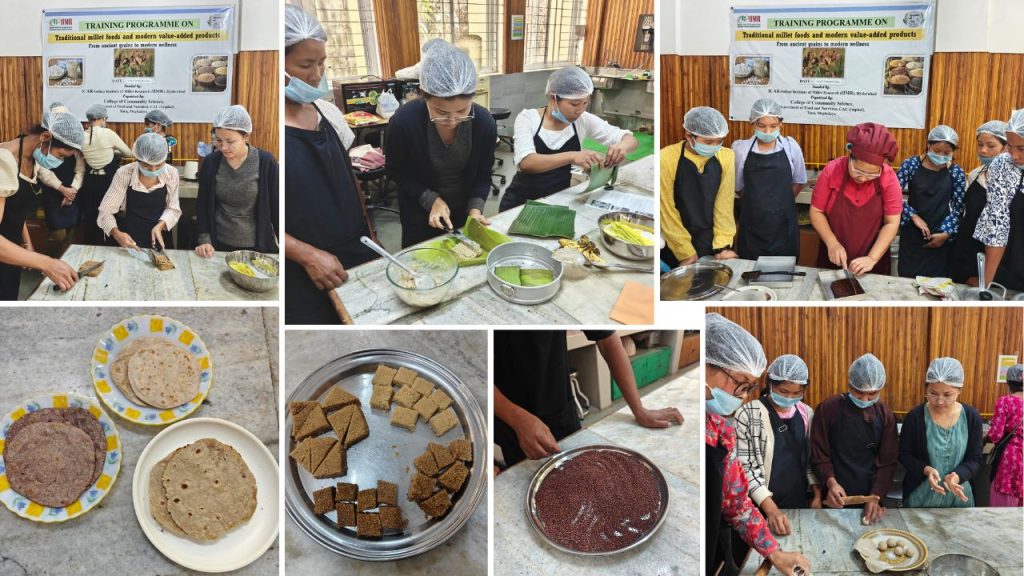
“The only way we know how to consume millets is as a simple porridge — or as we say, ‘rite cha.a’. We never imagined that so many products could be made from misi (millets),” one farmer said. Janitha D Sangma from Botegre Village of Rongram Block, a participant, expressed surprise and enthusiasm upon discovering the diversity of products possible from what was once considered a basic subsistence grain.
Beyond cooking and food processing, the initiative reflects a larger ambition under the IIMR–NEH programme: strengthening nutritional security while opening livelihood avenues.
The project is building a comprehensive knowledge base that blends ethnobotany, agriculture, and enterprise development. A detailed report is expected once the study concludes.
In the Garo Hills, millets are slowly moving from memory to marketplace.