
By Satyabrat Borah
Donald Trump recently celebrated his birthday by giving himself a very unique gift. It is a gift wrapped in high stakes diplomacy that could reshape the entire global landscape. This political present is something the whole world is watching closely, though it will take a considerable amount of time before anyone can see its true shape and lasting effects. As the dust begins to settle on the latest round of international maneuvering, everyday observers and financial experts alike find themselves staring at two massive, unavoidable questions. People are wondering if the long running, exhausting conflict with Iran has finally ground to an official halt.
At the same time, drivers and businesses across the globe want to know if the price of crude oil will ever drop back down to that comfortable baseline of seventy three dollars per barrel. If we look at the situation with a heavy dose of realism, the answer to that first question about peace is a cautious maybe. The answer to the second question about cheap oil is a painful, resounding almost impossible.
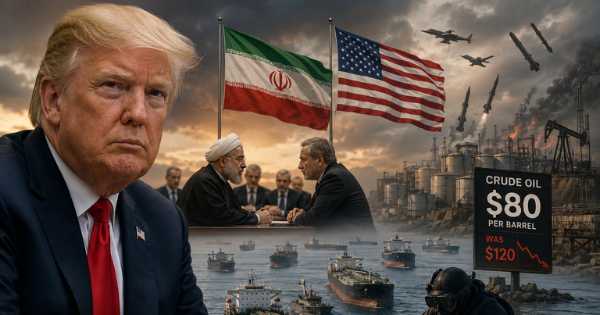
When we look closely at the prospects for peace, it helps to separate public rhetoric from actual military intentions. If you tune out the characteristically aggressive speeches and the fiery social media declarations coming from the American leadership, a different pattern emerges. Neither the United States nor Iran has shown any genuine appetite for engaging in a direct, full scale war with one another. Both nations seem to understand that an all out military confrontation would bring nothing but mutual destruction and economic ruin. This silent understanding has kept them from crossing the point of no return. The grand illusion of stability is constantly threatened by external wildcards. The biggest wildcard remains the aggressive stance of the Israeli government. unilateral military actions and hardline policies continue to keep the strategic Strait of Hormuz blocked by tension and fear. The real question is whether the American administration can successfully restrain the Israeli leadership. The Israeli prime minister has his own domestic political survival to think about, which frequently pushes him to maintain a highly combative posture toward Tehran.
There is also the dark cloud of Iran’s nuclear ambitions hanging over every single negotiation. Nobody in the international community feels truly certain about where Iran stands with its uranium enrichment capabilities. The heavily publicized agreement scheduled to be signed this week leaves this critical issue completely untouched. The negotiating parties have essentially kicked the nuclear can down the road, giving themselves a sixty day window to figure out the details. A lot can change in two months. In fact, a lot can change in forty eight hours. A single miscalculation, an unexpected drone strike, or a sudden shift in political alliances could tear the entire agreement to shreds before the ink even dries. True, lasting peace is still trapped in a thick fog of uncertainty. The global stock markets and fluctuating currency values are behaving with a sense of desperate optimism. Investors are eagerly buying up shares and stabilizing the dollar because they desperately want to believe that a peaceful resolution is on the horizon, even if the reality on the ground tells a much more complicated story.
Turning our attention to the global economy, there is a glimmer of hope in the way energy markets are behaving. The price of crude oil has slowly rolled back from its terrifying peak of one hundred and twenty dollars down toward the eighty dollar mark. International energy traders are showing a sudden willingness to lock in long term supply contracts at these lower rates. This shift suggests that the absolute worst phase of the energy panic is behind us. This sudden wave of optimism needs a reality check. Oil prices do not just tumble from eighty dollars down to seventy dollars overnight. The current administration has already issued a triumphant call for idle oil tankers to start their engines and begin moving through the Persian Gulf. A simple political request cannot instantly untangle a massive maritime traffic jam. There are currently about five hundred giant tankers sitting stuck in and around the Persian Gulf.
They cannot just sail away into the open ocean because the waters are literally littered with deadly naval mines dropped during the height of the recent hostilities.
Clearing these shipping lanes is going to be a slow, painstaking process. Naval forces will have to spend months scanning the seabed and safely detonating these hidden explosives. Every single tanker moving through the region will have to navigate with extreme caution, moving at a snail’s pace to avoid a catastrophic underwater explosion.
One single accident could spark a fresh wave of panic and send oil prices skyrocketing right back to the ceiling. The silver lining in this cloudy situation is the sheer volume of energy waiting in the wings. The ships currently trapped in the gulf are holding over one hundred million barrels of crude oil. The surrounding Gulf nations have their massive onshore storage facilities filled to the brim because their production lines never actually stopped running during the crisis. The moment the naval mines are cleared and shipping returns to a normal rhythm, a massive wave of oil and gas will flood the global market.
You might think this sudden flood of supply would automatically crash the prices and bring back the days of cheap fuel. The global demand side of the equation is about to become incredibly chaotic. Major consuming nations like China, India, and various European countries spent the last several months draining their emergency strategic reserves to keep their economies afloat during the blockade. The moment cheap oil becomes available, these nations will rush into the market simultaneously, competing fiercely to refill their empty storage domes. This massive wave of buying pressure will create a artificial floor for energy prices, preventing them from falling anywhere near the old seventy three dollar mark.
The structural costs of doing business in a post conflict world have permanently changed. The world just witnessed the terrifying extent of Iran’s missile and drone capabilities. Having seen what kind of damage can be inflicted on shipping infrastructure in a matter of hours, maritime insurance companies are rewriting their rulebooks. They are going to impose massive risk premiums on every single vessel traveling through the Middle East. These skyrocketing insurance premiums will add a heavy premium to the baseline cost of moving oil across the ocean. The story is just as bleak when you look at natural gas. The government of Qatar recently let it slip that repairing their damaged liquefied natural gas facilities will not be a quick fix. It will take anywhere from three to five years of intense engineering work to get those plants back to their original production capacities. This means the world will be dealing with expensive, strained gas supplies for years to come. The current diplomatic breakthrough will give the global economy a much needed breather, but the days of easy, cheap energy are gone, and getting the global market back to its old baseline will be a long uphill battle.