
By Satyabrat Borah
War has a way of revealing the limits of power. It strips away speeches and slogans and leaves behind raw consequences that touch ordinary lives across continents. The current conflict involving the United States, Israel, and Iran is one such moment. What was presented as a strategic move has unfolded into a crisis that is spreading pain, fear, and instability far wider than its planners seem to have expected. The decision to attack Iran has not only ignited a dangerous military confrontation, it has also shaken economic systems, strained alliances, and deepened uncertainty in a world that was already dealing with multiple pressures.
The role of Donald Trump in this crisis stands out sharply. He built much of his political appeal on the promise of avoiding endless military entanglements. Many voters supported him because they believed he would bring American troops home and focus on domestic priorities. That promise created a sense of hope among people tired of seeing lives lost in distant wars. When such a leader chooses to initiate a new conflict, the contradiction is not easy to ignore. It raises questions about judgment, about the pressures influencing decisions, and about the gap between campaign rhetoric and actual governance.
The partnership between the United States and Israel has long been strong, rooted in shared interests and strategic cooperation. Benjamin Netanyahu has always taken a hard line on Iran, viewing it as a central threat to Israel’s security. This perspective has shaped Israeli policy for years. When combined with American military strength, it creates a powerful force capable of reshaping regional dynamics. The recent actions suggest that both leaders believed they could achieve quick results, possibly weakening Iran’s leadership or forcing it into submission. That expectation appears to have underestimated the complexity of Iran’s political and military structure.
Iran is not a country that easily yields under pressure. Its leadership has spent decades preparing for confrontation, building networks, strengthening defensive capabilities, and developing strategies that rely on resilience rather than quick victory. When the attacks began, Iran responded with missile strikes and drone operations targeting Israel and locations linked to American forces. This response has kept the conflict active, turning what might have been planned as a short operation into a prolonged and unpredictable struggle. The sense of escalation has grown with each passing day, drawing more attention and concern from across the globe.
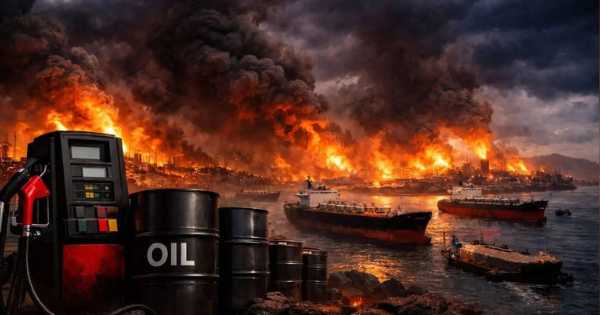
One of the most alarming developments has been the closure of the Strait of Hormuz. This narrow stretch of water carries a large portion of the world’s oil supply. Any disruption there sends shockwaves through global markets. Energy prices have surged, affecting transportation, manufacturing, and daily life in countries far removed from the battlefield. For many families, this translates into higher costs for fuel, food, and basic necessities. What began as a regional conflict is now touching the wallets of people who may not even follow international politics closely.
Economic strain is often the silent companion of war. It does not make headlines in the same dramatic way as missile strikes or troop movements, but its impact can be just as powerful. Rising prices can lead to public anger, political instability, and social tension. Governments are forced to adjust budgets, sometimes cutting essential services to cope with increased costs. Businesses face uncertainty, slowing down investments and hiring. In such a climate, the ripple effects of a single decision to go to war can spread widely and persist long after the fighting stops.
The human cost of the conflict is another dimension that cannot be overlooked. Reports of casualties among soldiers and civilians remind us that war is not an abstract concept. Each life lost represents a family shattered, a future erased, and a community affected. In Iran, Israel, and the surrounding region, people are living with fear and disruption. Air raid sirens, damaged infrastructure, and the constant threat of further attacks create an atmosphere of anxiety that is difficult to escape. For many, daily routines have been replaced by uncertainty and caution.
The targeting of key figures within Iran’s leadership has added another layer of tension. Such actions are often intended to weaken coordination and create confusion within the opposing side. Instead, they can sometimes have the opposite effect, uniting factions and strengthening resolve. The killing of high level officials sends a message, but it also invites retaliation. Each strike increases the stakes, making it harder for any side to step back without appearing weak. This cycle of action and reaction can quickly spiral, pushing the conflict into more dangerous territory.
There is also the question of how well this war was planned. Reports suggest that there was an expectation of a quick outcome, possibly even a change in Iran’s political leadership. That expectation now seems unrealistic. Iran has shown that it can sustain pressure and respond in ways that keep the conflict alive. The longer the war continues, the more difficult it becomes to claim success. Political leaders who initiate wars often face growing criticism when results do not match promises. In the United States, rising casualties and economic strain are already fueling debate and dissatisfaction.
The resignation of a senior counterterrorism official highlights internal concerns within the American system. When experienced figures step down and express doubts about the reasons behind a war, it signals deeper unease. Such moments can influence public opinion, shaping how people view the conflict and the leadership responsible for it. Trust is a fragile thing in politics. Once shaken, it can be difficult to restore.
For Israel, the situation is equally complex. Security concerns are real and cannot be dismissed. The fear of threats from Iran has been a consistent factor in Israeli policy. Still, the expansion of the conflict to include attacks on energy infrastructure and key sites has increased risks for the entire region. Retaliatory strikes affecting countries like Qatar, the United Arab Emirates, and Saudi Arabia have widened the scope of the crisis. These nations now find themselves drawn into a situation that could destabilize their own economies and security environments.
The involvement of multiple countries raises the possibility of a broader regional conflict. Such a scenario would be far more dangerous and difficult to control. History shows that wars involving several nations can escalate quickly, with unexpected consequences. Alliances can shift, new actors can enter the scene, and the original objectives of the conflict can become lost in a larger struggle. The current situation carries these risks, making it urgent for leaders to consider alternatives to continued escalation.
Diplomacy remains the most realistic path toward reducing tensions. It may not offer quick or dramatic results, but it provides a way to address concerns without further loss of life. Negotiations require patience, compromise, and a willingness to listen. These qualities can be difficult to maintain in the heat of conflict, especially when emotions are high and political pressures are intense. Still, history offers many examples where dialogue has succeeded in preventing greater disasters.
For diplomacy to work in this case, there needs to be a mediator who is trusted by all sides. Such a figure or nation could help bridge gaps, clarify intentions, and create space for meaningful discussion. The reopening of the Strait of Hormuz could serve as an early step toward easing economic pressure. In return, assurances regarding future military actions could help build confidence. These steps would not solve every issue, but they could create momentum toward a more stable situation.
The idea of sending ground troops into Iran would be a significant escalation. It would involve high risks, including greater casualties and deeper involvement in a complex environment. Military experts often warn that such moves can lead to prolonged conflicts with no clear resolution. Expanding attacks on energy infrastructure would carry its own dangers, potentially causing severe damage to the global economy. These options highlight the difficult choices facing decision makers, each with serious consequences.
Public opinion plays an important role in shaping these decisions. In democratic societies, leaders cannot ignore the voices of citizens for long. As the effects of the war become more visible, people may demand changes in policy. Protests, debates, and media coverage can influence the direction of a conflict. In the United States, growing concern about casualties and economic impact could push leaders toward reconsidering their approach. Similar pressures may arise in other countries involved.
The global community is watching closely. Many nations have called for restraint, urging all sides to avoid further escalation. International organizations have expressed concern about the humanitarian and economic impact of the conflict. There is a shared understanding that the situation has the potential to affect far more than just the countries directly involved. In a connected world, instability in one region can quickly spread to others.
War often creates a sense of urgency that can overshadow careful thinking. Decisions are made quickly, sometimes based on incomplete information or optimistic assumptions. The current conflict shows how important it is to consider long term consequences. A move that seems effective in the short term can create challenges that are far more difficult to manage later. Leaders carry a heavy responsibility when they choose to use military force. Their decisions can shape the lives of millions.
The story of this conflict is still unfolding. Each day brings new developments, new challenges, and new questions. What remains clear is that the cost is already high, and the potential for further damage is significant. The hope is that wisdom will guide the next steps, that dialogue will replace confrontation, and that the lessons of this moment will lead to more cautious and thoughtful approaches in the future.
For ordinary people around the world, the desire is simple. They want stability, security, and the chance to live their lives without the shadow of conflict. They want leaders who prioritize peace and who understand the value of restraint. The events surrounding this war serve as a reminder that power must be used carefully, with an awareness of its impact. When that awareness is missing, the consequences can reach far and last long.
In reflecting on this situation, one cannot ignore the importance of accountability. Leaders must be willing to face questions about their decisions and accept responsibility for the outcomes. This is essential for maintaining trust and for learning from mistakes. Without accountability, the same patterns can repeat, leading to further conflicts and suffering.
The path forward is uncertain, but it is not without options. Dialogue, cooperation, and a commitment to reducing harm offer a way out of the current crisis. These choices require courage, not the kind displayed on the battlefield, but the kind needed to step back, to listen, and to seek common ground. In a world that has seen too much conflict, such courage is more valuable than ever.