
By Satyabrat Borah
The small island nation of Cuba, just 90 miles from the Florida coast, has long occupied a outsized place in the American imagination and strategic thinking. Its proximity alone makes it impossible to ignore, but the reasons run much deeper, woven into geography, history, military considerations, and now the fresh turbulence of regional power shifts. Recent events have thrust Cuba back into the spotlight, particularly following the dramatic U.S. military operation in Venezuela that captured President Nicolás Maduro and severed a vital lifeline between Havana and Caracas. President Donald Trump’s pointed threats toward Cuba, warning that no more oil or money would flow from Venezuela and urging the island to “make a deal before it is too late,” have reignited questions about why this Caribbean country remains such a persistent concern for the United States.
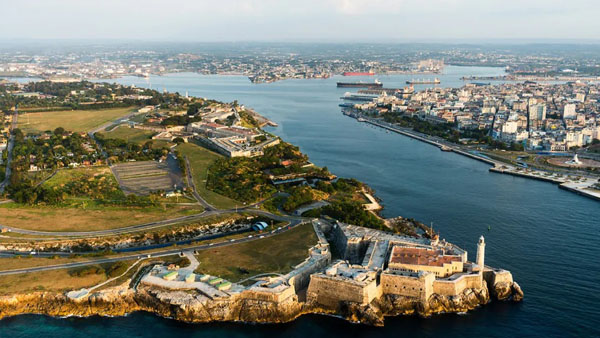
Cuba’s strategic value begins with simple map reading. Straddling the entrance to the Gulf of Mexico, it commands key maritime routes. Ships passing through the Yucatan Channel to the west or the Windward Passage to the east must navigate waters influenced by Cuban territory. This position has mattered since the days of Spanish colonial rule, when control of Cuba meant influence over trade in the Americas. For the United States, emerging as a regional power in the late 19th century, Cuba represented both opportunity and vulnerability. The Spanish-American War of 1898 ended with American forces driving Spain out, but rather than annexing the island outright, the U.S. opted for indirect control through the Platt Amendment, which allowed intervention rights and secured the lease of Guantanamo Bay as a naval base. That base remains today, a enduring symbol of American presence just off Cuba’s southeastern coast.
Geographically, Cuba sits like a sentinel guarding the approaches to the U.S. mainland. In an era of missiles and advanced weaponry, that closeness amplifies risks. During the Cold War, the Cuban Missile Crisis of 1962 brought the world to the brink of nuclear war when Soviet missiles were placed on the island, capable of striking deep into American territory with little warning. The episode underscored a fundamental truth: any hostile power with a foothold in Cuba could threaten U.S. security directly. Even without nuclear arms, the island’s location offers potential staging grounds for intelligence operations, electronic surveillance, or disruptions to shipping lanes critical for energy and commerce. The Gulf of Mexico carries vast amounts of oil and natural gas, and routes near the Panama Canal, though farther south, connect to global trade networks where stability matters enormously to the U.S. economy.
Experts have long highlighted these factors. One analyst noted that Cuba’s access to the Gulf of Mexico and Caribbean Sea makes it essential for American commerce and defense. Stability there protects international shipping and energy transport. Instability, conversely, could create openings for adversaries. In recent years, concerns have grown over deepening ties between Cuba, Russia, and China. Russian warships have visited Havana, renewing defense cooperation that echoes Soviet-era alliances. Reports of Chinese intelligence facilities on the island have added to worries about surveillance capabilities pointed toward the U.S. mainland. These partnerships are not abstract; they involve infrastructure investments, telecommunications, and military exchanges that could challenge American dominance in the hemisphere.
The Venezuela crisis has sharpened this focus dramatically. For more than two decades, Cuba and Venezuela forged one of the closest alliances in Latin America, built on ideological solidarity and mutual need. Under Hugo Chávez and then Nicolás Maduro, Venezuela supplied Cuba with subsidized oil through barter arrangements. In exchange, Cuba sent thousands of doctors, teachers, and advisors to Venezuela, while also providing security expertise, intelligence support, and training for Venezuelan forces. Cuban personnel helped restructure Venezuela’s military and intelligence apparatus, preparing it for asymmetric threats. This relationship sustained Cuba through economic hardships, especially after the Soviet Union’s collapse ended generous subsidies from Moscow.
The U.S. intervention in Venezuela changed everything. On January 3, 2026, American special operations forces, backed by airstrikes in an operation dubbed Absolute Resolve, raided Caracas and captured Maduro along with his wife. The action, which reportedly killed dozens including 32 Cuban security personnel serving as bodyguards, aimed to dismantle what Washington viewed as a narco-terrorist regime complicit in drug trafficking and regional instability. Maduro now faces charges in New York, and an interim government under Delcy Rodríguez has taken over, with the U.S. exerting significant influence over oil flows and policy directions.
Trump wasted little time linking the Venezuela operation to Cuba. In posts on his platform, he declared that Cuba would receive zero oil or money from Venezuela going forward. He accused Havana of providing “security services” to Venezuelan leaders in exchange for those resources, but emphasized that arrangement was over. The threats carried weight because Cuba’s economy, already strained by decades of U.S. sanctions, shortages, blackouts, and the lingering effects of the pandemic, depends heavily on imported fuel. Without Venezuelan shipments, power outages lengthen, transportation grinds down, and daily life becomes harder. Trump suggested Cuba negotiate a deal with the U.S., though details remained vague—perhaps eased sanctions, normalized trade, or political concessions.
From Washington’s perspective, severing this Cuba-Venezuela axis serves multiple goals. It weakens two governments long seen as adversarial, reduces opportunities for Russia, China, and Iran to gain footholds in the region, and asserts U.S. primacy in the Western Hemisphere. Some observers describe this as a revival of the Monroe Doctrine, reframed in modern terms to prioritize American access to resources like oil, curb migration pressures, and combat drug flows. Venezuela’s vast reserves hold appeal, but the broader aim appears to be reshaping alliances. Cuba, without Venezuelan support, faces deepened crisis, potentially pressuring its leadership toward change or collapse.
Yet Cuba’s defiance has been consistent. President Miguel Díaz-Canel rejected Trump’s overtures, asserting that no one dictates terms to Cuba and highlighting U.S. lack of moral authority. The government mourns its fallen personnel from the Venezuela raid and frames the events as imperial aggression. Historically, Cuba has survived isolation through resilience, alliances with distant powers, and a narrative of resistance that rallies domestic support.
For the United States, Cuba’s importance transcends immediate crises. It embodies unfinished business from the Cold War, a lingering ideological challenge, and a test of hemispheric influence. Proximity means threats here feel immediate—whether from missiles in the 1960s, intelligence bases today, or alliances that could evolve into military footholds. Economic potential also lingers; a normalized Cuba could open markets, tourism, and investment for American businesses, especially with the Cuban-American community bridging ties.
But strategic calculations carry risks. Direct pressure or intervention could backfire, alienating Latin American neighbors who value sovereignty and view U.S. actions warily. Brazil, Mexico, and others have criticized past interventions, and a heavy-handed approach might push Cuba closer to China or Russia rather than away. Humanitarian fallout—worsening shortages, potential unrest—could trigger migration waves toward Florida, a political flashpoint.
In this moment, amid the Venezuela fallout, Cuba stands at a crossroads. The loss of its key partner exposes vulnerabilities, yet it also highlights enduring strengths: a committed leadership, international sympathy in parts of the Global South, and a history of outlasting external pressures. For the U.S., the island remains a strategic puzzle—too close to ignore, too defiant to easily influence, and now caught in the ripple effects of bold regional moves. Whether through coercion, negotiation, or patience for internal change, Washington’s interest shows no sign of fading. Cuba’s location ensures it will always matter, a small nation with outsized implications for the security, economy, and influence of its giant neighbor to the north.