
By Satyabrat Borah
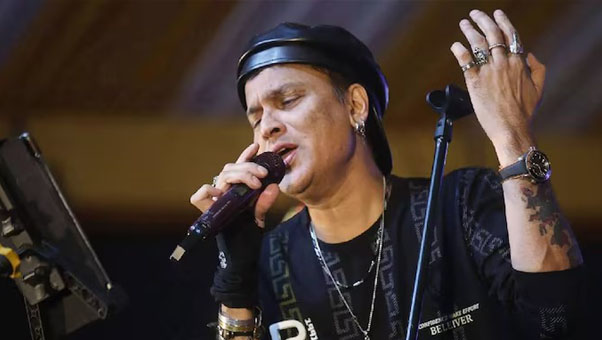
The untimely death of Zubeen Garg, the beloved Assamese singer, composer, actor, and cultural icon, has left an indelible scar on the hearts of millions across Northeast India and beyond. On September 19, 2025, the 52-year-old artist, known for his soul-stirring melodies that blended folk traditions with contemporary rhythms, collapsed while swimming in the sea off an island near Singapore. He had traveled there as the cultural brand ambassador for the fourth edition of the North East India Festival (NEIF), an event meant to showcase the vibrant heritage of the region under the auspices of the Indian High Commission. What began as a routine outing on a yacht, organized by members of the Assam Association Singapore ahead of his scheduled performance, spiraled into a tragedy that shook Assam to its core. Garg’s body was recovered from the waters, and initial reports from Singapore authorities attributed the incident to drowning, with no immediate signs of foul play. Yet, back home in Guwahati, whispers of suspicion quickly grew into a roar of public outrage, demanding answers for how a man in his prime, celebrated for hits like “Mon Jai” and “Mayabini,” could vanish so abruptly.
Born on November 18, 1972, in Tura, Meghalaya, to an Assamese family rooted in the village of Tamulichiga in Jorhat district, Zubeen Garg was more than an entertainer; he was a symbol of Assamese pride. His career spanned over three decades, encompassing playback singing, film direction, and philanthropy. Garg’s voice carried the raw emotion of the Brahmaputra’s floods and the resilience of the tea garden workers, earning him accolades like the Asom Ratna and a legion of fans who saw in him a bridge between tradition and modernity. He was unmarried, dedicating his life to music and social causes, including environmental advocacy and support for flood victims. His presence at NEIF was poised to be a highlight, drawing expatriates eager for a taste of home. Instead, news of his collapse spread like wildfire, prompting an outpouring of grief. Vigils lit up Guwahati’s streets, and social media overflowed with tributes, but beneath the sorrow simmered questions: Was this truly an accident, or something far more sinister?
Assam Chief Minister Himanta Biswa Sarma wasted no time in signaling that the state would not accept surface-level explanations. Addressing the assembly and the public within days, Sarma declared the incident “not a normal case,” hinting at deeper conspiracies tied to financial irregularities that predated the COVID-19 pandemic. “It was a murder case from the very first day,” he asserted, vowing that the truth would “shock the state.” This bold stance set the tone for an unprecedented investigation, bypassing initial skepticism from Singapore police, who had issued a death certificate citing drowning and suggested a coroner’s inquiry for further clarity. The Assam government, undeterred, invoked Section 208 of the Bharatiya Nagarik Suraksha Sanhita to secure Central government sanction for prosecuting an extraterritorial crime, underscoring their conviction that justice transcended borders.
The probe kicked off swiftly with the formation of a nine-member Special Investigation Team (SIT) under the Criminal Investigation Department (CID), headed by Special Director General of Police Munna Prasad Gupta. Registered as Case No. 18/2025 at the Dispur Police Station, the investigation initially invoked Sections 61 (criminal conspiracy), 105 (culpable homicide not amounting to murder), and 106 (causing death by negligence) of the Bharatiya Nyaya Sanhita (BNS), India’s revamped criminal code. But as evidence mounted, the SIT pushed for escalation. Within two days, they petitioned the court to add Section 103, equivalent to the erstwhile IPC 302 for murder, arguing that preliminary findings pointed to deliberate foul play rather than negligence. After intense debates, the court approved the amendment, transforming the case from potential manslaughter to premeditated homicide. A parallel case, No. 19/2025, targeted property-related offenses against key figures, broadening the net to include forgery and breach of trust.
The SIT’s work was exhaustive, spanning three grueling months. Over 300 witnesses were interrogated, from festival organizers and hotel staff in Singapore to fellow performers and locals in Assam. The team traversed continents, collaborating with Singapore authorities to obtain critical documents: two post-mortem reports—one from Singapore and another from Guwahati—a toxicology analysis from the Singapore Police, and viscera examination from the Central Forensic Science Laboratory (CFSL) in Kolkata. Seized items included Garg’s mobile phone, personal medicines, a suitcase, multiple hard drives, forged PAN cards, and at least 28 seals from various companies and government offices, hinting at a web of financial manipulation. Gupta, in a December 6 briefing, revealed that the chargesheet would encompass nearly 3,500 pages—some reports even cited 7,000—detailing timelines, forensic correlations, and inmate confessions from the seven accused, who had been grilled relentlessly in CID lockups.
Arrests began trickling in almost immediately, each revelation fueling public fervor. The first breakthroughs came on September 30, when prime suspects Shyamkanu Mahanta, the NEIF chief organizer, and Siddharth Sharma, Garg’s long-time manager, were apprehended after days on the run. Mahanta was nabbed in Delhi, Sharma in Haryana, and both were produced before the Chief Judicial Magistrate’s residence amid closed courts, remanded to 14-day police custody. Mahanta’s home yielded a trove of incriminating documents, leading to a fresh forgery case. Sharma, who handled Garg’s schedules and finances, faced scrutiny over suspicious transactions totaling over ₹1.1 crore. By October 2, murder charges under BNS 103 were formally slapped on them, with Gupta confirming the SIT’s certainty of orchestration.
The dragnet widened to include those closest to Garg during his final hours. Shekhar Jyoti Goswami, a bandmate and musician, and Amritprabha Mahanta, a co-singer and relative, were arrested after six days of questioning. Goswami, part of the entourage on the fateful yacht, and Amritprabha, who shared stages with Garg, were accused of abetment, their roles allegedly pivotal in luring him into vulnerability. Sandipan Garg, Zubeen’s cousin and an Assam Police Service officer serving as Deputy Superintendent of Police, was detained next, charged under BNS 105 for culpable homicide—implying knowledge or intent without full premeditation. His proximity to the victim raised eyebrows about insider betrayal. Rounding out the septet were the singer’s personal security officers (PSOs), Paresh Baishya and Nandeswar Bora, booked under BNS 316 for criminal breach of trust (CBT), their failure to protect deemed not mere oversight but complicity in fatal negligence.
The chargesheet, submitted on December 12, 2025, before the Chief Judicial Magistrate’s court in Kamrup Metropolitan under heavy security—a convoy of six vehicles ferrying the voluminous files—crystallized these allegations. It explicitly invoked BNS 103 against Siddharth Sharma, Shyamkanu Mahanta, Amritprabha Mahanta, and Shekhar Jyoti Goswami for abetment of murder, portraying them as architects who “facilitated or encouraged the act.” Sandipan Garg stood accused under 105, his actions linked to causing death with awareness of consequences. The PSOs faced 316, underscoring their breach as a direct enabler of harm. Accompanying the document were seized exhibits, forensic linkages, and timelines reconstructing the yacht outing: how the group, ostensibly celebrating, isolated Garg in the water, where toxicology hinted at possible impairment from undisclosed substances.
Yet, the chargesheet was just the prelude to deeper revelations. Sarma, in a November 25 assembly address amid an opposition adjournment motion, dropped a bombshell: “One person murdered him, and others cooperated.” He refrained from naming the principal perpetrator but stressed that four to five faced murder charges outright. The motive, he implied, wove through financial entanglements—disputed festival funds, embezzlement from Garg’s tours, and a “big story” of conspiracy simmering since pre-pandemic years. Opposition leaders, including those from the Congress and AAP, had lambasted the government for premature conclusions, but Sarma countered with the court’s endorsement of Section 103, crediting the SIT’s rigor for preventing bail-outs. The probe’s extraterritorial nod from the Ministry of Home Affairs further validated their pursuit.
Complicating the narrative was the legal standoff over representation. In a rare show of solidarity, the Assam Advocates’ Association, representing over 10,000 lawyers, resolved to boycott the accused, citing the gravity of betraying a cultural icon. Shyamkanu Mahanta’s wife, Anita Deka Mahanta, a lawyer herself, penned a desperate plea for withdrawal, arguing it undermined due process. “In the context of legal proceedings, what comments were made by advocates?” she questioned in her letter, decrying the decision as emotional overreach. The association stood firm, forcing the accused to navigate without local counsel, a move that amplified perceptions of communal outrage. Protests erupted outside suspects’ residences, with arrests for incitement underscoring the volatile mood.
As the chargesheet landed in court, it marked a pivotal closure to the SIT’s phase, but the trial loomed as the true battleground. Gupta emphasized that while the core murder probe concluded, ancillary inquiries into finances and forgeries persisted, promising no escapes. Public sentiment, raw and unrelenting, echoed in chants of “Justice for Zubeen Da,” with fans from Sivasagar to Shillong holding candlelight marches. Garg’s absence reverberated in empty concert halls and silenced airwaves, his songs now anthems of loss. The case exposed fissures in the entertainment industry’s underbelly—managerial greed, security lapses, familial fractures—while highlighting Assam’s unyielding quest for accountability.
Was the plot to eliminate Zubeen Garg hatched long before that fateful swim? Inmate testimonies, buried in the chargesheet’s annexures, reportedly affirm a premeditated snare, with whispers of earlier attempts thwarted. Financial trails point to siphoned royalties and festival kickbacks, Mahanta’s forged seals suggesting a syndicate preying on artists. Sharma’s evasion to Rajasthan, Mahanta’s Delhi hideout—these were no panic flights but calculated dodges, per investigators. Singapore’s initial clean bill clashed with CFSL’s viscera insights, possibly indicating tampering or overdose, though details remain sealed until trial.
Three months on, as December’s chill settled over Guwahati, the submission of the chargesheet felt like a collective exhale. Yet, for a state that revered Garg as its heartbeat, closure remains elusive. His music, once a balm for everyday joys and sorrows, now underscores a cautionary tale of trust shattered. The courts will dissect the 3,500 pages, weighing abetment against intent, conspiracy against coincidence. But beyond legalese, this is a reckoning for a legacy: Zubeen Garg, the voice of Assam, silenced not by waves but by human shadows. As Sarma promised, the full story will shock, but in unveiling it, perhaps it heals—reminding us that icons, too, deserve guardians as fierce as their admirers. In the Brahmaputra’s steady flow, one hears his echo still: a call for justice, unyielding and pure.