
By Satyabrat Borah
War often begins with words, with threats, with the slow normalisation of violence dressed up as security. The war against Iran did not erupt overnight. It was built carefully through years of sanctions, assassinations, covert operations, and calculated humiliations. When American and Israeli forces launched their full-scale assault on Iran on February 28, killing Supreme Leader Ayatollah Ali Khamenei, it marked not just the escalation of a regional conflict but a deep fracture in the already fragile international system. What unfolded was not an act of defence but an act of imperial aggression, driven by power, ideology, and the dangerous belief that might make right.
Donald Trump returned to the White House with a familiar slogan and an old promise. He claimed he would end America’s endless wars and focus on domestic renewal. Many Americans, exhausted by decades of military interventions from Iraq to Afghanistan, wanted to believe him. But West Asia once again became the graveyard of that promise. In just over a year in office, Trump authorised military action in at least seven countries, reviving a pattern of unilateral force that has long defined American foreign policy. The war on Iran stands out not only for its scale but for its recklessness, its disregard for international law, and its catastrophic consequences.
Trump’s partnership with Israeli Prime Minister Benjamin Netanyahu has been central to this disaster. Both leaders thrive on confrontation. Both see compromise as weakness. Both frame complex geopolitical realities as simple battles between good and evil. Netanyahu, already facing charges of war crimes at the International Criminal Court, has pushed Israel further toward expansionist ethnonationalism, treating international norms as obstacles rather than obligations. Under his leadership, Israel has repeatedly violated sovereignty across the region, confident that American backing would shield it from accountability. Trump, for his part, has embraced this role enthusiastically, turning the United States into a blunt instrument of coercion rather than a steward of global stability.
The killing of Iran’s Supreme Leader was a moment of profound rupture. Assassinating the highest authority of a sovereign nation is not an act of precision warfare. It is a declaration of total war. It shatters any remaining illusions about rules, restraint, or diplomacy. The message sent to the world was unmistakable. Power determines legitimacy. Violence replaces dialogue. This precedent is dangerous not only for Iran but for every country that exists outside the narrow circle of Western military dominance.
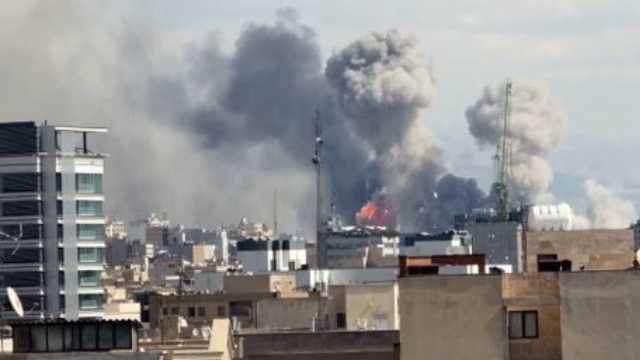
Iran’s response, though predictable, has pushed the region closer to the edge. Missile and drone attacks on Israeli and American bases in the Persian Gulf and Jordan have raised the risk of a wider conflagration. Each strike invites retaliation. Each retaliation narrows the space for de-escalation. The logic of war feeds on itself, and civilians across the region are once again trapped between forces far beyond their control. Cities brace for sirens. Families sleep under the shadow of drones. Ordinary lives are reduced to strategic calculations.
Perhaps the most alarming development has been Tehran’s announcement of the closure of the Strait of Hormuz. This narrow stretch of water is one of the most critical energy corridors in the world. Nearly a fifth of global oil passes through it. Shutting it down is not just a regional act of defiance but a global shock. The consequences would ripple across continents, disrupting supply chains, driving up energy prices, and deepening economic distress in already vulnerable economies. For major oil importers like India, the fallout could be severe, affecting inflation, growth, and the daily cost of living for millions.
What makes this war particularly troubling is how casually it has been justified. The language of security has been stretched beyond recognition. Iran is portrayed as an existential threat, a perpetual villain whose sovereignty does not deserve respect. Yet this narrative ignores history. Iran has been encircled by foreign military bases for decades. It has faced crippling sanctions that have devastated its economy and punished its people. Its scientists have been assassinated. Its infrastructure has been sabotaged. When such pressure finally provokes a violent response, it is framed as aggression rather than resistance.
The international system, already weakened by selective enforcement and double standards, has been further hollowed out by this conflict. International law is invoked when convenient and ignored when inconvenient. Institutions meant to prevent war are sidelined. The United Nations watches largely powerless as permanent members pursue their own agendas. Smaller nations observe and learn a grim lesson. Survival depends not on law but on alignment or armament.
Trump’s approach reflects a broader shift in American politics. The belief that the United States is bound by rules has been replaced by a belief that rules are tools to be used against others. This transformation did not begin with Trump, but he has embraced it openly. By bombing multiple countries within a short span and boasting about military strength, he has normalised the idea of perpetual conflict. War becomes not a last resort but a demonstration of resolve, a spectacle for domestic consumption.
Netanyahu’s role is equally destructive. His government has blurred the line between national security and territorial ambition. Military force is no longer about protection but about dominance. Civilian suffering is dismissed as collateral. International criticism is framed as hostility. This mindset has isolated Israel diplomatically while binding it ever more tightly to American power. Together, Trump and Netanyahu have formed a partnership that thrives on confrontation and leaves little room for peace.
The human cost of this war is often reduced to numbers, but behind every statistic is a story. Iranian families mourning a leader they may have supported or opposed but still recognised as part of their national identity. Israeli civilians living under the constant threat of retaliation. Workers in the Gulf fearing instability. Refugees preparing for another wave of displacement. War does not discriminate between those who made the decisions and those who must live with them.
India has long balanced its relationships carefully, maintaining ties with Iran, Israel, and the United States. The closure of the Strait of Hormuz threatens India’s energy security directly. Rising oil prices could strain the economy and hit the poorest hardest. Diplomatically, India must navigate a world where neutrality is increasingly difficult and pressure to take sides is growing.
There is also a deeper moral question. What kind of world is being shaped when powerful nations act with impunity? When leaders accused of war crimes are treated as partners. When assassinations of heads of state are justified as strategic necessity. This erosion of norms does not stay confined to one region. It spreads, legitimising similar actions elsewhere. The international system becomes less a framework for cooperation and more a battlefield of competing empires.
The tragedy is that alternatives existed. Diplomacy with Iran, however difficult, was not exhausted. Agreements could have been strengthened rather than abandoned. Regional security frameworks could have been pursued. Confidence-building measures could have reduced tensions. Instead, the language of force drowned out the language of negotiation. The result is a war that benefits no one except those who profit politically or economically from chaos.
History offers sobering lessons. Wars launched in the name of security often create the very instability they claim to prevent. Iraq was supposed to be a quick victory. Afghanistan was meant to be decisive. Both became long, costly quagmires with devastating human consequences. The war on Iran risks repeating these mistakes on an even larger scale, with global repercussions.
This conflict reveals a crisis of leadership. Leaders who equate strength with violence, who dismiss restraint as weakness, and who treat human lives as expendable chess pieces are steering the world toward permanent instability. Trump’s impulsive nationalism and Netanyahu’s hardened ethnonationalism feed off each other, reinforcing a worldview where compromise is betrayal and peace is naïveté.
Yet amid the darkness, there remains a responsibility for the international community and for ordinary citizens. Silence becomes complicity when injustice is normalised. Critical voices matter. Diplomatic pressure matters. Economic leverage matters. The demand for accountability matters. Wars are not inevitable forces of nature. They are choices made by individuals in positions of power.
The war against Iran is not just about Iran. It is about the future of global order. It is about whether rules apply to everyone or only to the weak. It is about whether he will continue to trump right. American and Israeli thuggery, unchecked and unchallenged, sets a precedent that endangers all nations, including those who believe themselves protected today.
As the missiles fly and markets tremble, the world stands at a crossroads. One path leads deeper into militarised chaos, where force replaces dialogue and fear governs policy. The other path, harder and less dramatic, leads back to diplomacy, restraint, and the slow rebuilding of trust. Choosing the latter requires courage of a different kind, the courage to step back from the brink.
History will judge this war not by the slogans used to justify it but by the lives it destroyed and the instability it unleashed. Blood on the hands of leaders cannot be washed away by rhetoric. The ashes of broken promises in West Asia serve as a stark reminder that endless wars do not end themselves. They are ended only when power is restrained, accountability is demanded, and humanity is placed above ambition.