
By Satyabrat Borah
The story of India’s journey toward a green future is often told through the shimmering blue glass of millions of solar panels spread across the vast deserts of Rajasthan and the open plains of Tamil Nadu. It is a story of incredible ambition and record breaking speed. On a bright afternoon in late April 2026, the country hit a milestone that seemed like a distant dream just a few years ago. National power demand surged to a staggering 256.1 gigawatts, and for a few hours while the sun was at its highest point in the sky, solar energy carried more than a fifth of the entire nation’s load. It was a moment of triumph for engineers and policymakers who have spent a decade pushing for a cleaner grid. But as the sun began to dip toward the horizon and the evening lights of hundreds of millions of homes flickered on, that triumph turned into a stark reminder of a massive missing piece in the puzzle.
By the time the day ended and the full twenty-four hour ledger was tallied, the numbers looked very different. That record breaking solar fleet, which did so much heavy lifting at noon, ended up contributing only about ten percent of the total daily generation. Even more concerning was the fact that once the stars came out and the peak evening demand arrived, solar power accounted for a negligible fraction of what the country needed. This reveals a massive disconnect. Between 2022 and early 2026, the share of solar in India’s total installed capacity nearly doubled, reaching almost twenty-eight percent. But the actual electricity reaching people throughout the day has not grown at the same pace. The gap between what we can build and what we can actually use is widening every single day.
We have plenty of panels and we certainly have the land and the political will. The real bottleneck is far more invisible but far more critical. We simply cannot store the vast ocean of electrons we are generating during the day to use when we actually need them most. Without batteries, solar power is like a high speed train that only runs when the sun is out and leaves passengers stranded at the station the moment a cloud passes by. This lack of storage is now so severe that it is creating a bizarre and wasteful situation. In some of the sunniest parts of the country, state authorities are being forced to tell solar producers to stop sending power to the grid. If too much unpredictable solar energy flows into the wires at once without a way to balance it, the entire electrical stability of the country could be at risk.
This leads to a process called curtailment, which is essentially throwing away perfectly good green energy. In 2025, India wasted 2.3 terawatt hours of solar generation. To put that in perspective, that is nearly a fifth of a typical month’s worth of solar output. In the single month of October, nearly a terawatt hour went to waste. This isn’t just an environmental tragedy; it is a financial one. Because of the way power purchase agreements are written, the government often has to compensate producers for this lost electricity. The public ends up paying for power that was never used and never even reached a lightbulb. It is a drain on the national treasury that could be avoided if we had the means to catch that energy and save it for later.
The urgency of this situation is heightened by the weather. With the India Meteorological Department predicting a below normal monsoon, the coming months are likely to be hotter and drier than usual. A failing monsoon means more heat, less water for hydroelectric dams, and a massive spike in the use of air conditioners and fans during the day. This is the exact time when solar should be the hero of the story. If we can harness every ray of sunlight, we can keep the country cool without burning through more coal. But if we continue to waste the surplus at noon and struggle through the darkness at night, the grid will remain under immense pressure.
There is a silver lining in the economics of technology. The cost of storing energy is falling at a rate that almost mirrors the earlier crash in solar panel prices. In just one year, the tariffs for standalone battery storage dropped significantly. This makes the financial argument for batteries much easier to sell to skeptical investors and cash strapped state utilities. The problem now is not the price tag but the speed of execution. By the end of 2025, the amount of operational battery storage in India was tiny compared to the size of the solar fleet. While more is expected to come online by the end of 2026, it is still a drop in the bucket.
We need to shift our focus from just signing papers and winning auctions to actually building the physical infrastructure on the ground. Every new solar project being built should ideally come with its own battery system attached. This ensures that the power generated is smooth, predictable, and useful for more than just a few hours around lunchtime. We also have to address the “financing wall.” Many companies bid very low prices to win projects, and now they find it hard to get loans from banks because the profit margins are so thin. If these projects stall, the whole transition slows down.
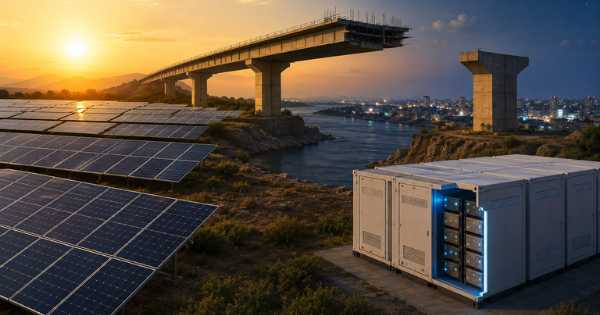
Building a solar fleet without massive battery storage is exactly like building a bridge that stops halfway across a river. It looks impressive from the shore, but it doesn’t actually get anyone to the other side. To reach a future where green energy is the backbone of the Indian economy, we must move past the obsession with just adding more panels. We have to start valuing the ability to store energy as much as the ability to create it. Only then can we turn those record breaking afternoon numbers into a reliable reality that lasts all through the night. The sun provides us with more than enough wealth; we just need to build the vaults to hold it.