
By Dipak Kurmi
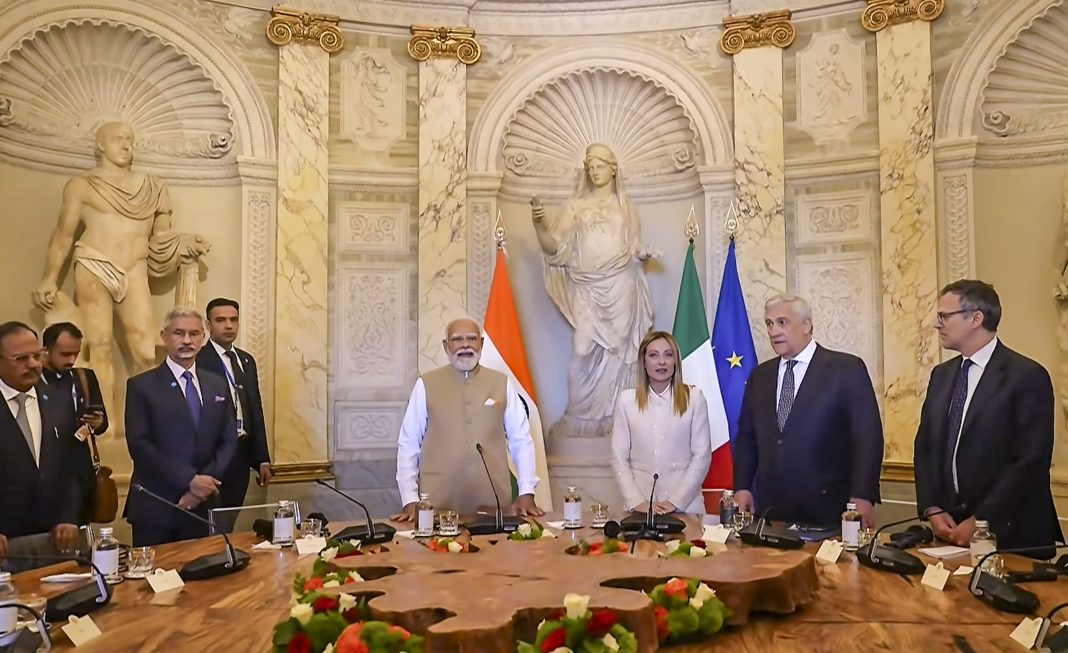
The recent India-Nordic Summit signals a profound paradigm shift in international relations, moving decisively beyond traditional diplomatic pleasantries to establish a structured template for deep strategic alignment. Historically characterized by cordial but economically understated ties, the contemporary engagement between India and the Nordic bloc—comprising Denmark, Sweden, Finland, Iceland, and Norway—is being systematically re-engineered around the critical axis of institutional capital. While the broader Nordic region offers unprecedented technological sophistication, pioneering sustainability frameworks, advanced maritime shipping solutions, and cutting-edge clean energy infrastructure, Norway stands uniquely apart within this geoeconomic constellation. It acts as the ultimate steward of the world’s largest pool of patient sovereign capital, a resource that arrives at a historical juncture where India stands out as one of the exceedingly few global economies possessing both the structural stability and the sheer physical scale required to absorb long-duration capital efficiently. Consequently, the bilateral summit in Oslo, marking the first visit by an Indian Prime Minister to the Norwegian capital in forty-three years, transcends routine bilateralism, representing an institutional arena where long-term asset accumulation directly meets unprecedented developmental scale.
At the absolute core of this economic equation lies Norway’s Government Pension Fund Global, an institutional behemoth managing an astonishing two point one trillion dollars in sovereign assets. To contextualize this scale within the global financial architecture, this single fund controls a portfolio worth more than half of India’s entire gross domestic product, yet it belongs collectively to a domestic population of just five point five million citizens, a demographic footprint smaller than that of the Indian city of Surat. This striking juxtaposition highlights a profound divergence in inheritance and economic history, yielding an implied sovereign wealth reservation of approximately three hundred and eighty-two thousand dollars per Norwegian citizen against an average annual income of one hundred thousand dollars. This remarkable accumulation represents one of the greatest acts of intergenerational discipline and civilizational foresight in modern financial history, serving as Norway’s enduring systemic antidote to the legendary greed of Fafnir by ensuring that finite resource windfalls are preserved for posterity rather than consumed in the present. Currently, India accounts for merely one point five per cent of this massive global portfolio, an allocation that appears remarkably modest for the world’s fifth-largest economy and underscores a significant structural gap that the current diplomatic momentum seeks to urgently rectify.
The historical trajectories of these two nations provide a compelling study in macroeconomic contrasts, framing a natural complementarity born out of divergent financial experiences. In the pivotal year of nineteen ninety, India found itself in the throes of a severe balance of payments crisis, forced to pledge its gold reserves to foreign central banks to avert an ignominious sovereign default. Concurrently, across the globe, Norway was making its first quiet institutional deposit into the nascent vehicle that would eventually mature into the modern Government Pension Fund Global, illustrating an evocative contrast between immediate macroeconomic compulsion and long-term fiscal discipline. Furthermore, their relationship with global energy markets highlights a fundamental structural asymmetry, as the Norwegian Krone consistently appreciates with every upward movement in Brent crude prices, while the Indian Rupee conversely faces downward pressure with every inflationary spike in energy commodities. This intrinsic tension between oil wealth and oil dependence establishes an ideal macroeconomic synergy, wherein Norway’s surplus hydrocarbon capital can systematically fund India’s capital-intensive transition toward a sustainable, decarbonized post-oil economy, thereby mitigating risks for both sovereign entities.
Amidst the widespread volatility that characterized global capital markets between twenty twenty-four and twenty twenty-five, during which a significant majority of foreign portfolio investors systematically reduced their exposure to emerging markets, the Government Pension Fund Global uniquely and counter-cyclically increased its allocations to the Indian domestic market. The fund currently maintains an aggregate investment of thirty-four point six billion dollars distributed across five hundred and seventy-five Indian corporate entities, illustrating its institutional identity as a patient, sovereign, and profoundly counter-cyclical investor. Deploying sovereign capital of this unprecedented magnitude necessitates a domestic investment environment defined by absolute clarity, long-term regulatory credibility, and multi-decade project visibility. India’s comprehensive National Infrastructure Pipeline, which spans critical sectors such as regulated toll roads, green hydrogen generation, utility-scale offshore wind farms, and advanced port logistics, represents an asset class precisely designed to match the risk-return profiles of such long-duration global investors. This foundational architecture is further strengthened by the National Monetization Pipeline two point zero, which introduces one hundred and seventy-four billion dollars in operational, yield-generating brownfield assets, complemented by resurgent state-owned enterprises across the energy, defense, and logistics sectors that offer deep institutional liquidity.
As global sovereign wealth funds become increasingly selective in an environment of rising geopolitical fragmentation and shifting demographic trends, very few contemporary economies can successfully combine macroeconomic scale, sustained capital absorption capacity, favorable demographic dividends, and institutional depth in the manner that India now demonstrates. Therefore, the strategic objective of the bilateral summit must transcend the standard, non-binding memorandums of understanding that frequently typify international diplomacy, aiming instead to forge a highly sophisticated, bespoke sovereign investment corridor. This specialized financial pipeline must be strictly ring-fenced for participation by the Government Pension Fund Global, incorporating robust, mutually agreed-upon frameworks governing long-term taxation, predictable currency risk-sharing mechanisms, and explicit alignment with the stringent ethical mandates overseen by Norway’s Council on Ethics. Decades ago, Norway made the strategic decision to cast off its traditional economic anchor of direct oil dependence, relying on institutional discipline to navigate volatile global capital markets, and today India is similarly casting off its legacy developmental anchors with all sails wide and meticulously trimmed. Within this grand macroeconomic voyage, India’s secular growth narrative serves as the primary atmospheric wind, while Norway’s patient sovereign capital provides the indispensable institutional tailwind required to sustain momentum.
Ultimately, the deepening relationship between New Delhi and Oslo reflects a recognition that the two nations are interconnected at a level that extends far deeper than mere capital flows or trade balances, as modern climate science increasingly demonstrates that the environmental dynamics of the fragile Arctic ecosystem and the structural patterns of the Indian monsoon are deeply co-dependent. The conceptual Bifrost, the mythical bridge connecting distinct realms, already exists in the form of shared democratic values, mutual respect for international law, and complementary economic requirements, placing the onus on contemporary leadership to substantially widen this corridor. This institutional bridge must be engineered to be wide enough to accommodate massive, multi-billion-dollar capital flows and durable enough to withstand the cyclical volatility inherent in multi-decade investment horizons. The fundamental question confronting both states has progressed beyond the mere maintenance of cordial bilateral ties, focusing instead on the deliberate, strategic alignment of sovereign capital at a civilizational scale that will inevitably redefine the broader contours of the Indo-Pacific and Nordic geopolitical landscapes for generations to come.
(the writer can be reached at dipakkurmiglpltd@gmail.com)