
NFHS-6 shows steepest drop in fertility rates among the states
Shillong, June 1: Key health indicators of Meghalaya have shown significant improvements in the sixth National Family Health Survey (NFHS) 2023-24, including steepest reduction in fertility rates in the country and one of the fastest gains in child immunisation records.
The NFHS 2023-24 also recorded major gains in teenage pregnancy, spousal violence, and institutional births in the state.
According to the survey, Meghalaya’s total fertility rate (TFR) fell from 2.9 children per woman in 2019-21 to 2.2 in 2023-24, a 24.1% reduction, steepest in any state in the country.
Teenage pregnancy declined by more than a third, from 7.2 to 4.6 births per thousand adolescent girls, while the child marriage rate reduced by 18.3%.
Maternal and newborn care also improved significantly. Institutional births rose from 58.1% to 65.6%, with deliveries in public facilities climbing from 49.1% to 55.7%. Deliveries attended by a skilled health worker reached 70.9%.
Meghalaya ranks among the top two or three states for improvement in both institutional delivery and skilled attendance. Full immunisation of young children jumped from 64% to 75.3%, one of India’s fastest gains.
The proportion of expectant mothers taking iron-folic-acid supplements for 100 days rose by nearly half.
Spousal violence against ever-married women fell from 15% to 5.9%, a 60% reduction in eight years.
“These are not abstract demographic curves; they are thousands of girls whose futures widened,” the NFHS-6 analysis noted.
Officials attribute the gains to a whole-of-government approach. The Meghalaya Health Systems Strengthening Project rebuilt public health infrastructure and data systems. The MOTHER programme tracked at-risk pregnancies in real time through a mobile app. The Rescue Mission brought Health, Social Welfare, and Rural Development departments together to address social causes of poor maternal outcomes.
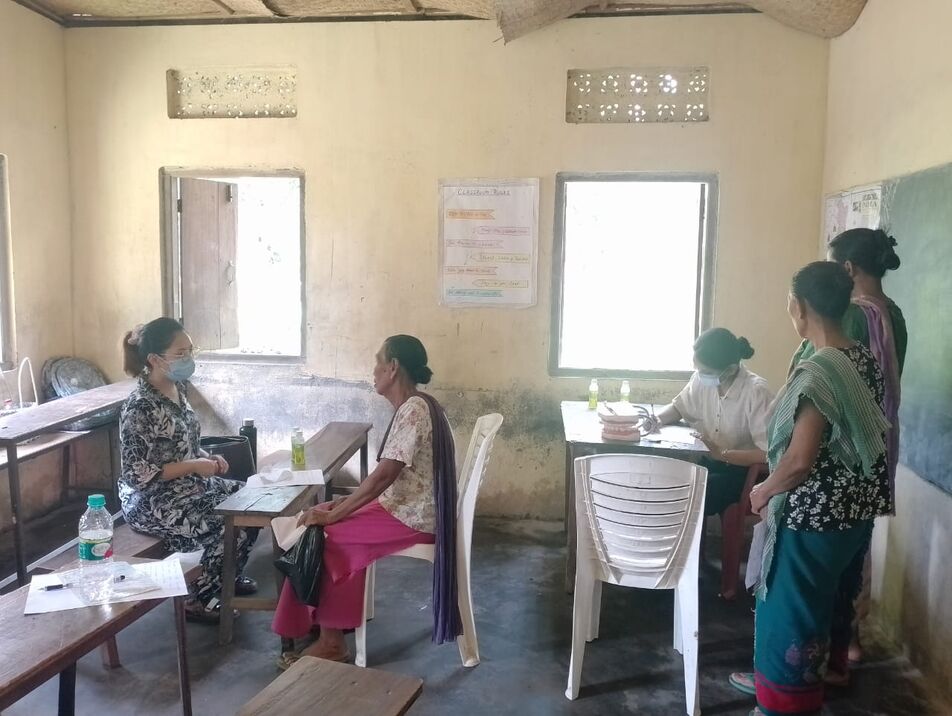
Community innovations also played a role. SHG-run transit homes near health facilities allowed pregnant women from remote villages to stay before delivery, enabling safe institutional births. The same SHG networks promoted nutrition awareness and agri-nutrition gardens, credited with reducing severe acute malnutrition cases.
On financing, the Megha Health Insurance Scheme (MHIS) now offers cashless cover of up to Rs 5.3 lakh per family, integrated with Ayushman Bharat–PM-JAY. The CM Care+ scheme covers catastrophic, high-cost treatments.
“When a family knows that a complicated delivery or a sick newborn will not bankrupt them, the decision to seek institutional care becomes far easier,” officials said.
However, challenges remain. Child stunting stands at 36.8% despite a 20.9% improvement since 2019-21.
Unmet need for family planning, a dip in children receiving an adequate diet, and high tobacco use among men are still concerns.
“The honest reading of NFHS-6 is that Meghalaya is one of India’s fastest-improving states even though its absolute levels still sit in the lower band nationally,” the analysis said.
“It is a story of rapid catch-up, not yet of arrival.” The state has now launched Mission 1000 Days, targeting the period from conception to a child’s second birthday with nutritional support, mother-and-child kits, and community interventions.
Its “003” agenda aims for zero maternal deaths, zero unimmunised children, and healthy growth for every child in the first 1,000 days.
“What ties these efforts together is a philosophy that lasting development comes from long-term human-development systems rather than isolated welfare announcements,” officials said.
NFHS-6 shows Meghalaya “can post some of the country’s fastest improvements in the indicators that decide whether mothers survive childbirth and whether children grow up healthy.”