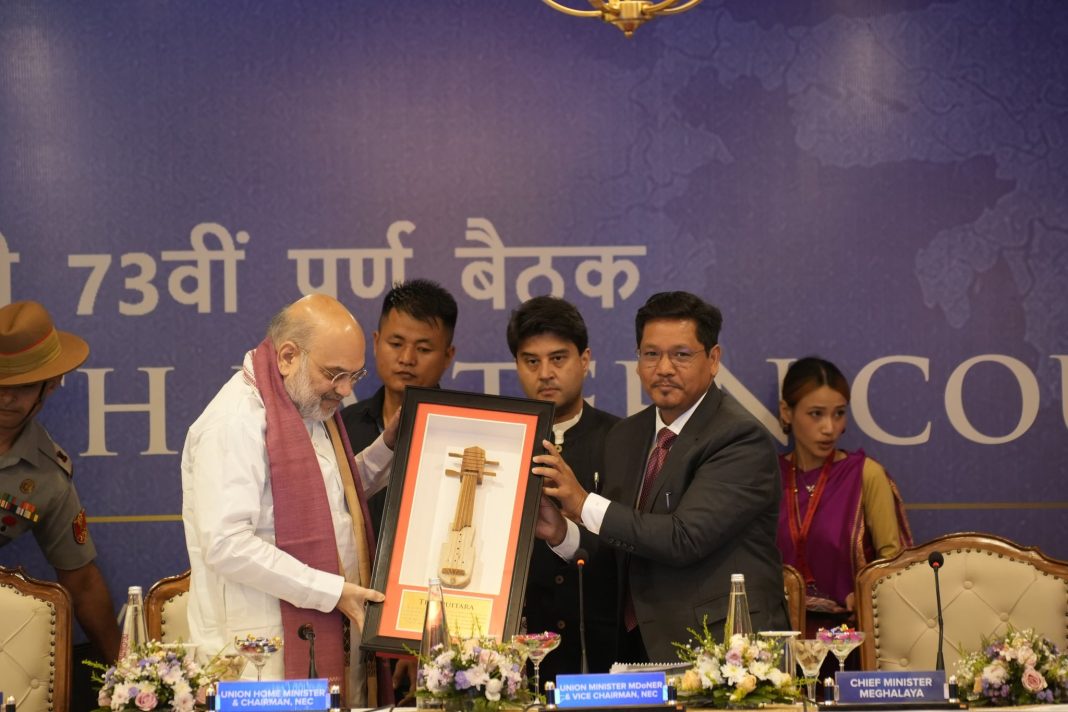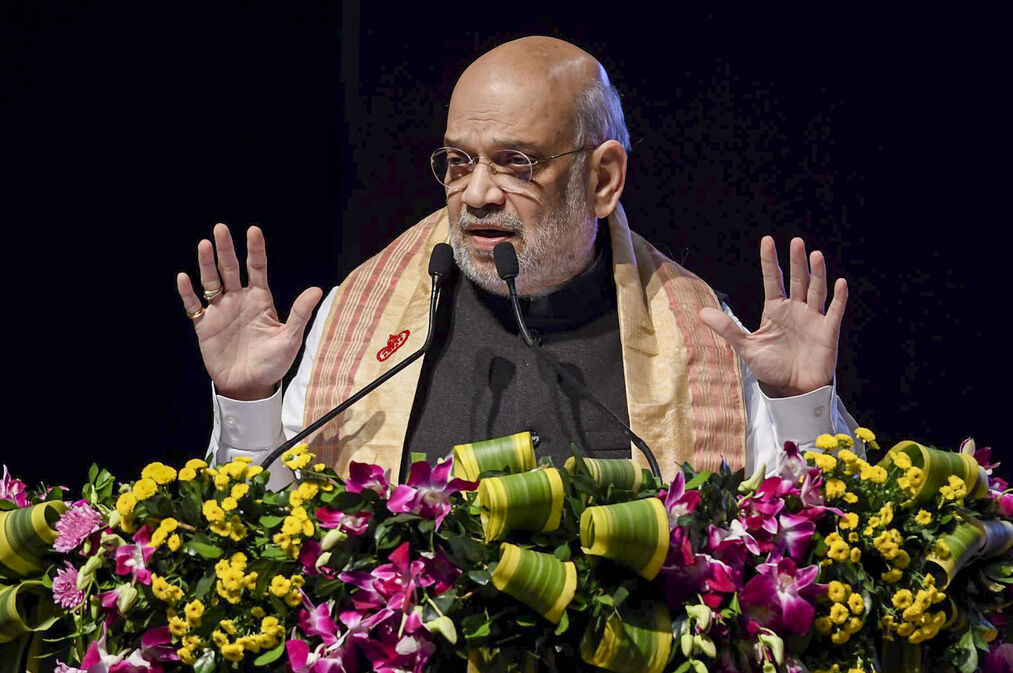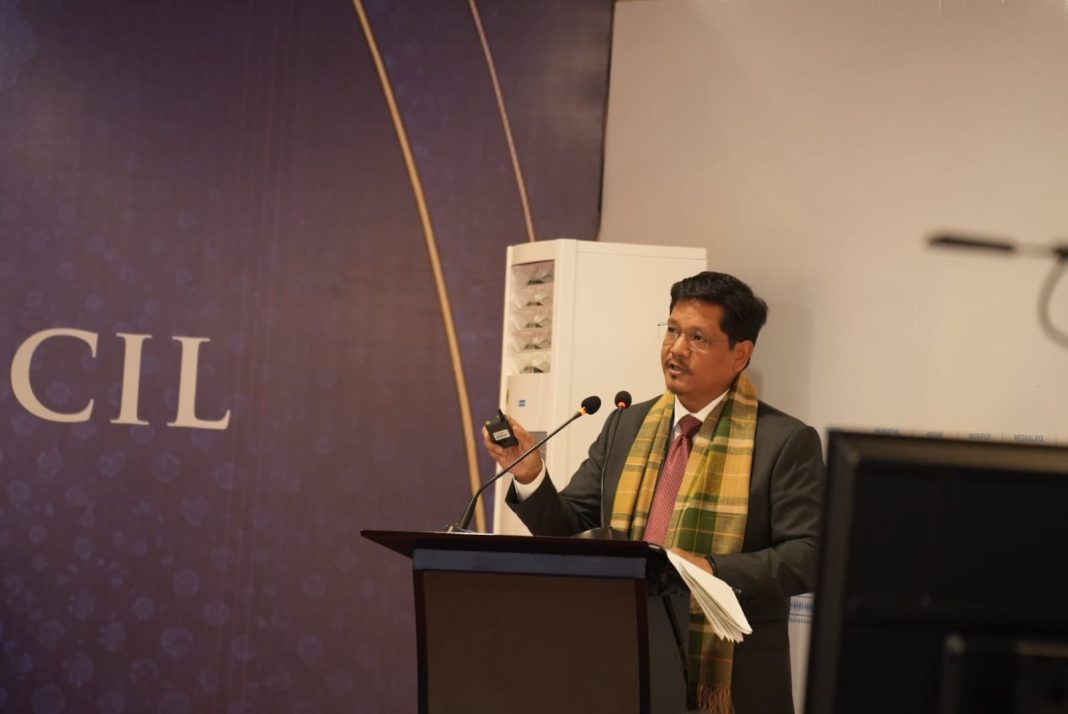

Shillong, June 4: The state government has pressed for increase of strength of the three Autonomous District Councils (ADCs) with Chief Minister Conrad K Sangma submitting a memorandum to visiting Union Home Minister Amit Shah on Thursday.
In the memorandum, Sangma urged the Home Minister to ensure that Meghalaya’s recommendations are incorporated in the Constitution (125th Amendment) Bill, 2019, which proposes to increase the strength of the three ADCs.
Sangma said the state government had “comprehensively examined” the Bill and finalised its position after “extensive consultations with various stakeholders” and several meetings with the ADCs.
“The Government of Meghalaya urges upon the Government of India to incorporate its views in The Constitution (One Hundred and Twenty-Fifth Amendment) Bill, 2019,” Sangma said.
While backing an expansion of the councils, Sangma differed with the Centre’s proposed numbers for two of the three ADCs.
For the Garo Hills Autonomous District Council (GHADC), the Bill seeks to raise the strength from 30 to 42 members — 36 elected and 6 nominated.
“The view of the Government of Meghalaya is that the GHADC shall consist of not more than 40 members, of whom 36 shall be elected on the basis of adult suffrage. The Governor will nominate four members of whom at least two shall be women,” the memorandum stated.
For the Khasi Hills Autonomous Territorial Council (KHADC), the state agreed with the Bill’s proposal of 40 members — 36 elected and 4 nominated — with at least two women among the nominees. For the Jaintia Hills Autonomous Territorial Council (JHADC), Sangma proposed a smaller increase than envisaged in the Bill. The Centre has proposed 34 members — 30 elected and 4 nominated.
“The view of the Government of Meghalaya is that for the JHADC the number of seats should be increased to 32 out of which 2 may be nominated of whom at least one will be a woman,” Sangma said.
“This view for 32 members for JHADC compared to 40 each for KHADC and GHADC, is on the basis of the relative population and size of the JHADC which is smaller than the KHADC and GHADC.”
Sangma also opposed the Bill’s provision for nominating members from “unrepresented tribes” to the ADCs, arguing that Meghalaya’s tribal diversity makes such a quota unworkable.
“There are 17 major tribes in the State of Meghalaya with some of the tribes like the Kuki tribe also having as many as 37 sub-tribes,” he said.
“With the proposed increase in the number of seats… the ratio of seats to the number of tribes/sub-tribes works against the equitable distribution of nominated seats among these tribes, which will result in inequality of opportunity among them and endanger the fraternity that they share.”
Instead, the state proposed that nominated members be selected from categories including reputed academicians, sportspersons, women administrators, and eminent entrepreneurs or professionals.