
By Dipak Kurmi
The escalation of global temperatures to unprecedented highs alongside unabated industrial emissions underscores a critical inflection point for the planet, rendering World Environment Day 2026 an indispensable catalyst for collective ecological action. Celebrated annually on the fifth of June, this international observance serves as a vital platform to address three interlocking planetary crises: accelerating climate change, catastrophic biodiversity loss, and systemic pollution. Rather than relying on superficial, short-term remedies that merely mask ecological degradation, the international community is increasingly recognizing the need for a comprehensive, structural overhaul of production and consumption models. This transition is anchored heavily in the philosophy of circularity, which seeks to decouple economic progress from the depletion of finite natural resources. By providing a democratic and participatory space, this global event effectively bridges the gap between high-level national climate policies and grassroots implementation. While the historic damage inflicted upon global ecosystems remains monumental, the latent potential for scaling up localized, community-driven interventions offers a viable pathway toward long-term environmental resilience and systemic economic transformation.
At the core of this year’s strategic conservation framework is the officially designated theme, Inspired by Nature. For Climate. For Our Future. This directive operates on the fundamental premise that human survival and climate resilience are intrinsically linked to nature-based solutions capable of mitigating atmospheric carbon accumulation. The theme challenges traditional industrial paradigms by demanding a shift toward closed-loop systems, effectively reimagining waste as a valuable secondary raw material rather than an eventual environmental liability. This global trend manifests across multiple operational scales, beginning with international cooperation through the alignment of regional compliance legislation to systematically lower emissions. On a corporate level, it translates into binding pledges to integrate sustainable materials, particularly traceable post-consumer recycled resins, into mainstream product manufacturing and packaging portfolios. Simultaneously, community initiatives are being deployed to establish municipal sorting networks that capture clean, unpolluted material streams directly at the source, ensuring that local actions directly feed into broader macroeconomic climate objectives.
The historical significance of the 2026 observance is further elevated by its capacity to drive concrete legislative mandates and enforce accountability across highly pollutive industrial sectors. Governments worldwide are utilizing this momentum to implement stringent Extended Producer Responsibility frameworks alongside ambitious plastic neutrality targets. This legislative push is complemented by unified transnational leadership, as environmental ministries leverage the global platform to coordinate strategies against marine degradation and cross-border chemical pollution. Crucially, these policy shifts are channeling significant capital investments from venture architecture and green bond funding into advanced waste processing infrastructure and circular technology platforms. By translating abstract, data-heavy scientific consensus into tangible regulatory and economic demands, the event alters how public and private institutions evaluate their long-term environmental liabilities, making carbon accounting and resource stewardship central to corporate survival.
For the 2026 cycle, the Republic of Azerbaijan serves as the official host country, positioning its historic capital city of Baku at the absolute center of international climate diplomacy. Working in close coordination with the United Nations Environment Programme, Azerbaijan is utilizing this global stage to showcase its own national environmental ambitions and structural transition strategies. The host nation has committed to an aggressive roadmap that includes integrating twenty percent renewable energy into its primary grid by 2030, designating expansive new forest conservation zones, and investing heavily in high-technology, waste-free industrial processing plants. This partnership highlights how transitional economies, historically reliant on conventional energy sectors, can pivot toward sustainable infrastructure, thereby setting a precedent for other nations navigating the complex socio-economic realities of decarbonization.
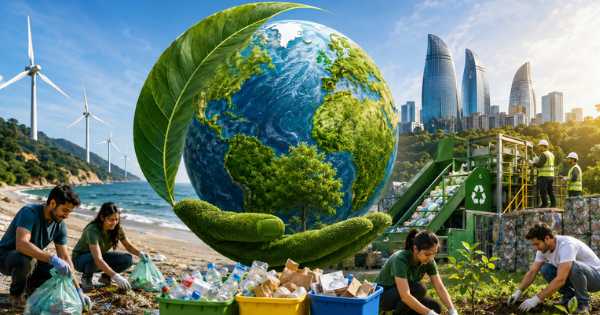
To catalyze public involvement and transform passive observers into active stakeholders, a diverse array of global and regional activities has been organized across multiple societal sectors. Industrial compliance audits are being executed by major corporations to map out their total plastic footprints, with a specific focus on identifying and eliminating multi-layered, non-recyclable materials from their global supply chains. Complementing these industrial audits are massive urban reforestation drives designed to mitigate the intense effects of urban heat islands, restore localized biodiversity, and reduce ambient temperatures in densely populated areas. On the coastlines and major waterways, community clean-up mobilizations are actively preventing plastic leakage into fragile marine pathways, while educational institutions and engineering universities are hosting specialized codeathons dedicated to refining mechanical waste sorting algorithms through artificial intelligence.
The operational philosophy of this movement is reinforced by targeted awareness messages and slogans designed to transcend cultural and linguistic barriers. The primary slogan, Inspired by Nature. For Climate. For Our Future., functions alongside the digital rallying cry of the ForClimateNow campaign to emphasize that nature-based preservation is a non-negotiable prerequisite for future human advancement. Supplementary messaging underscores the deep environmental chemistry and urgency of the crisis, reminding populations that every piece of discarded plastic represents a disruption of ecological balance and a failure of the linear extraction system. These communication strategies aim to reframe public perception, moving society away from a culture of disposable convenience and toward a collective acknowledgment that finite planetary systems cannot be replaced once they cross critical ecological tipping points.
Achieving these overarching environmental goals requires a profound public understanding of how systematic recycling and waste segregation directly protect volatile ecosystems. Utilizing the June fifth date as a yearly baseline for infrastructure evaluation allows societies to measure the tangible reduction of carbon emissions achieved by substituting virgin petrochemical production with recycled alternatives. When post-consumer plastic waste is systematically diverted from landfills and oceans, it directly decreases the energy-intensive extraction and refining processes traditionally required by the plastics industry. This systematic stabilization of material loops forms the bedrock of true circularity, ensuring that existing synthetic compounds remain active within the manufacturing chain rather than degrading into microplastics that threaten global food security and public health.
This industrial transition toward high-tech circularity is highly visible in regional market interventions, such as those led by Banyan Nation within the Indian plastic recycling ecosystem. While global campaigns frequently operate on abstract environmental idealism, industrial entities are deploying scalable technology to make the circular economy a predictable reality. Through the application of proprietary hot-washing sequences and advanced decontamination technologies, post-consumer plastic waste is successfully recovered and re-engineered into premium-quality, near-virgin pellets known as Better Plastic. To ensure regulatory compliance and brand accountability, these operations utilize vertically integrated data-tracking systems that provide complete transparency across the entire supply chain. This technological rigor allows major fast-moving consumer goods brands to seamlessly fulfill the strict Extended Producer Responsibility guidelines set by authorities like the Central Pollution Control Board, effectively transforming environmental values into standardized industrial practice.
Ultimately, the overarching importance of World Environment Day 2026 lies in its urgent reminder that humanity must fundamentally restructure its relationship with the natural world. The historical economic model of pure extraction must rapidly give way to an intentional ecosystem of restoration, a feat that can only be accomplished through the widespread adoption of advanced mechanical recycling networks and nature-aligned industrial design. The collective policy choices, capital allocations, and grassroots actions taken throughout this year will inevitably dictate the baseline health of the global biosphere for the coming decades. By actively choosing to transition toward a model where waste is structurally eliminated, global society possesses the unique opportunity to build a resilient, circular economy capable of sustaining both human progress and ecological equilibrium.
(the writer can be reached at dipakkurmiglpltd@gmail.com)