
By Prarthana Hazarika
The International Cricket Council’s (ICC) decision to introduce a structured post-pregnancy Return-to-Play Policy for women cricketers has been hailed as a landmark moment for the sport, with former players saying it could transform the way female athletes balance motherhood and professional careers.
For decades, pregnancy often marked an uncertain phase in the careers of women athletes. Many faced difficult choices between starting a family and continuing their sporting ambitions. The ICC’s newly unveiled framework seeks to address that challenge by providing member boards with guidelines covering physical recovery, mental well-being and professional reintegration following childbirth.
Former Indian cricketer Gargi Banerjee believes the initiative is a progressive step that will benefit current and future generations of players.
“I totally believe it is a good decision taken by the ICC for all women cricketers on post-pregnancy return policy. At one stage these young women cricketers will surely be benefited too,” Banerjee told Meghalaya Express.
Her remarks highlight a growing recognition within women’s sport that athletes should not have to choose between motherhood and elite competition.
Former Sri Lankan international Sripali Weerakkody echoed similar sentiments, emphasizing that experienced players still have much to offer after becoming mothers.
“Yes, they should balance both. Experienced and active players can come and play again,” Weerakkody said.
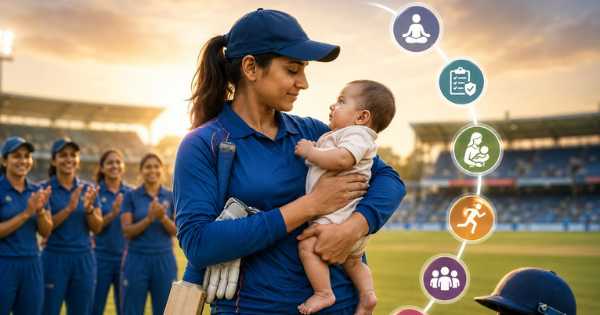
The ICC’s framework is built around a “6 Rs” model — Ready, Review, Restore, Recondition, Return and Refine — designed to ensure a gradual and safe transition back to competitive cricket. The policy focuses not only on physical rehabilitation but also on psychological support and long-term athlete welfare.
The move follows a broader shift in women’s sport globally. High-profile cricketers and athletes across disciplines have increasingly spoken about the need for maternity support, flexible contracts and childcare provisions. Several players have successfully returned to international cricket after childbirth, proving that motherhood need not signal the end of a sporting career.
Experts believe the ICC policy could encourage more women to remain in the game for longer periods, helping teams retain experienced talent while creating a more inclusive sporting environment.
As women’s cricket continues its rapid growth worldwide, the new guidelines represent more than just a welfare measure. They send a message that female athletes can pursue both motherhood and sporting excellence without compromising either.
For many current and aspiring cricketers, that could be one of the most significant victories off the field.