
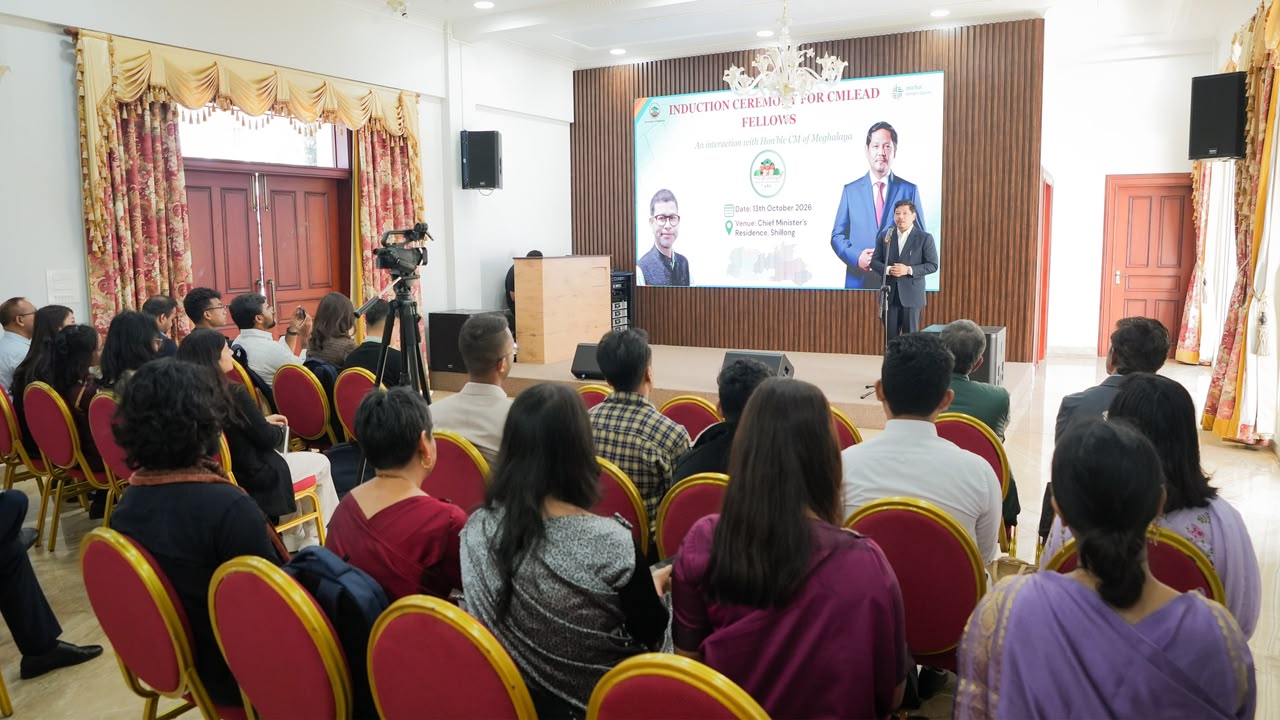
SHILLONG, October 13: Meghalaya’s inaugural Chief Minister’s Leadership in Education and Development (CMLEAD) Fellowship cohort will work across all 12 districts to support education reforms, with Chief Minister Conrad K. Sangma calling for clear targets, accountability and regular school visits.
Addressing the fellows at an induction ceremony at his residence in Shillong on Tuesday, Sangma urged the Education Department to assign specific tasks and establish a reporting system with defined indicators. He suggested that each fellow visit at least one school a week and submit candid assessments of conditions and learning outcomes.
The state-led initiative places skilled young professionals within Meghalaya’s education system. Fellows will work with Samagra Shiksha, the Directorate of Educational Research and Training (DERT) and district education offices to help design, coordinate and implement priority initiatives aimed at improving student learning.
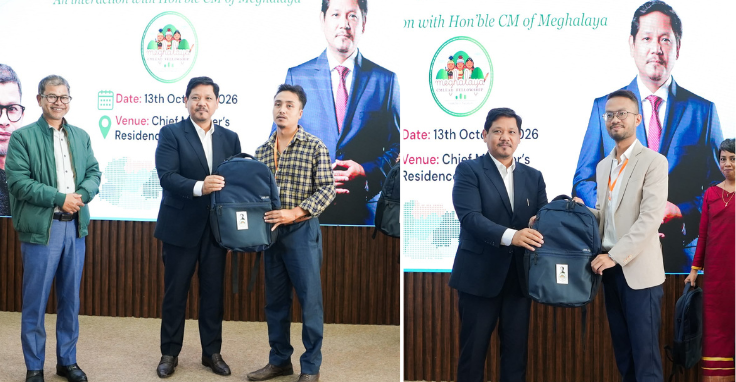
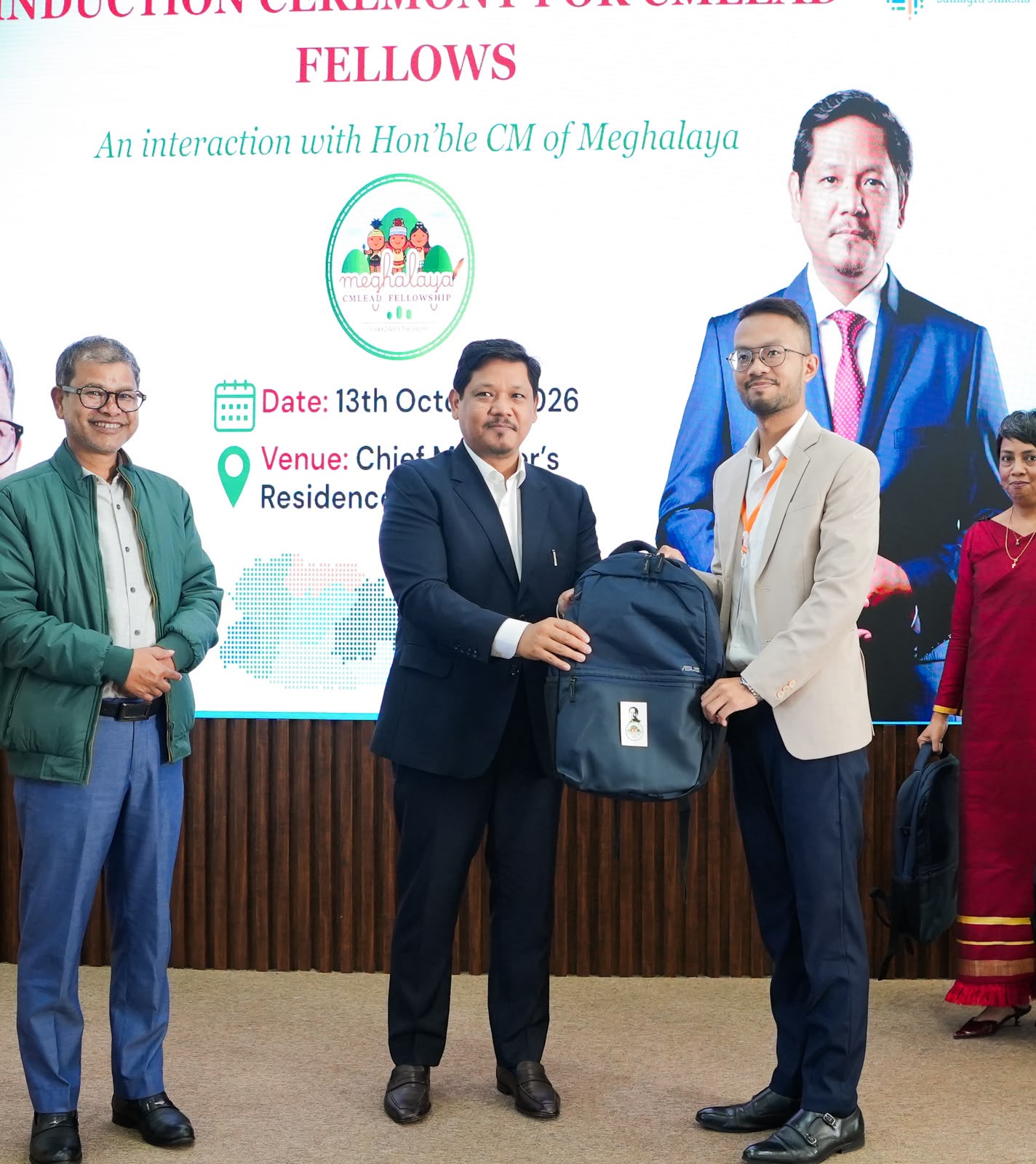
Sangma and Education Minister Lahkmen Rymbui handed over laptops to the fellows during the ceremony, according to an official press release.
Stressing that infrastructure alone does not ensure better education, Sangma said: “Making a new building is not making education necessarily better. It is providing the infrastructure. But education becomes better when that building helps a child to get education and the quality of education goes up,”
He said officials and politicians, often absorbed in their daily responsibilities, could miss developments on the ground. Fellows could help bridge that gap by providing firsthand observations from schools and communities.
Their assessments, he suggested, could cover school buildings, toilets, including separate facilities for girls, furniture and the quality of learning, informed by conversations with students. He left the final selection of indicators to the Education Department, emphasizing that fellows should not be left “moving around with a laptop.”
Sangma said governance required community and societal participation to assess whether government initiatives were achieving their intended goals. He described the fellowship as an opportunity for young people to gain exposure to public service, likening it to an internship with the government.
Beyond their assigned duties, he encouraged fellows to involve village headmen, church pastors, students and NGOs in supporting schools. Such participation could include regular visits, volunteering time, teaching English or adopting a school that needs support.
The chief minister also invited suggestions that could inform reforms and policy changes, urging fellows to embrace the challenges of working in remote locations and difficult conditions.
“Don’t look at the problems as a challenge, look at it as an opportunity for you to be able to do something to change it,” he said.