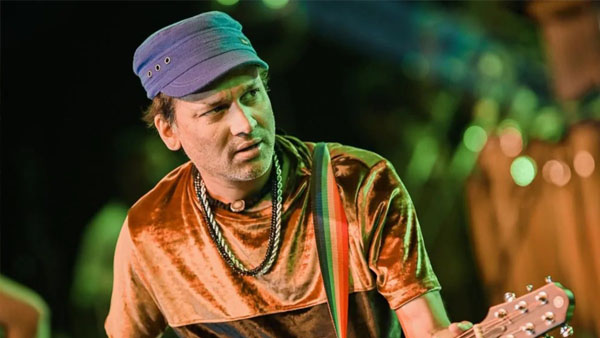

By Satyabrat Borah
In the quiet corners of Assam, where tea gardens stretch endlessly under misty skies and rivers carve their ancient paths, there lived a voice that belonged to everyone. Zubeen Garg was more than a singer; he was the heartbeat of a people, a man whose melodies wove through weddings and funerals, protests and celebrations, lonely nights and joyful dawns. His songs carried the ache of unrequited love, the fire of rebellion, and the deep, abiding love for the land that shaped him. For millions, he was not just an artist but a companion, a symbol of resilience in a region often overlooked by the rest of the world.
On September 19, 2025, that voice fell silent in a way no one could have imagined. Zubeen was in Singapore, invited as a cultural ambassador for the North East India Festival, a platform meant to showcase the richness of his homeland on an international stage. He had arrived with his team, excited for the performance scheduled the next day. That morning, he joined friends for a leisurely swim off the coast near St. John’s Island. What began as a moment of relaxation turned tragic. Witnesses later described how he removed his life jacket after an initial dip, feeling confident in the calm waters. He swam out again, but soon suffered a sudden seizure. Those nearby rushed to help, pulling him from the sea and administering CPR, but by the time he reached Singapore General Hospital, it was too late. He was pronounced dead in the intensive care unit that afternoon. The official cause, as stated in the death certificate from Singapore authorities, was drowning.
The news spread like wildfire across Assam and beyond. Schools closed, markets shut down, and streets filled with stunned silence. Fans gathered in thousands, some weeping openly, others playing his songs on loop as if the music could somehow bring him back. Prime Minister Narendra Modi issued a condolence message, praising his contributions that touched lives across all walks of society. Even in a state often divided by religious and linguistic tensions, Zubeen’s passing momentarily united people. A Muslim truck driver who found solace in his songs during long hauls mourned alongside Hindu devotees who saw him as a modern-day bard. His funeral in Guwahati drew massive crowds, and he was cremated with full state honors, including a gun salute, reflecting the profound respect he commanded.
Yet, in the midst of this collective grief, something darker began to stir. Questions arose almost immediately. Why had he gone swimming without proper precautions? Who was with him, and could more have been done to save him? His wife, Garima Saikia Garg, spoke publicly about his health issues, mentioning that he carried medications for seizures and that those closest to him knew about his condition. She clarified early rumors, insisting it was not a scuba diving accident as some initial reports claimed, but a simple swim that went horribly wrong. Still, whispers of foul play started circulating. Social media amplified every rumor, every unverified detail, turning sorrow into suspicion.
The Assam government, led by Chief Minister Himanta Biswa Sarma, responded swiftly to the public’s anguish. A second post-mortem was conducted upon the body’s repatriation to address demands for transparency. Soon after, a Special Investigation Team was formed under the Criminal Investigation Department to probe the circumstances. What followed was a series of arrests that shocked the state. Zubeen’s manager, Siddhartha Sharma; the festival organizer, Shyamkanu Mahanta; band members Shekhar Jyoti Goswami and Amritprava Mahanta; and even his cousin, a senior police officer named Sandipan Garg, along with two personal security officers, found themselves in custody. Allegations emerged of negligence, conspiracy, and worse. One arrested band member claimed poisoning, though later medical reports ruled it out. The SIT’s massive chargesheet, running into thousands of pages, accused four of the individuals of murder, suggesting premeditation and financial motives.
Chief Minister Sarma did not mince words. In the state assembly, he declared it was no accident but a “plain and simple murder,” with one person directly responsible and others aiding. He vowed justice, promising the accused would face the full wrath of the law. The investigation involved hundreds of witnesses, forensic analysis of phones, and even trips to Singapore for coordination. Public anger fueled rallies demanding swift action, and artists pressured authorities to leave no stone unturned.
But across the sea in Singapore, a very different picture emerged. The Singapore Police Force conducted its own thorough inquiry under the Coroners Act. Time and again, they stated that no foul play was suspected based on evidence gathered so far. Witnesses were questioned, forensics examined, and a coroner’s inquiry was scheduled for early 2026 to formally establish the facts. Their findings pointed consistently to a tragic drowning, possibly triggered by a medical episode. They urged the public to avoid speculation, emphasizing patience while the process unfolded.
This stark contrast between the two investigations ignited a political firestorm back in Assam. Opposition leaders, including Congress MP Gaurav Gogoi, accused the government of using the case for character assassination, suggesting the murder charges were more about tarnishing Zubeen’s legacy than seeking truth. They pointed to the timing, with elections looming in 2026, and questioned why the SIT pursued murder when Singapore authorities found no evidence of crime. Student unions and civil society groups rallied against politicization, pleading for parties to let grief remain pure rather than turning it into a weapon. Some saw the heavy-handed probe as a response to public pressure, while others viewed it as an overreach that risked undermining trust in institutions.
Amid the accusations and counter-accusations, the human cost became painfully clear. Zubeen’s family endured not just the loss of a husband and father but the relentless scrutiny of private moments turned into a public spectacle. His wife returned the autopsy report at one point, demanding faster justice without the endless drama. Fans felt betrayed, torn between loyalty to their idol and confusion over conflicting narratives. Social media, that double-edged sword, amplified outrage but also spread misinformation, turning personal tragedy into viral content.
What does it say about us when grief becomes a battleground? Zubeen spent his life bridging divides with his music, singing in Assamese, Bengali, Hindi, and more, touching hearts regardless of background. He questioned power when needed, supported social causes quietly, and refused to bow to shallow trends. His popularity came from authenticity, from years of pouring his soul into every note. Now, in death, his name is invoked in ways he might have despised, dragged into political narratives and sensational headlines.
The emotional toll on ordinary people is immense. Parents who played his lullabies to children, young lovers who found expression in his romantic ballads, protesters who marched to his anthems of resistance—all felt a piece of themselves die with him. Rumors and allegations only deepened the wound, leaving many in a state of perpetual unrest. Digital platforms rewarded clicks over compassion, algorithms pushing the most inflammatory content to the forefront.
The media too bore responsibility. Responsible journalism demands verification, especially in matters of life and death. Yet, some outlets rushed unconfirmed details, fueling the frenzy. In an era where attention is currency, sensitivity often takes a backseat.
This story reveals a society’s struggle with loss in the digital age. We treat emotions as consumable, death as trending topics. When a cultural icon passes, the vacuum he leaves invites all manner of projections—hero worship, conspiracy theories, political opportunism. Assam has long revered its artists as guardians of collective memory. Zubeen stood in that proud lineage, his voice echoing the joys and struggles of the marginalized.
The contrast between what he represented and how his passing has been handled is heartbreaking. He earned adoration through dedication, not controversy. Those seeking relevance through his tragedy reveal their own voids.
Ultimately, justice must prevail, but it should be grounded in facts, not fueled by emotion or ambition. Singapore’s measured approach reminds us of the value of impartiality. Whatever the final verdicts—from the coroner’s inquiry or Indian courts—may they bring closure without further division.
Zubeen lives on in his music, in the memories of first dances and shared sorrows, in the spirit of a land that refuses to forget. His voice may have stilled, but its echoes demand we honor him better: with empathy over exploitation, truth over spectacle, unity over division. In pausing to reflect, to verify before sharing, to choose compassion over clicks, we affirm not just our love for him, but the humanity he celebrated in every song.
If we can rise to that, perhaps some healing can emerge from this profound loss. Otherwise, the true casualty will not be one man’s reputation, but the soul of a society that once found its voice in his.