
Roopak Goswami
Shillong, May 17: The age-old Khasi community rules still continue to play a major role in protecting forests, water sources and biodiversity in Meghalaya, even as mining, land pressure and commercial farming increasingly reshape the landscape, according to a study.
The study examines how Khasi communities manage natural resources through customary institutions and locally enforced rules that regulate forests, agriculture and water use.
Khasi is an indigenous Austro-Asiatic group from Meghalaya, whose presence in the northeastern region of India can be traced back approximately 4,000–5,000 years.
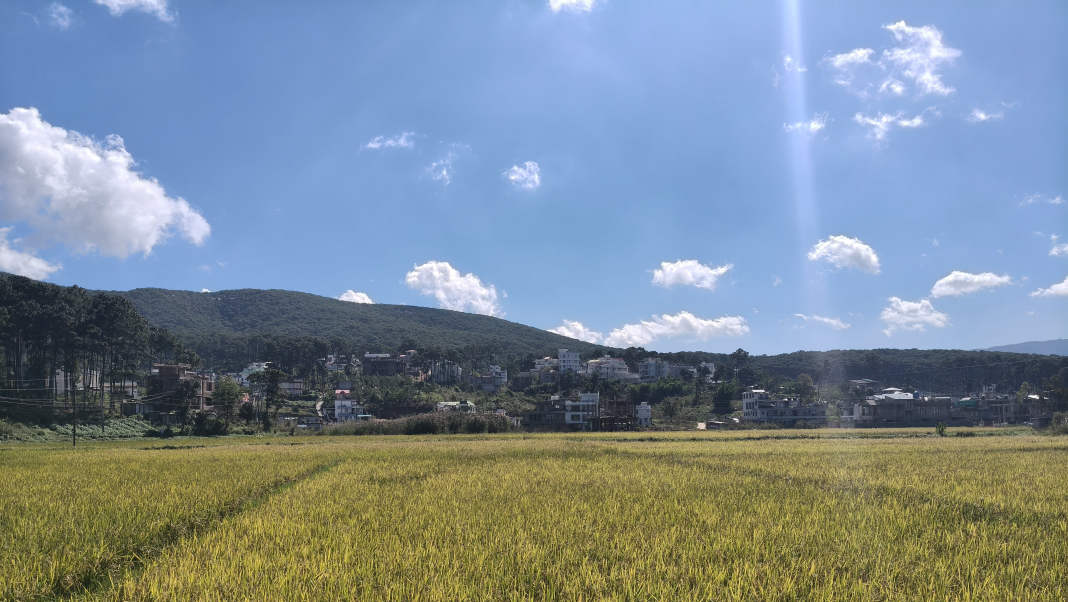
The research by Bhogtoram Mawroh of North East Society for Agroecology Support (NESFAS) focuses on five villages in East Khasi Hills — Ladmawphlang, Nongwah, Umsawwar, Nongtraw and Dewlieh — and documents how traditional governance systems continue to influence everyday environmental management.
Khasi communities maintain different categories of forests under customary law, including “Law Adong” or restricted forests, which are protected to conserve water sources and biodiversity.
Other forests are designated for controlled community use, including timber extraction and collection of non-timber forest produce.
The research paper published in the Journal of Environmental Studies and Sciences notes that several villages still enforce strict community rules against indiscriminate tree felling, hunting, pollution of streams and destructive fishing practices.
In some villages, washing vehicles near water sources and using chemicals to catch fish are prohibited, while others have even created community fish sanctuaries.
Researchers found that these traditional systems are closely linked to Khasi cultural beliefs and governance structures such as the Dorbar Shnong and Hima.
The study describes how forests are viewed not only as ecological resources but also as sacred and cultural spaces deeply connected to Khasi identity.
However, the paper also highlights growing ecological stress across parts of Meghalaya. Forest cover has declined in several villages due to rising population pressure, expansion of agriculture and increasing commercial activities.
Traditional jhum fallow cycles, which once lasted over 20 years in some areas, have reportedly shrunk to nearly 10 years.
The study further points to the expansion of broom cultivation, stone quarrying and mining as emerging pressures on traditional landscape management systems.
Water scarcity during the dry season has already become severe in some villages in East Khasi Hills.
One of the more striking observations in the study is that environmental degradation in Meghalaya is not entirely recent.
The paper links historical forest loss to ancient iron-smelting activities and the transportation of megaliths, practices that date back nearly 2,000 years.
This existed alongside community rules that protected resources such as land, water, and agriculture, ensuring that the state’s forest cover has remained above 70%, while new species of plants and animals continue to be discovered.
At the same time, the study argues that conservation policies imposed without recognising indigenous governance systems often fail to gain acceptance at the grassroots level.
It cites examples such as forest legislation and conservation initiatives that overlooked Khasi customary rights and traditional ecological knowledge.
The research emphasises that Meghalaya’s future conservation efforts, including emerging carbon credit and restoration programmes, may succeed only if they work alongside traditional Khasi governance systems rather than bypassing them.