
Roopak Goswami
Shillong, May 3: Are sacred Khasi symbols gradually being repurposed as tools of tourism branding? A new study has raised this compelling question as Meghalaya pushes its cultural festivals onto the global tourism map.
Research by Pascal Mario Kmenlang Pathaw of Indian Institute of Technology Guwahati and Dr Udaya Kumar Dharmalingam examines how Khasi identity is being visually represented through festival logos—revealing a complex interplay of tradition, adaptation, and modern design.

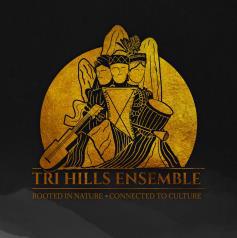
Focusing on major festivals such as the Monolith Festival, Na Thymmei Festival, and Tri Hills Ensemble, the study argues that these logos are far more than decorative elements. They function as layered cultural texts, embedding meanings tied to Khasi cosmology, kinship systems, and oral traditions.
The Monolith Festival, organised by the Khasi Hills Autonomous District Council, celebrates Khasi–Jaintia megalithic heritage and ancestral practices. First launched in 2013, the festival is held at the Khasi Heritage Village in Mawphlang, directly opposite the region’s sacred groves—sites deeply embedded in indigenous belief systems.
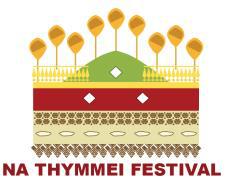
Similarly, the Na Thymmei Festival—literally meaning “From the Root” or “From the Origin”—was launched in 2022 by Seng Khasi Kmie with support from the state’s tourism department. Held in Shillong, the festival draws from cultural revival efforts rooted in a socio-cultural movement established in 1899 to safeguard Khasi traditions.
The Tri Hills Ensemble Festival, also initiated in 2022 by the Department of Arts and Culture, brings together the cultural expressions of Meghalaya’s three major tribes—the Khasi, Jaintia, and Garo. Hosted at venues such as the State Central Library and U Soso Tham Auditorium in Shillong, it blends indigenous performances with global collaborations, including Welsh harpists and Vietnamese folk artists.
According to the study, elements like monoliths, rice grains, sacred hills, and traditional motifs are not merely aesthetic choices. In the Na Thymmei festival logo, for instance, rice grains and the traditional knup (rainshield) symbolically represent origin narratives and social philosophy—compressing complex cultural knowledge into a single visual form.
The researchers note that such branding is increasingly becoming “a tool of cultural presence in public and tourist spaces,” helping enhance visibility while reconnecting younger generations with their heritage.
However, the study also flags a growing concern: when removed from their original cultural context, these symbols risk being simplified or reinterpreted—potentially diluting their deeper meanings.
Set against the backdrop of Shillong’s rise as a major tourist destination, the research situates Meghalaya within a broader global debate—how Indigenous cultures can engage with tourism without compromising authenticity.
Rather than framing it as a binary between preservation and commercialisation, the study calls for a more balanced approach—one where cultural symbols continue to evolve, but remain anchored in community meaning.