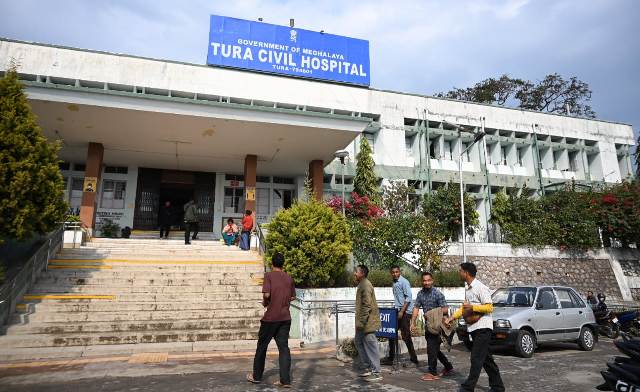

Tura, April 25: In a shocking case of alleged medical indifference, an 11-year-old girl with a suspected case of rabies was reportedly turned away from Tura Civil Hospital and another private institution on Friday night due to claims of no vacant beds. The child died on the return journey home.
The girl, Netera Sangma of Azigre village in Dadenggre Civil Sub-Division, had been bitten by a dog in the village a few months ago. The incident reportedly occurred sometime in January or February, but out of fear she did not disclose it, even asking her friends not to inform anyone. The family remained unaware until she suddenly fell ill last Tuesday night, said Nilstone A. Marak, Netera’s father, while speaking to The Meghalayan Express.
“She began vomiting throughout Tuesday night. On Wednesday morning, she was taken to a local dispensary run by Sisters. She told them she had been bitten by a spider, and they accordingly treated her and asked us to return if there was no improvement,” the father said.
As her condition deteriorated, she was taken on Friday to the government-run Dadenggre Community Health Centre, where doctors identified symptoms consistent with rabies. “When we asked her, she confessed that she had been bitten by a dog but had kept it from us,” the father said.
They were advised to go to Tura Civil Hospital and were told that the hospital had been informed. However, upon arrival, they were reportedly informed that no beds were available and were directed to Holy Cross Hospital instead. Questions are now being raised about how a government hospital turned away a critical patient and whether isolation facilities meant for infectious diseases were available or functional.
“It broke my heart when my daughter asked me, ‘Daddy, why are they not taking me in and giving me treatment?’ She was still conscious, lying on the floor of the ambulance when I returned to her. I pleaded with the doctors because she was already in a serious condition, but the reply was again that no beds were available,” the father said.
The family then rushed her to Holy Cross Hospital, where they were met with a similar response. “We were told there was no vacant bed and that such cases required special isolation facilities they did not have. They advised us to return to the civil hospital and try to speak with the doctors there,” he recalled.
“We were helpless and without support. By then, I could see my daughter slipping away. We turned back toward Dadenggre that same night, but she passed away before we could reach home. She was our only child and would have turned 12 in a few weeks,” he added.
Her father broke down while saying, “I know rabies is a disease that cannot be cured once symptoms appear, but all I wanted was for my daughter to receive care and go peacefully. She suffered immensely.”
Medical sources have expressed dismay over the manner in which the hospitals allegedly handled the case. While hospitals cited lack of beds and infection-control concerns, experts note that rabies transmission risk can be managed with proper precautions, as the virus spreads only through saliva or infectious material entering open wounds or mucous membranes.
They further point out that Personal Protective Equipment (PPE)—including masks or respirators, face shields or goggles, gloves, full-body protective gowns, and shoe and head covers—is designed for such high-risk situations and was widely used during the COVID-19 pandemic in hospitals across the region. “It is unacceptable to use the risk of infection as a reason to deny palliative care to a dying child.”