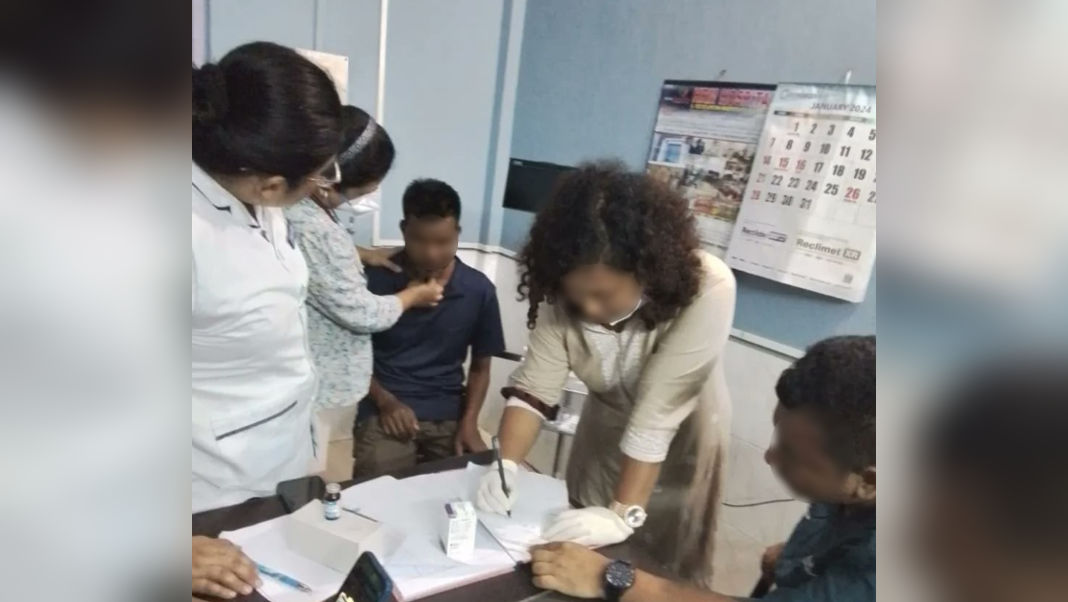

Many villagers fear screening because they worry a diagnosis would mean lifelong medication and repeated hospital visits
Roopak Goswami
Shillong, May 18: Fear, traditional beliefs, work pressures and poor healthcare access are preventing many people in Garo Hills from undergoing diabetes and blood pressure (BP) screening, according to a study.
Many people in West Garo Hills avoid screening not because services are absent, but due to fear of diagnosis, dependence on traditional healers, and misconceptions linking the diseases mainly to food habits.
Diabetes is commonly referred to as “chini” (sugar) and hypertension simply as “pressure,” with many villagers believing the illnesses are caused mainly by “chemical-filled” foods, broiler chicken, excess salt or sweets.
The researchers interviewed 52 participants, including healthcare workers, ASHAs, Village Health Council members and community residents across Tikrikilla, Selsella and Gambegre blocks in West Garo Hills district.
In one of the key findings, the researchers gathered that many villagers fear screening because they worry a diagnosis would mean lifelong medication and repeated hospital visits. Others reportedly avoid tests because they are scared of finger-prick blood tests.
They also found that Village Health and Nutrition Days (VHNDs) are still largely viewed as programmes meant only for pregnant women and children, leaving many adults unaware that blood pressure and blood sugar tests are also available there.
Researchers noted that agricultural work and daily wage labour often take priority over preventive healthcare, with many villagers unwilling to lose a day’s income to attend screenings.
The study by researchers from Indian Institute of Public Health Shillong, Johns Hopkins Bloomberg School of Public Health, and AIIMS New Delhi was published in BMC Health Services Research.
It was authored by Balaplielad Warlarpih, Melari Shisha Nongrum, Baldeep K. Dhaliwal, YounJung Na, Preet Verma, Tiameren Jamir, Krishna D Rao, Sandra Albert and Svea Closser.
Meanwhile, traditional healers continue to play a major role in healthcare decisions in Garo villages.
The study found that many people rely on herbal remedies and local healers known as “Oja” for ailments ranging from hypertension to seizures and malaria.
Some participants claimed local plants and fruits, such as pomelo, help control blood pressure.
Family influence, especially from elders, emerged as another major barrier. Researchers found that if older family members discouraged screening or preferred traditional treatment, younger members often followed their advice.
The report also highlighted serious systemic challenges. In some cases, a single health worker was managing immunisation, maternal care, diabetes and hypertension screening across nearly 30 villages spread over difficult terrain.
During monsoon months, some workers reportedly walk for over an hour through poor roads and flooded areas to conduct village health camps.
According to studies, Meghalaya’s diabetes prevalence stands at 15.6% and hypertension prevalence at 24.3%, while screening levels remain far below national averages.
The researchers suggested involving Nokmas, Dakuras, self-help groups and even traditional healers in awareness campaigns to improve screening participation.
They also recommended doorstep screening and integrating blood pressure and blood sugar testing at MGNREGS worksites to reach more people.
It also recommended the need for regular training and strengthening of frontline healthcare workers, many of whom are managing multiple responsibilities across large and difficult-to-reach rural areas.
The study concluded that Meghalaya’s growing burden of non-communicable diseases cannot be tackled through healthcare facilities alone and requires culturally rooted, community-led approaches that build trust and improve awareness.