
New Delhi, Jan 14 : Geoeconomic conflict has become the topmost risk facing the world in 2026, while it is cyber insecurity for India, a new study showed on Wednesday.
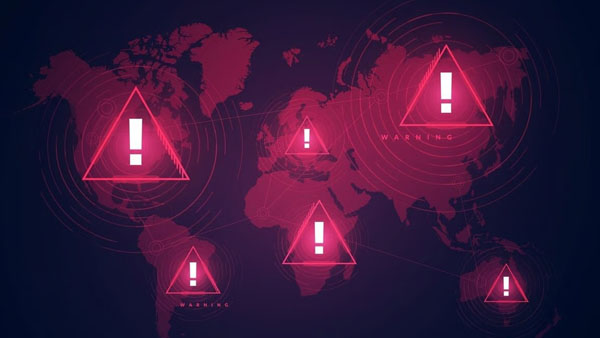
Releasing its annual Global Risks Report ahead of the Davos annual meeting, the World Economic Forum said that geoeconomic confrontation has climbed eight positions to become the top-most risk globally for a two-year period, followed by misinformation and disinformation, societal polarisation, extreme weather and interstate conflict.
On a longer-term 10-year horizon, extreme weather events remain the biggest risk, followed by biodiversity loss and ecosystem collapse, critical change to earth systems, misinformation and disinformation and adverse outcomes of AI technologies.
In the case of India, the study identified the top five risks as cyber insecurity, income inequality, insufficient public services and social protections, economic downturn and state-based armed conflict.
Highlighting critical infrastructure as a new front for warfare globally, the WEF said governments with upstream control over rivers and reservoirs could be tempted to divert water to their own populations at the expense of neighbouring countries, as water security concerns are likely to continue rising worldwide.
“Potential flashpoints over the next decade could include the Indus River Basin, between India and Pakistan, or Afghanistan’s construction of the Qosh Tepa Canal, which could diminish the flow of the Amu Darya River into Turkmenistan and Uzbekistan,” it said.
At the same time, the WEF cited India’s Unified Payments Interface as “a good example” for the governments to take measures to make their banking systems more attractive and, by extension, more resilient in the face of potential future global debt or broader financial crises.
On risks emanating from misinformation and disinformation, it said a particular problem area is the proliferation of deepfakes or digitally altered videos, images, and audio recordings.
It said deepfakes have started to proliferate and have a greater influence on politics and electoral processes, and their weaponisation can undermine trust in democratic institutions, contributing to more political polarisation, and can lead to the incitement of political violence or social upheaval.
“Recent elections in the United States, Ireland, the Netherlands, Pakistan, Japan, India and Argentina have all had to contend with such fabricated content on social media, depicting fictional events or discrediting political candidates, blurring the line between fact and fiction,” it said.
The report is WEF’s flagship publication on global risks and is now in its 21st edition. Its findings are likely to be debated in detail during the WEF Annual Meeting in Davos next week.
It leverages insights from the Global Risks Perception Survey, which draws on the views of over 1,300 global leaders and experts from academia, business, government, international organisations and civil society, as well as the Global Risks Report Advisory Board, the Global Future Councils Network and the WEF’s C-suite communities.
The outlook from leaders and experts showed deep concern as half of those surveyed anticipate a turbulent or stormy world over the next two years, up 14 percentage points from last year.
A further 40 per cent expect the two-year outlook to be unsettled at the very least, while 9 per cent expect stability and just 1 per cent predict calm.
When it comes to the outlook for the next 10 years, 57 per cent expect a turbulent or stormy world, 32 per cent expect things to be unsettled, 10 per cent predict stability and 1 per cent anticipate calm.
“A new competitive order is taking shape as major powers seek to secure their spheres of interest. This shifting landscape, where cooperation looks markedly different than it did yesterday, reflects a pragmatic reality: collaborative approaches and the spirit of dialogue remain essential,” WEF President and CEO Borge Brende said.
“Our Annual Meeting in Davos will serve as a vital platform for understanding risks and opportunities and for building the bridges needed to address them,” he added.
Geoeconomic confrontation topped the near-term rankings, with 18 per cent of respondents viewing it as the risk most likely to trigger a global crisis in 2026, as well as being ranked 1st for severity over the next two years, up eight positions from last year.
State-based armed conflict follows in 2nd position for 2026, dropping to 5th position in the two-year timeframe.
When it comes to the geopolitical outlook, 68 per cent of respondents expect a ‘multipolar or fragmented order’ over the next decade, up four points from last year.
Economic risks show the largest collective increase in the two-year outlook. Economic downturn and inflation risks both surged eight positions, to 11th and 21st respectively, while asset bubble burst rose seven to 18th position.
Mounting debt concerns and potential asset bubbles, amid geoeconomic tensions, could trigger a new phase of volatility, as per the survey.
Misinformation and disinformation ranked 2nd on the two-year outlook, while cyber insecurity ranked 6th globally.
Adverse outcomes of AI showed the starkest trajectory, climbing from 30th in the two-year horizon to 5th in the 10-year horizon, reflecting anxiety about implications for labour markets, societies and security.
Societal polarisation ranked 4th in 2026 and 3rd by 2028. Inequality was in 7th position in the two-year and 10-year outlooks.
With short-term concerns overtaking long-term objectives, environmental risks declined in ranking in the two-year outlook.
Extreme weather dropped from 2nd to 4th, pollution from 6th to 9th, while critical change to Earth systems and biodiversity loss fell seven and five positions respectively.
Yet over the 10-year period, they remained the most severe. Three-quarters of respondents expected a turbulent or stormy environmental outlook, the most negative of any category. (PTI)