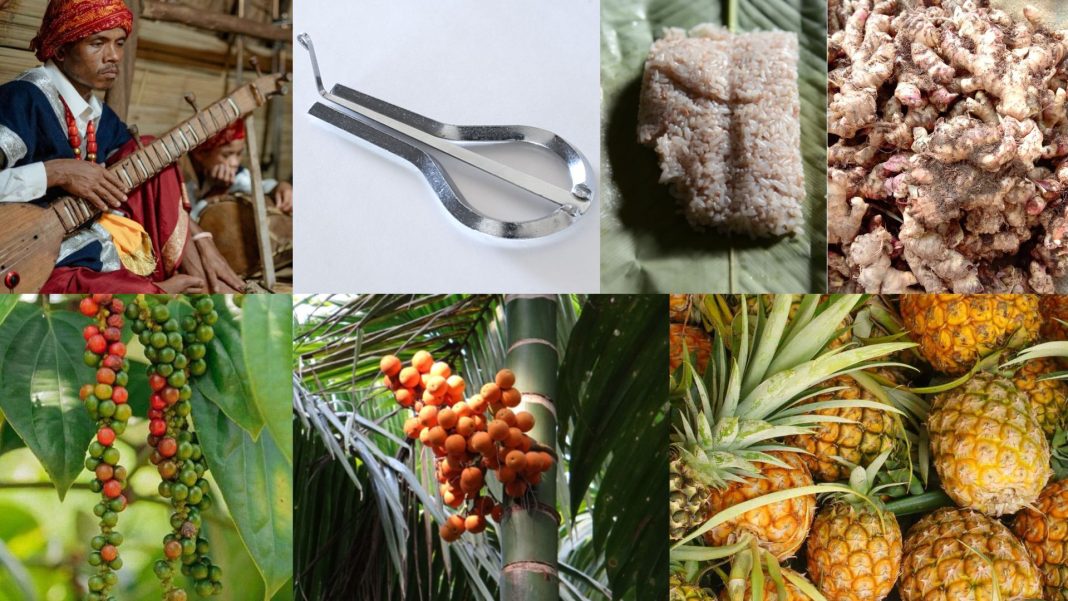

Products range from tribal musical instruments, handicrafts, and cultural artefacts
Application for Meghalaya Areca Nut states that the product’s reputation is linked to its firm kernel structure, balanced astringency, and durable chew texture…
Guwahati, May 19: Several organisations active in different sectors in Meghalaya have launched an aggressive initiative to secure Geographical Indication (GI) tags for as many as 32 indigenous products of the state.
With the products ranging from traditional foods and spices to tribal musical instruments, handicrafts, and cultural artefacts, the intense effort aims to protect and promote the state’s rich bio-cultural heritage globally.
The iconic products for which GI tag is sought include Sohra Honey, Meghalaya Hills Coffee, Meghalaya Pineapple, Meghalaya Black Pepper, Meghalaya Ginger, and Meghalaya Areca Nut, alongside traditional ethnic foods like Tungrymbai and Garo Sticky Rice (Minal).
GI is a sign used on products originating from a specific geographical region and possessing qualities, reputation, or characteristics essentially linked to that place of origin. GI protection is often associated with products developed and preserved over generations by rural, indigenous, and marginalised communities.
The GI push also highlights Meghalaya’s deeply rooted indigenous craftsmanship and musical traditions, with applications filed for products such as the Khasi Duitara, Tangmuri musical instrument, Gongmina Jew’s Harp, Khasi Besli Flute, Bom Drum, and Garo Dao Milam.
Traditional crafts and cultural artefacts, including Khasi Jaintia Jewellery, Khasi Shield, Cane Mat Tlieng, Khoh Basket, Meghalaya Fishing Trap Craft, and Meghalaya Khneng Embroidery, are also part of the extensive list.
For instance, the application for Meghalaya Areca Nut states that the product’s reputation is linked to its firm kernel structure, balanced astringency, and durable chew texture—qualities shaped by the state’s humid hill agro-climatic conditions and traditional agro-forestry cultivation systems.
“The areca nut of Meghalaya, locally known as ‘Kwai’ among Khasi and Jaintia communities and ‘Gue’ among the Garos, possesses distinct agro-ecological, cultural, and qualitative characteristics intrinsically linked to the state’s humid hill environment and indigenous agro-forestry traditions,” the application notes.
It further highlights the crop’s deep cultural significance in Khasi and Garo society, arguing that its historical and socio-cultural identity is uniquely tied to Meghalaya.
Among horticultural products, the state has also sought GI recognition for native fruits and crops such as Sohiong, Sohphoh, Sohshang, and Raitruh Finger Millet, all closely associated with Meghalaya’s indigenous farming systems and local food traditions.
Officials said the initiative aims to protect traditional knowledge systems, prevent imitation products in the market, and create stronger branding opportunities for Meghalaya’s indigenous products in national and international markets.
If approved, the new GI registrations would significantly expand Meghalaya’s existing portfolio of GI-tagged products, which already includes Lakadong Turmeric, Khasi Mandarin, Memong Narang, Meghalaya Garo Textile, Meghalaya Ryndia Textile, and Khasi Handloom Products.
Under India’s GI framework, producer associations, cooperatives, organisations, or authorities representing local producers can apply for registration through the Geographical Indications Registry in Chennai. The process involves scrutiny of the product’s historical linkage, uniqueness, geographical boundaries, and producer representation before publication in the GI Journal and eventual registration after an opposition period.
Experts believe GI recognition could help Meghalaya’s indigenous products command premium market value, strengthen rural livelihoods, preserve traditional knowledge systems, and build stronger global branding for the state’s cultural and agricultural heritage.