
By Dipak Kurmi
The visible transformational advancements that India has achieved over the last decade have altered global perceptions and unsettled several advanced nations as well as immediate neighbours. This unease does not emerge in isolation; it is rooted in the recognition that India has moved beyond incremental progress to systemic change across governance, infrastructure, social delivery and strategic autonomy. It is equally important to acknowledge that those who held power for nearly six decades after Independence did lay crucial foundations by building enduring institutions and responding to existential challenges such as food scarcity, eventually turning India into a food-grain surplus nation. Yet, many among this older political class appear to have lost touch with the strategic imagination that once defined them. In a democratic system, power is neither hereditary nor permanent, and the inability to accept electoral verdicts with grace often leads to frustration, denial and an erosion of credibility. Only an enlightened political culture can prepare leaders to contribute meaningfully even after they leave office, instead of viewing loss of power as a personal or national calamity.
Over the years, elected representatives in India have insulated themselves with privileges, pensions and perks that would have been inconceivable in the austere years following Independence. This has created a small but influential class that has tasted authority and now finds itself politically marginalised, facing what it perceives as a one-way exit from relevance. Such frustration has diminished the capacity to acknowledge tangible national achievements, even when these accomplishments are globally recognised. Instead of reconnecting with citizens, listening to their aspirations and participating constructively in problem-solving, large sections of the opposition have resorted to relentless criticism that is often emotional rather than analytical. In a democracy, people tend to ignore rhetoric that lacks substance or sincerity. Matters worsen when some Indians carry their political grievances abroad, criticising a democratically elected government and even seeking external pressure to dislodge it. This not only weakens India’s collective voice but also disregards the nation’s progress in social development, scientific advancement and external security, areas that have drawn international attention and appreciation.
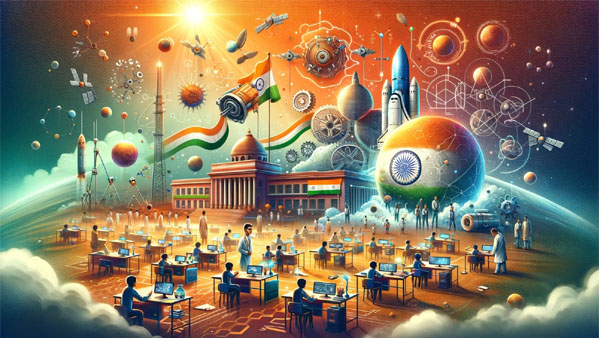
India’s determined march towards becoming a developed nation by 2047, articulated as the vision of Vikasita Bharat, demands support that transcends political affiliations, ideological leanings, regional identities and religious boundaries. This journey has unsettled some developed countries that remain psychologically tethered to imperial hierarchies and reluctant to accept India as an equal. Global institutions such as the United Nations, the UN Security Council, the UN Human Rights Council and UNESCO have repeatedly revealed their structural limitations, particularly in safeguarding national sovereignty and ensuring equitable global governance. The manner in which the sovereignty of countries like Venezuela has been compromised underscores the inadequacy of these mechanisms. In this context, India’s political leadership, both in power and in opposition, must redefine its role against global machinations that seek to keep India compliant and constrained. National unity and strategic clarity are no longer optional; they are imperatives in a competitive and increasingly fragmented world order.
Major global powers, including the United States and China, remain hesitant to envision India as a peer on the global stage. They are acutely aware that once India consolidates its position as a major power, its onward march will be difficult to contain. What distinguishes the present phase of India’s rise is the unprecedented level of self-confidence and civilisational conviction it has acquired. This confidence is not newly manufactured; it draws from the foresight of post-Independence leadership that invested in institutions of science, technology, space research, management education, agriculture, naval strength and higher learning. The Constitution of India provided a moral and legal framework for social cohesion, religious harmony and equality of opportunity, ensuring that development was not merely economic but also ethical. The present leadership has built upon this constitutional and institutional legacy while also reconnecting with the ancient Indian knowledge tradition that once made the subcontinent a global centre of learning and intellectual exchange.
Colonial rule had systematically drained India of its resources while ridiculing its culture, traditions and intellectual contributions. The consequences of this exploitation were so deep that even in the 21st century India was compelled to prioritise basic human necessities such as sanitation, clean cooking fuel and access to potable water. The breadth of deficiencies was vast, spanning healthcare, housing, education and infrastructure. Simultaneously, India had to reduce its dependence on arms imports, strengthen its defence preparedness and emerge as a leader in frontier domains such as space science, digital technology and artificial intelligence. Initiatives aimed at self-reliance, strategic manufacturing and indigenous innovation have significantly altered India’s security and economic profile. Despite internal resistance, hostile neighbours and apprehensive global powers, the momentum of this resurgent India appears irreversible.
As India enters 2026, growth and development remain the defining themes, but with a critical difference. The country now possesses a body of demonstrable successes that inspire confidence, particularly among the youth. The vision of Vikasita Bharat 2047 has gained intellectual and emotional currency, encouraging young Indians to imagine their personal aspirations as part of a larger national project. This shift is visible in the enthusiasm with which students, researchers and professionals participate in debates, discussions and innovation-driven initiatives across schools, universities and institutions. Independent India has a substantial record of achievements in housing, sanitation, energy access and financial inclusion that have reached the last person in the queue. Programmes such as Make in India and Startup India have not merely created enterprises; they have transformed attitudes, fostering risk-taking, entrepreneurship and technological ambition among the younger generation.
These achievements are debated and scrutinised across the country, from elite intellectual circles in Lutyens’ Delhi to remote rural communities. However, informed discourse is often clouded by ideological rigidity, which compromises objectivity even among professionals and intellectuals. Rural India, despite limitations in access to data and analytical frameworks, continues to express a direct and heartfelt faith in national leadership and constitutional values. This sincerity, if systematically captured and integrated into policymaking, could enhance the pragmatism and effectiveness of implementation. Development cannot remain an elite-driven narrative; it must reflect lived experiences and grassroots wisdom. The resilience and moral clarity of rural India remain among the nation’s greatest assets.
The larger civilisational question remains whether India can truly free itself from the intellectual legacy of Macaulay and its lingering effects by 2035. The answer lies not in rejection but in rediscovery. As jurist Nani Palkhivala famously observed, India is like a donkey carrying a sack of gold, unaware of the wealth it bears. The responsibility of opening that sack rests with institutional leaders and, more importantly, with the youth of India. By aligning ancient wisdom with modern science, constitutional morality with technological innovation, and national pride with global responsibility, India can transform not only itself but also contribute meaningfully to humanity. The march towards Vikasita Bharat is not merely a policy objective; it is a civilisational resurgence whose time has arrived.
(the writer can be reached at dipakkurmiglpltd@gmail.com)