
By Dipak Kurmi
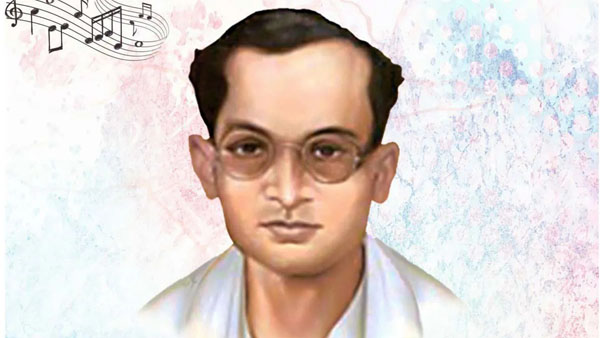
Jyoti Prasad Agarwala (1903-1951) stands as the revered cultural luminary of Assam, heralding a cultural renaissance that played a pivotal role in delineating Assamese identity from the shadows of Bengali influence. In 1935, he etched his name in history by spearheading the Assamese film industry with the creation of the pioneering film “Joymoti.” Agarwala’s profound impact extended far beyond the realms of art and culture, as he intricately wove the fabric of Assamese literature through his compelling dramas, poignant poems, and captivating short stories. His journalistic prowess and musical compositions, collectively known as “Jyoti Sangeet,” echoed not only in the hearts of Assam but resonated across the entire North-East region, leaving an indelible mark on generations.
An emblem of fervent patriotism and a revolutionary spirit, Jyoti Prasad Agarwala, despite being born into one of Assam’s most affluent families, became a torchbearer for the freedom movement from his teenage years. His commitment deepened upon his return from Edinburgh University and Germany in 1930, where he delved into the realms of Economics and Film-making. Endowed with Mahatma Gandhi’s blessings during the latter’s stay at the ancestral home “Poki” in Tezpur, Agarwala founded the “Mrityu Bahini” (Death Squad) imbued with the tenets of non-violence, yet embracing the motto “Karengay ya Marengay” (Do or Die).
His patriotic melodies reverberated as anthems of inspiration during the struggle for Indian independence, particularly in the North-East region. In the throes of the ‘Quit India’ movement in 1942, Agarwala fearlessly led the populace, especially in northern Assam, to confront British bullets. The indomitable spirit of the people, guided by Agarwala, was evident in acts of bravery such as the attempts to hoist the tricolour in places like Gohpur, Sootea, Tezpur, and Dhekiajuli, where individuals like schoolgirl Kanaklata and Mukunda Kakoty embraced martyrdom. Agarwala, facing imprisonment, opted for the clandestine path to continue steering the independence movement, marked by his frequent underground sojourns.
Every January 17th marks the solemn observance of Jyoti Prasad Agarwala’s death anniversary in Assam, celebrated as “Silpi Divas” or Artists’ Day. On this significant occasion, heartfelt homage is paid through the offering of floral tributes and the illumination of earthen lamps (diyas) before his portrait. The collective gatherings and voluntary functions serve as poignant moments of reflection, where the profound contributions and sacrifices of this genuine son of the soil are fondly remembered. Bestowed with the title “Rupkonwar” (Prince of Enlightenment) by the people of Assam, Agarwala’s legacy transcends time. His selfless dedication to the public cause and unwavering service to the nation have etched his name as a true patriot and a man of the people. The annual “Silpi Divas” stands as a testament to the enduring impact of his life’s work and the enduring reverence he commands in the hearts of the people.
The roots of Rupkonwar trace back to the village of Tai in the bygone princely state of Jaipur. His ancestors, hailing from a prosperous merchant lineage, found themselves ensnared in the grip of envy and hostility from the local zamindar, leading to their forced exodus to Churu in a state of destitution. The Agarwala family’s tale unfolds in 1828 when Naba-rangaram Agarwala, Rupkonwar’s great grandfather and a mere teenager at the time, became the pioneer to venture into Assam. Arriving in Assam with nothing but unyielding determination, Naba-rangaram embarked on a mission to resurrect the fortunes that had eluded his forefathers. The saga of resilience and tenacity began with this courageous leap into the unknown, setting the stage for the Agarwala family’s enduring legacy in Assam.
In the year 1830, Nabarangaram Agarwala (1811-1865) initiated a modest enterprise, establishing a small shop in Gomiri, a secluded village nestled on the northern banks of the Brahmaputra River in eastern Assam. His astute business sense, industrious spirit, and dedicated efforts propelled him swiftly towards prosperity. Yet, his impact transcended mere economic success, as he made a conscious choice to fully assimilate into the local Assamese community.
Embracing the ethos of the Assamese people, Nabarangaram seamlessly integrated by marrying into the community, adopting their language and cultural practices, and immersing himself in the local way of life. Noteworthy is his decision to retain his original title “Agarwala,” distinguishing him from others who, during that era, often adopted local titles after migrating to Assam for work or business.
By the time of his passing in 1865, Nabarangaram Agarwala had not only laid the groundwork for a burgeoning business empire but had also emerged as a prominent figure within the Assamese community. His legacy extended beyond personal success, sowing the seeds for a lineage that would play a pivotal role in enriching the socio-cultural tapestry of the State and contributing significantly to the modernization of Assam.
The legacy forged by Nabarangaram found a stalwart successor in his eldest son, Haribilash Agarwala (1842-1916), who carried forth the principles of assimilation, enterprise, patriotism, and social service. As the patriarch of the family, Haribilash not only elevated the family fortunes to unprecedented heights but also left an indelible mark on the trade and industry landscape of Assam. Despite facing discrimination from the British administration, he ardently championed Assamese literature and culture while actively engaging in community development initiatives.
Haribilash’s multifaceted contributions extended to the realm of language and literature. In a groundbreaking move in 1899, he unveiled the ancient hand-written manuscripts of Sri Sankardev and Sri Madhabdev, a watershed moment that showcased Assam’s rich literary and cultural heritage to the wider world and a new generation of Assamese scholars and litterateurs. This transformative effort played a pivotal role in propelling the movement for the revival and recognition of the Assamese language, dispelling the notion that it was merely an offshoot of Bengali. By the turn of the century, Haribilash, driven by the discriminatory practices of the British against native entrepreneurs, found resonance with the Indian National Congress, aligning himself with the burgeoning movement for national independence. His life’s work, characterized by resilience, cultural preservation, and nationalist fervor, marked him as a beacon in the tapestry of Assam’s socio-cultural and political evolution.
The torchbearers of cultural and literary progression within the Agarwala lineage emerged in the form of Haribilash’s second eldest son, Chandra Kumar Agarwala (1867-1938), and his nephew, Ananda Chandra Agarwala (1874-1939), each leaving an indelible mark on the growth of the Assamese language and literature. Chandra Kumar, during his undergraduate years at Presidency College, Calcutta, emerged as a trailblazer in the movement for the revival and acknowledgment of the Assamese language. Venturing into uncharted territory, Chandra Kumar became a pioneer of Assamese journalism, etching his name in history with the publication of the first Assamese literary journal, Jonaki, in 1889. A further testament to his commitment came in 1918 when he launched the Assamese newspaper, Asomiya. This publication not only played a crucial role in spreading awareness about the struggle for Indian independence in Assam but also became a catalyst for cultural and literary enlightenment in the region. The efforts of Chandra Kumar and Ananda Chandra stand as pivotal chapters in the narrative of Assamese language and literature’s renaissance.
In contrast to the typical migration patterns of Marwaris seeking fortune in Assam, Jyoti Prasad Agarwala’s forefather, Nabarangaram Agarwala, stands out as a singular example of socio-cultural integration. Unlike others, he forged a unique connection between two communities hailing from opposite corners of the country, uniting the northwest and the northeast in a remarkable display of patriotism. This extraordinary case not only contributed to the upliftment of a community but also played a significant role in fostering national integration, setting it apart with few parallels in India.
(the writer can be reached at dipaknewslive@gmail.com)