
ROOPAK GOSWAMI
Shillong, Jan 27: Malaria infection has witnessed a gradual decline in Meghalaya in the past decade although some parts of the state, particularly South Garo Hills, has continued to remain a hotspot of the disease.
South Garo Hills recorded the highest prevalence – driven largely by outdoor exposure and repeat infections – with 12.3 per cent of those tested carrying malaria parasites, according to a new study published in the Malaria Journal.
This was followed by West Jaintia Hills at 2.6 per cent, while West Khasi Hills reported the lowest prevalence at 1.8 per cent.
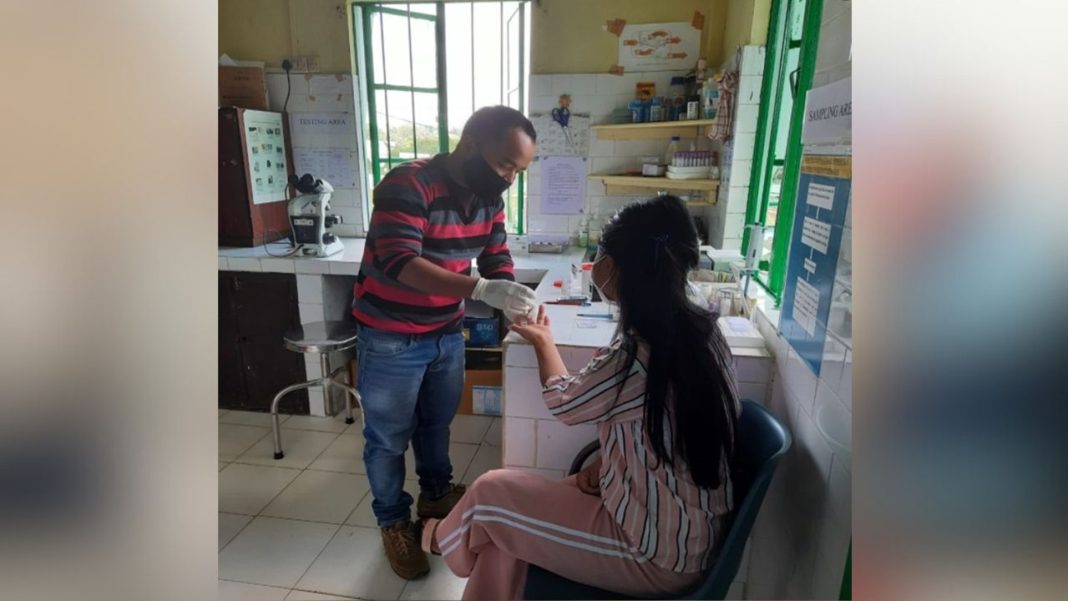
Researchers analysed malaria cases among patients visiting government health centres in West Khasi Hills, West Jaintia Hills and South Garo Hills between 2018 and 2021.
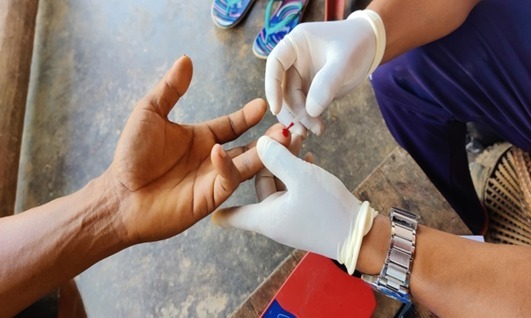
Blood samples from 1,031 individuals with malaria-like symptoms were tested, and 4.4 per cent were found to be infected with malaria parasites.
The study was led by researchers from Meghalaya-based institutions, including the Indian Institute of Public Health (IIPH), Shillong, and Martin Luther Christian University (MLCU), Shillong, along with collaborators from the University of Michigan, New York University, and the Johns Hopkins Bloomberg School of Public Health (JHSPH).
Most infections were caused by Plasmodium falciparum, the more severe form of malaria. Significantly, more than half of the infections were sub-microscopic, meaning they could not be detected through routine microscopy or rapid diagnostic tests and required advanced molecular methods. This indicates that malaria can continue to circulate silently even when reported case numbers are low.
The study found that individuals who had suffered from malaria in the previous year were far more likely to be infected again. Outdoor activities before bedtime or in the early morning hours — when mosquitoes are most active — significantly increased the risk of infection. In South Garo Hills, people staying overnight in agricultural fields faced particularly high risk.
Despite widespread use of bed nets — reported by over 96 per cent of participants — the researchers identified a critical gap. Bed nets may offer limited protection due to changing mosquito behaviour, with biting occurring earlier in the evening and later in the morning.
Those sleeping in agricultural fields were especially vulnerable, likely due to increased exposure to Anopheles mosquitoes and irregular bed net use outdoors.
On a positive note, the study highlights strong public trust in Meghalaya’s healthcare system, with more than 97 per cent of patients reporting government health centres as their first choice for malaria treatment.
The researchers emphasise that while Meghalaya is moving in the right direction, achieving malaria elimination will require enhanced surveillance to detect mild or subclinical infections, improved protection for outdoor workers, and sustained community awareness efforts.