
ROOPAK GOSWAMI
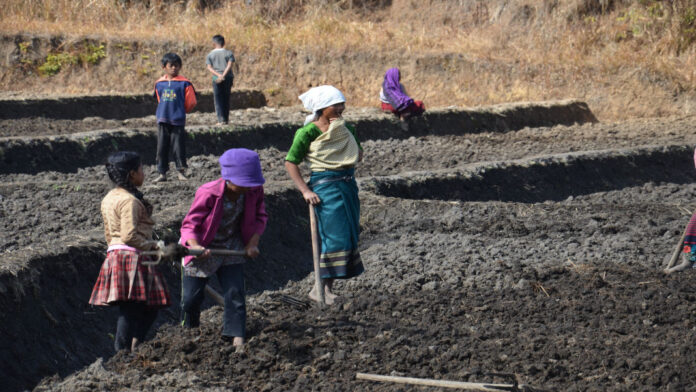
Shillong, Jan 7: Impact of climate change has been visible in rural Meghalaya for quite some time, much earlier than awareness drives about need for climate models due to changes in the weather pattern reached the stakeholders in the state. Meghalaya’s farmers have long observed the changes in their fields, albeit without knowing much about global ‘climate change’.
Areca nut yields began to fall as the nuts themselves grew smaller. Betel vines that had previously remained healthy throughout the season began to show signs of black rot. Potato crops were frequently hit by late blight, which wiped out harvests that farmers relied on for food and cash. In orchards and forests, guava, wild pepper and even the pitcher plant began ripening earlier than usual—quiet signals that seasonal rhythms were shifting.
Other changes followed. Gall formation increased in Cinnamomum tamala, slowly drying out the plants. Farmers adjusted sowing times for maize and potatoes by weeks, sometimes by a month, to cope with erratic rainfall and rising temperatures. These were not isolated incidents, but patterns repeated across villages.
Taken together, these small, observable changes formed an early warning system—one built not on instruments, but on generations of close interaction with land and forests.
These observations, recorded across rural Meghalaya, now form the backbone of a new scientific assessment that identifies indigenous knowledge systems as some of the region’s strongest tools for climate resilience. The findings appear in a chapter of the Springer volume Ecosystem-based Approaches for Resilience Building in Himalayan Landscapes, documenting how local communities are responding to climate stress long before formal adaptation policies reach them. Researchers from Meghalaya Climate Change Centre, Government of Meghalaya had done the study.
Based on fieldwork covering nearly 700 villagers across 163 villages in 10 districts, the study finds that people’s lived experiences closely align with global climate science. Rising temperatures, irregular rainfall, fewer rainy days, and more extreme weather events—landslides, floods, hailstorms and drought-like conditions—are no longer abstract threats but daily realities affecting agriculture, water sources, forests and health.
Agriculture, the primary livelihood for most rural households, has emerged as the most climate-sensitive sector. Farmers report increased pest attacks, declining soil quality and frequent crop losses linked to rainfall variability. In response, many have altered sowing schedules, diversified crops and revived traditional pest-control methods using locally available plants. These adjustments are not driven by external advisories but by trial, error and accumulated ecological knowledge.
Water stress is another growing concern. Despite being home to some of the world’s highest rainfall zones, Meghalaya faces seasonal water scarcity due to its rocky terrain and poor water-holding soils. Communities are increasingly relying on traditional systems such as bamboo drip irrigation, a centuries-old practice that delivers water drop by drop to plant roots using gravity-fed bamboo channels. The method conserves water, requires no external energy and remains highly effective under changing rainfall patterns.
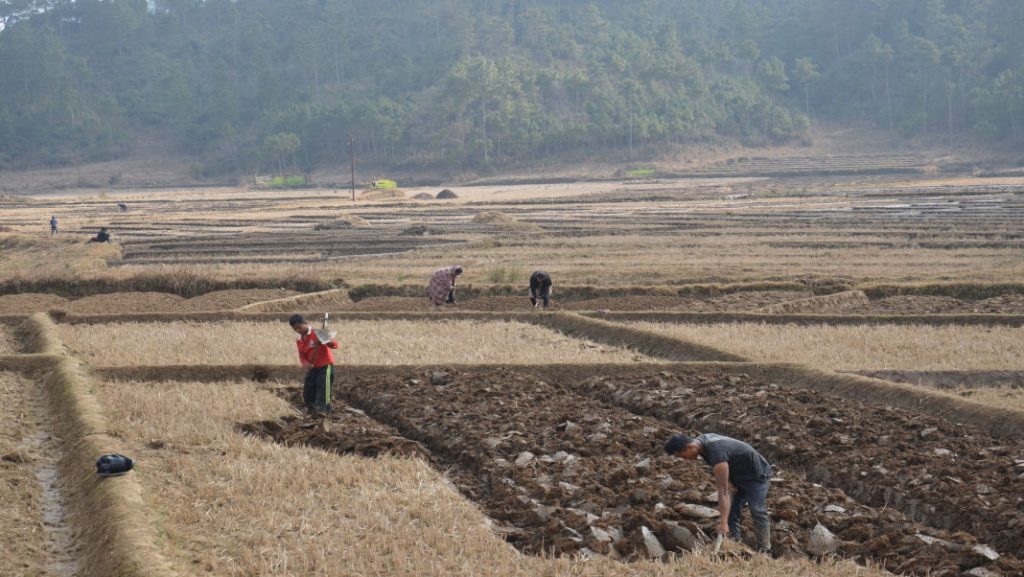
Forests, which cover nearly three-fourths of Meghalaya’s geographical area, are also under pressure. Villagers perceive a steady decline in forest cover over the past three decades, driven by logging, infrastructure development, fires and climatic stress. The loss has reduced access to timber and non-timber forest products, affecting livelihoods and increasing the risk of human-wildlife conflict.
Against this backdrop, community-conserved sacred groves have gained renewed importance. These forest patches, protected for religious and cultural reasons, function as biodiversity reservoirs, carbon sinks and water regulators. Many perennial streams originate from sacred groves, sustaining villages during dry periods. Researchers note that such indigenous conservation systems offer ecosystem services that modern climate policies often struggle to replicate.
One of Meghalaya’s most striking climate adaptations, however, lies in its living root bridges—structures grown from the aerial roots of rubber fig trees by Khasi and Jaintia communities. Unlike steel or concrete bridges that frequently collapse during floods, these living bridges grow stronger with age and can last for centuries. As extreme rainfall events increase, they are increasingly seen as models of climate-resilient infrastructure rooted in ecological engineering.
The study also documents how villagers use biological indicators as early warning systems. Changes in insect behaviour, bird nesting patterns, flowering cycles and even spider webs are read as signs of impending weather shifts. Such micro-level indicators, researchers argue, can complement scientific forecasting in regions where formal data remains limited.
Importantly, the research cautions that traditional knowledge alone is not enough. Some practices are losing effectiveness as climate change accelerates. The way forward, it suggests, lies in blending indigenous knowledge with scientific approaches—co-developing solutions rather than imposing them.
“People’s perceptions of climate change and the ways they adapt to it are critical for shaping local and regional policies. These experiences can also inform broader, macro-level frameworks for global climate adaptation,” the study noted, adding that most responses to climatic variability have emerged from affected communities themselves rather than from external agencies or top-down interventions.
“The lessons learned from these communities need to be shared with policymakers and farmers alike,” the study said. “Doing so can create a positive feedback loop that strengthens long-term efforts to reduce vulnerability through ecosystem-based, community-driven solutions.”