
By Satyabrat Borah
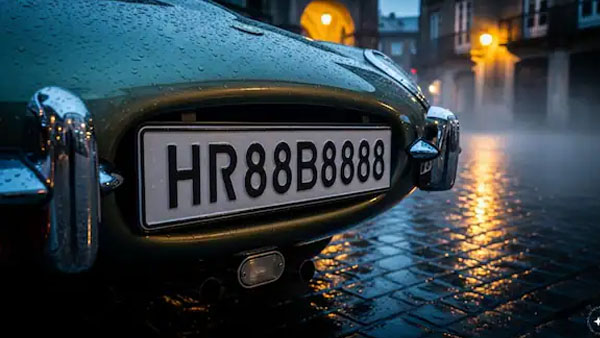
In the bustling chaos of Indian roads, where honking symphonies and sudden lane changes define the rhythm of daily life, a quiet revolution has been unfolding on the metal plates affixed to the front and rear of vehicles. What began as a mundane registration marker, assigned mechanically by transport authorities, has transformed into something far more profound: a public declaration of identity, wealth, and even cosmic alignment. The recent auction of the Haryana registration number HR 88 B 8888 for an astonishing 1.17 crore rupees stands as the latest testament to this cultural phenomenon. No longer content with mere functionality, Indians have elevated the vehicle number plate into a canvas for aspiration, where digits speak louder than words ever could.
This transformation did not happen overnight. For decades, car owners made do with whatever sequence the Regional Transport Office dispensed, treating the plate as little more than proof of legality. Yet beneath the surface, an ancient fascination with numbers never truly faded. India has long been a land where numerology shapes decisions both trivial and momentous. Parents consult astrologers to choose auspicious names for newborns based on birth charts. Weddings are timed to the minute according to planetary positions. Businesses launch on dates deemed fortunate. In such a worldview, numbers are never neutral; they vibrate with meaning, carrying the power to attract prosperity or deflect misfortune. The car, already a potent symbol of upward mobility in a country where owning four wheels remains a milestone for millions, became the perfect vehicle for this belief to manifest publicly.
The turning point arrived with the introduction of choice and vanity registration numbers across various states. Suddenly, citizens could bid for combinations that resonated personally or numerologically. What started modestly soon snowballed into fierce competitions for repetitive digits, sequential patterns, or sums that added up to lucky totals. The number 8 emerged as the undisputed monarch of this new realm. In Chinese numerology, which has seeped deeply into global consciousness including India’s affluent classes, eight sounds like the word for prosperity and is considered infinitely auspicious. Four eights compounded the effect exponentially, turning a simple plate into a rolling talisman. When HR 88 B 8888 appeared on the auction block, it combined the prestige of a low series prefix, the rarity of quadruple repetition, and the cultural weight of the most coveted digit available. The final price reflected not just scarcity but faith: faith that those symmetrical eights might channel abundance toward whoever commanded them.
Critics are quick to label such purchases extravagant folly, symptoms of a society intoxicated by new money. They point out that 1.17 crore could educate hundreds of children or feed thousands of families. Yet dismissing the phenomenon as mere ostentation misses deeper currents. In a nation where visible markers of success have always mattered, from the grandeur of wedding processions to the marble floors of newly built homes, the fancy number plate simply occupies the latest rung on an ancient ladder of status. It is instantly legible to anyone stuck behind in traffic: the owner has arrived, both literally and metaphorically. Where once a red beacon declared VIP privilege, now a string of identical digits performs the same function more democratically, because anyone with sufficient resources can theoretically acquire one.
There is also a psychological comfort in believing that destiny can be nudged, even purchased. Life in India remains unpredictable for most. Markets crash, governments change policies overnight, illnesses strike without warning. Amid such uncertainty, the idea that aligning oneself with fortunate numbers might tilt the odds feels empowering rather than superstitious. The purchaser of HR 88 B 8888 is not just buying metal and paint; he is buying peace of mind, the comforting illusion of control in a chaotic universe. The plate becomes a modern yantra, an object imbued with protective and attracting properties, much like the sacred threads or gemstones worn closer to the skin by earlier generations.
This trend finds echoes worldwide, though each culture infuses it with local flavor. In the United Arab Emirates, where oil wealth arrived even more suddenly than India’s IT and startup billions, single digit plates have traded for sums exceeding 120 crore rupees. British collectors covet historic low numbers that trace lineage back to the earliest days of motoring. North American vanity plates spell out clever phrases or boast affiliations. What sets India apart is the seamless fusion of numerology with raw economic signaling. Here, the same person who checks planetary transits before signing a deal sees no contradiction in spending crores on a registration number. Both actions stem from the same impulse: to harmonize material ambition with spiritual caution.
The auctions themselves have become theatrical events. Held online or in government offices, they draw bidders who remain anonymous yet whose determination is palpable in the rapidly escalating figures. Transport departments, initially surprised by the revenue windfall, now actively court high value series, reserving the most repetitive combinations for public sale rather than routine allocation. States compete to offer the most desirable prefixes: DL for Delhi, MH for Maharashtra, and increasingly the newer codes like HR or UK that sound prestigious simply because they are scarcer. A cottage industry of consultants has emerged, advising clients on which upcoming auctions hold promise and how high they might need to go. Some owners treat plates as investments, holding them across multiple vehicles or reselling when prices appreciate further.
Beneath the glamour lies an undeniable democratizing aspect. Unlike inherited palaces or ancestral jewelry, anyone with sufficient funds can enter this arena. A first generation entrepreneur who built a logistics empire from a single truck can now cruise past the old money bungalows displaying a number more exclusive than their occupants ever managed. The plate levels hierarchies in a way few other symbols can. It compresses complex stories of struggle and triumph into four digits and four letters, broadcasting success to strangers who will never know the sleepless nights behind it.
Of course, the frenzy has its absurd edges. Tales circulate of marriages arranged partly because the groom’s family possessed a particularly auspicious series, or of business rivalries fought through competing bids for the same number. Accidents involving fancy plated cars receive disproportionate attention, as if the universe occasionally reminds mortals that even the luckiest digits cannot defy physics. Yet these anecdotes only underscore how deeply the phenomenon has embedded itself in contemporary Indian consciousness.
As cities grow more congested and anonymity increases, such visible declarations become ever more precious. Social media amplifies the effect: photographs of gleaming supercars with perfect plates rack up likes and comments that blend envy with admiration. The number becomes part of personal branding, as recognizable as a luxury watch or designer handbag. Youngsters who cannot yet afford the cars dream first of the plates they will one day display, understanding instinctively that in this new grammar of success, the digits must align before everything else falls into place.
What began as administrative necessity has thus evolved into cultural artifact. The vehicle registration plate now carries the same symbolic weight once reserved for caste markers, professional titles, or residential addresses in elite colonies. It compresses identity into its most concentrated form, instantly communicating prosperity, taste, and metaphysical alignment. In a society hurtling toward the future while remaining tethered to ancient beliefs, the fancy number plate embodies the paradox perfectly: cutting edge aspiration expressed through timeless superstition.
The roads will continue to fill with ever more inventive combinations as new series are released and fresh fortunes are made. Each auction record broken will briefly shock, then quickly normalize as the benchmark shifts upward again. And somewhere in a transport office, an official will prepare the next list of available treasures, aware that what seems like mere bureaucracy has become something closer to priesthood, dispensing modern India’s most coveted blessings one digit at a time. In the end, the metal plate says everything words never could: I have arrived, the stars approve, and prosperity follows wherever I go.