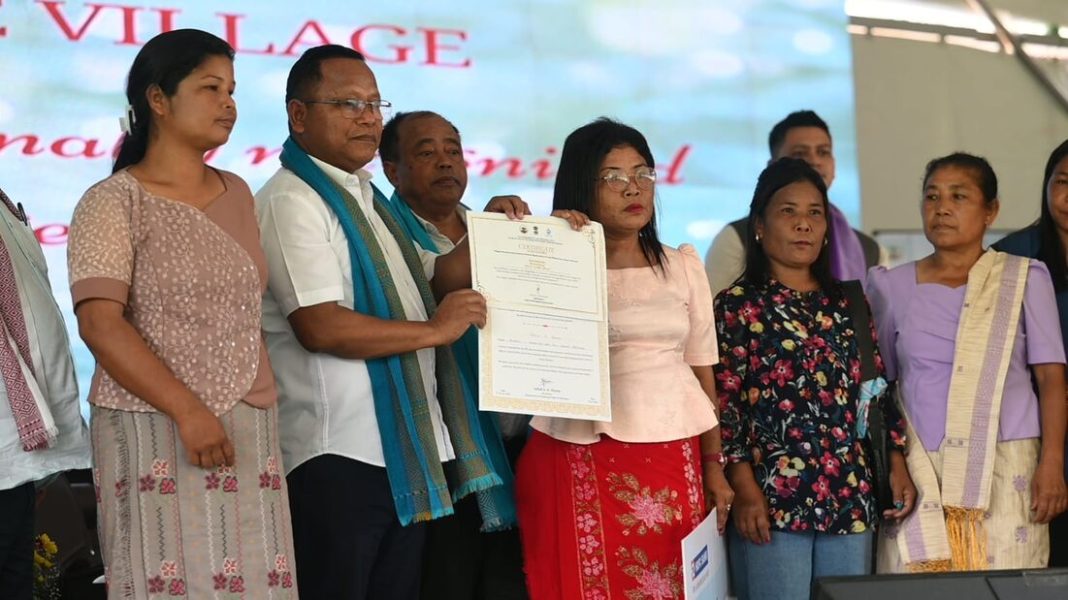

Asanang, April 24: Amidst the celebration of rural water achievements at the Asanang Playground, 18 kms from Tura, Meghalaya’s PHE Minister, Marcuise N. Marak, delivered a pointed address today, linking the success of the Jal Jeevan Mission (JJM) to the broader vision of a Vikshit Bharat. Addressing a large gathering during the “Jal Gaurav Saman,” the Minister balanced a celebration of the state’s massive infrastructure gains with a candid critique of the leadership gaps and misinformation challenges currently facing the region.
The event, titled Jal Gaurav Saman, was organized to formally recognize Jendragre Village, which achieved national distinction last month under the Har Ghar Jal, Jal Jeevan Mission (JJM), for excellence in implementing water sustainability and sanitation initiatives. Jendragre has emerged as a model for the region, having successfully implemented sustainable water harvesting and 100% tap water connectivity through dedicated community participation and the efficient use of Field Testing Kits (FTK) to ensure water quality.
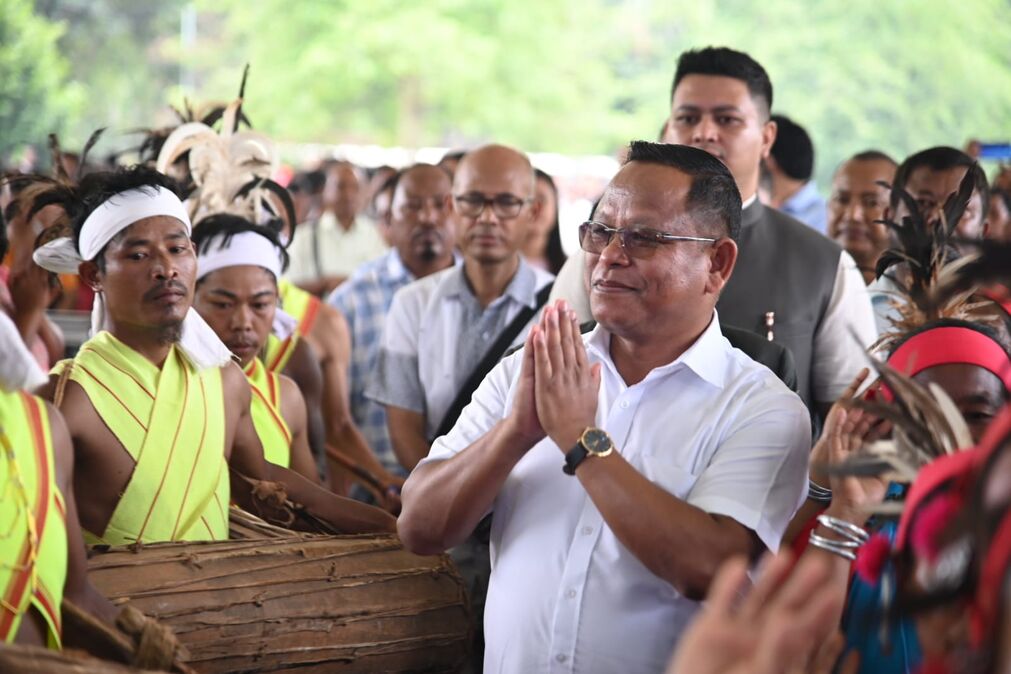
Gracing the occasion as Chief Guest, PHE Minister Marcuise N. Marak presented a certificate and a cash prize of fifty thousand rupees to the leaders of Jendragre Village. Addressing the gathering, the Minister emphasized the importance of community-led conservation and the role of local leadership in ensuring water security for the region. He said that Jendragre was among only ten villages selected from Meghalaya following the rigorous “Jal Mahotsav” assessment campaign conducted by the Central Government.
The Minister highlighted a monumental shift in Meghalaya’s water landscape, noting that while only 4,550 households previously had tap connections, the state has now successfully linked over 5.40 lakh households to potable water supplies. However, he was quick to acknowledge that infrastructure alone is not a guarantee of success. Citing a village in his own constituency of Williamnagar where taps ran dry shortly after completion, the Minister noted with concern that villagers had returned to drawing water from streams simply because no local leader took the initiative to report the issue. He emphasized that the government cannot solve these challenges in isolation; rather, it requires a robust partnership between the PHE Department, Village Water and Sanitation Committees (VWSCs), and local stakeholders to ensure that drying water sources or technical glitches do not render projects unsuccessful.
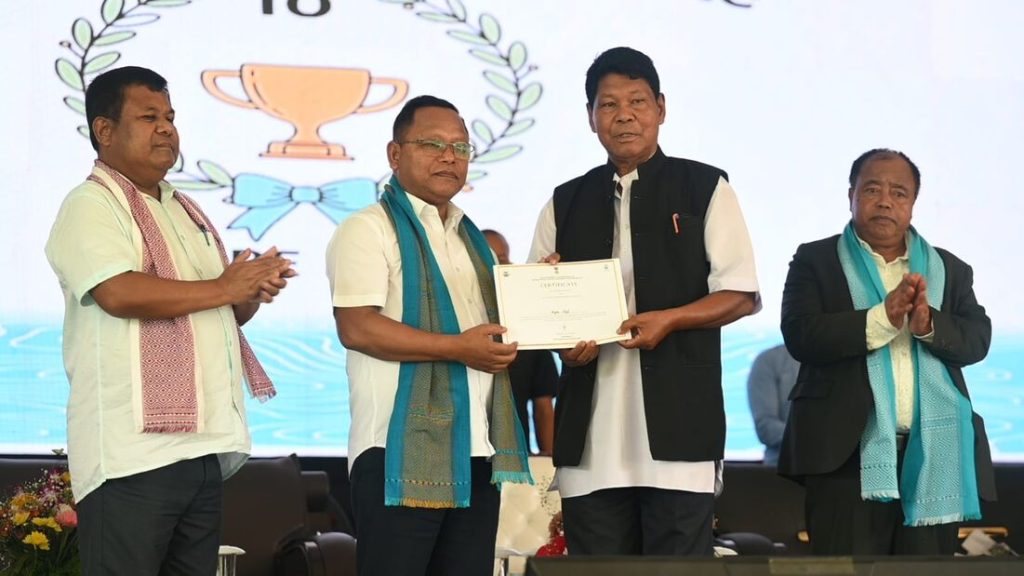
During the ceremony, appreciation certificates were also awarded to five other villages—Sasatgre, Chandigre, Chandragre, Darichekgre, and Aigre Apal—for their exemplary performance in mission implementation and outstanding efforts in maintaining water infrastructure and promoting efficient usage.
Chief Engineer of PHE, R. S. Nongbri, lauded the technical teams for their swift execution of the mission and underscored the prestige of Jendragre receiving an award from the President of India. The event also saw a key technical segment by Henilla A. Sangma of Jendragre, who shared the village’s success stories and conducted a live demonstration on water testing. Representatives from the five award-winning villages also addressed the gathering, detailing how the Jal Jeevan Mission has effectively resolved long-standing water scarcity issues in their respe