
By Satyabrat Borah
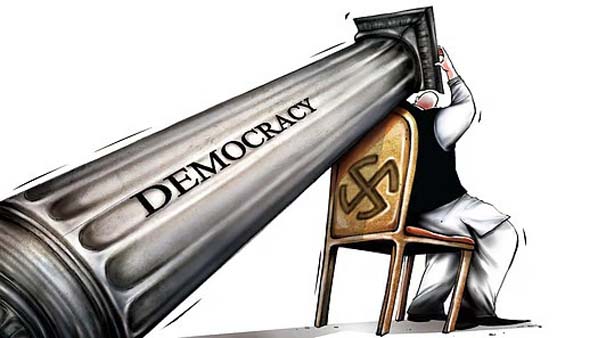
India’s democracy is often hailed as one of the world’s greatest achievements, a vibrant tapestry woven from the votes of nearly a billion people. At the heart of this monumental exercise stands the Election Commission of India, an institution that has, over decades, earned a reputation for safeguarding the sanctity of the ballot. Yet, in recent times, particularly with the ongoing Special Intensive Revision of electoral rolls, questions have arisen about priorities, processes, and the broader implications for electoral integrity. The Commission’s firm stance on excluding foreigners from voter lists is constitutionally sound, but it has sparked a debate that touches on deeper issues of inclusion, trust, and the real threats facing our elections.
The Election Commission was established in 1950, just as independent India was finding its feet. In those early years, conducting elections in a vast, diverse, and largely illiterate nation was no small feat. Literacy rates were low, infrastructure sparse, and logistical challenges immense. But the Commission rose to the occasion, conducting the first general elections in 1951-52 with remarkable success. Over the subsequent decades, it has overseen seventeen Lok Sabha elections and hundreds of state assembly polls, each time expanding the reach of democracy. From introducing the Electronic Voting Machines in the 1980s to make counting faster and reduce booth capturing, to the widespread adoption of Voter Verifiable Paper Audit Trail in recent years for greater transparency, the ECI has innovated continuously. The introduction of photo identity cards in the 1990s helped curb impersonation, while systematic voter education programs have boosted turnout, especially among women and marginalized communities.
This evolution has not been without hurdles. There have been moments of criticism, such as delays in addressing electoral malpractices or perceptions of uneven enforcement of the Model Code of Conduct. Yet, on balance, the Commission has built institutional integrity by treating the franchise as more than a mere formality. It has been a substantive right, one that empowers citizens to shape their destiny. The ECI’s efforts to include remote tribes, migrant workers, and displaced populations reflect this commitment. Voter turnout has steadily climbed, crossing 67 percent in the 2019 general elections, a testament to growing public faith. International observers have often praised India’s elections as free and fair, crediting the Commission’s impartiality and robustness.
In this context, the current emphasis on purging electoral rolls of potential foreigners merits careful scrutiny. The Constitution is clear: only citizens can vote. Article 326 explicitly restricts the franchise to adult citizens. The Representation of the People Act reinforces this, mandating that voter lists comprise eligible citizens. The ECI, in its recent submissions to the Supreme Court, has underscored this as a core constitutional duty. It argues that allowing even a single non-citizen on the rolls undermines the citizen-centric nature of our democracy. The Special Intensive Revision, initiated in several states and union territories, aims to verify and update rolls intensively, removing duplicates, deceased entries, and suspected ineligible voters.
This process began gaining momentum amid allegations of irregularities in voter lists, particularly in border states or areas with historical migration. Political parties across the spectrum have, at times, raised concerns about infiltrators influencing elections. The Commission responded by launching the SIR, publishing draft rolls, and inviting claims and objections. In some states, millions of names have been scrutinized, leading to deletions where eligibility could not be verified. Over six crore entries were reportedly removed in initial drafts across multiple regions. The ECI maintains that this is routine housekeeping, amplified to address specific concerns, and not targeted at any community.
However, critics argue that the scale and timing of this revision raise red flags. Door-to-door verifications, demands for additional documents, and tight deadlines have created anxiety among genuine voters, especially the poor, migrants, and minorities who may lack easy access to paperwork. Reports emerged of long-time voters receiving notices questioning their citizenship, forcing them to produce birth certificates or other proofs that many do not possess. In a country where documentation gaps persist despite initiatives like Aadhaar, such requirements can feel exclusionary. The maxim from criminal justice—that it is better for guilty persons to escape than for an innocent one to suffer—finds echo here. No one disputes the need to exclude non-citizens, but if the process risks disenfranchising even a fraction of legitimate voters, it erodes the very trust the ECI has built.
The fear of foreigners “taking over” the electoral process seems exaggerated when viewed against the numbers. India’s voter base is massive, and documented cases of large-scale infiltration affecting outcomes are rare. Border security, citizenship laws like the Citizenship Amendment Act, and the National Register of Citizens in certain states already address immigration concerns. Yet, the narrative of an external threat has gained traction, often amplified in political discourse. This phantom fear distracts from more pressing, tangible challenges to electoral integrity.
Consider money power, for instance. Despite spending limits, elections have become increasingly expensive. Candidates and parties pour resources into campaigns, with unaccounted cash allegedly playing a role in influencing voters. Electoral bonds, introduced to bring transparency, faced criticism for anonymity favoring ruling parties before being struck down. Black money continues to flow, distorting the level playing field. Criminalization of politics remains another stubborn issue. A significant number of lawmakers face serious charges, yet mechanisms to debar them swiftly are limited. Inner-party democracy is waning, with tickets distributed based on winnability rather than ideology or clean records.
Then there is the misuse of state machinery. Transfer of officials, selective enforcement of laws, and allegations of bias in deploying security forces have surfaced periodically. Social media and fake news pose modern threats, spreading disinformation at lightning speed and polarizing voters. Hate speech during campaigns often goes unchecked, deepening societal divides. Voter turnout discrepancies, delays in releasing data, and questions over EVM reliability fuel skepticism in some quarters.
Polarization itself is a growing concern. Elections are increasingly fought on identity lines, with religion, caste, and region weaponized to consolidate vote banks. This not only strains social fabric but also pressures institutions like the ECI to navigate a minefield of accusations from all sides. When every action is viewed through a partisan lens, impartiality becomes harder to demonstrate.
Is the intense focus on foreigner infiltration a genuine priority, or does it serve as a convenient diversion? Some observers suggest the latter, arguing that whipping up paranoia about outsiders unites certain voter groups while overshadowing accountability on governance failures like unemployment, inflation, or agrarian distress. In border areas, migration is a complex reality shaped by history, geography, and economics. Painting it in stark terms of invasion risks alienating communities and stoking unnecessary tension.
The ECI must balance its duty to purify rolls with the imperative of inclusion. Transparency is key: detailed guidelines, extended timelines for objections, and public disclosure of deletion criteria would build confidence. Collaboration with civil society and political parties in verification drives could mitigate fears of targeting. Technology, like linking Aadhaar for de-duplication while protecting privacy, offers tools to streamline without hardship.
Ultimately, the strength of India’s democracy lies in its inclusivity. The ECI’s legacy is one of expanding the vote—from universal adult suffrage in 1950, abolishing separate electorates, to enabling service voters and overseas Indians. Occasional slippages have been corrected through judicial interventions and internal reforms. The current controversy is a test of that resilience.
As India prepares for future elections, the Commission would do well to refocus on holistic integrity. Strengthening enforcement against money and muscle power, mandating real-time disclosure of donations, and fostering voter education on digital literacy could yield greater dividends. Addressing booth-level discrepancies and ensuring seamless EVM-VVPAT reconciliation would silence doubters.
Democracy thrives when citizens feel empowered, not anxious about their right to vote. The fear of foreigners should not overshadow the real work of making elections truly representative. By prioritizing substantive threats and upholding inclusion, the ECI can continue its proud tradition of guarding India’s democratic soul. Our elections are not just about numbers on a roll; they are about the voice of every citizen shaping the nation’s future. Let us protect that voice jealously, without letting shadows distract from the light.