
By Dipak Kurmi
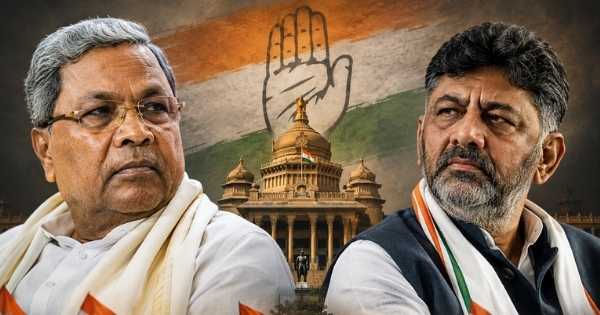
The recent political transition within the Congress government in Karnataka, where the seasoned veteran Siddaramaiah has stepped down to make way for D K Shivakumar, marks a departure from established historical patterns. Throughout his long and tumultuous career, Siddaramaiah has rarely been associated with the graceful relinquishment of power. Instead, his political trajectory has been defined by an unyielding resistance to displacement, a characteristic that first became glaringly evident in 1996 when he vehemently challenged the elevation of J H Patel to the chief ministership. This pattern of defiance repeated itself in 2004 during his opposition to Dharam Singh’s ascent, eventually culminating in his expulsion from the Janata Dal (Secular) by H D Deve Gowda in 2005 on charges of anti-party activities. Even after migrating to the Congress, his sharp elbows remained active, visible in his 2008 challenge against Mallikarjun Kharge for the position of Leader of the Opposition, and again in 2013 when he successfully outmaneuvered Kharge to claim the chief minister’s chair.
This restless pursuit of authority was not contained within internal party mechanisms alone. Following the electoral setbacks of 2018, Siddaramaiah was widely seen as the architect behind the collapse of the Congress-JDS coalition government in 2019, quietly permitting a faction of his loyalists to defect to the Bharatiya Janata Party, thereby paving the way for B S Yediyurappa to assume power. The streak of strategic self-interest persisted into 2023, when he effectively checkmated Shivakumar to capture the chief ministership despite the latter having painstakingly built the organizational machinery that secured the party’s decisive victory. Even as recently as 2025, when the original power-sharing agreement dictated a leadership handover, Siddaramaiah engaged in intense political maneuvering, pleading for an extension under the pretense of breaking Devaraj Urs’s historic record as the longest-serving chief minister. This reasoning was structurally flawed, given that Urs’s tenure was a unique, unbroken stretch of nearly eight years sustained by the extraordinary, election-free conditions of the Emergency era.
Given this extensive history of intransigence, the extraordinary smoothness of the current handover presents a profound political paradox. The transition was executed without the public recriminations or structural sabotage that historically accompanied Siddaramaiah’s displacements. This unprecedented compliance raises critical questions regarding the shifting dynamics within the Congress party and the broader political landscape of Karnataka. It remains an open question whether advanced age has finally tempered his combative instincts, or if he was simply outmaneuvered by a reassertive Congress high command, heavily fortified by the strategic presence of Congress President Mallikarjun Kharge. In the unforgiving ecosystem of state politics, the underlying motivations remain shielded, and observers must now watch whether Siddaramaiah will content himself with a supportive role from the backbenches or if this quietude merely precedes another subterranean realignment.
Beyond the immediate theater of interpersonal rivalries, this transition reflects a fundamental mutation in the core vocabulary of Indian politics. Siddaramaiah’s brand of politics was deeply anchored in the classic social engineering models of the late twentieth century, particularly the AHINDA coalition, a carefully structured alignment of minorities, backward classes, and Dalits. However, the efficacy of relying on monolithic caste identities has encountered severe structural limitations. The modern electorate is increasingly driven by sub-caste fragmentation, where smaller communities demand distinct recognition and political representation, rendering the macro-categories of the 1980s and 1990s largely obsolete. The declining dividend of pure caste identity politics is visible across the national landscape, mirrored in the fading dominance of figures like Nitish Kumar in Bihar and the gradual dismantling of Lalu Prasad Yadav’s traditional support bases.
This structural exhaustion explains why the extensive claims regarding Siddaramaiah’s vast social base have frequently failed to translate into proportional electoral dominance. Even during the 2023 assembly elections, where Congress secured a major victory driven largely by the immediate appeal of its five “guarantee” welfare schemes, the underlying voter architecture revealed a different story. The BJP’s core vote share remained remarkably resilient, and the party simultaneously expanded its footprint into uncharted geographic territories, eroding the traditional strongholds of both the Congress and the JDS. The reality of modern political warfare dictates that while ideological branding may project an image of social justice, the actual consolidation of power requires broader, cross-caste demographic coalitions that transcend old identity binaries.
In this emerging landscape, D K Shivakumar represents a distinct political archetype. Free from the explicit ideological baggage and rigid caste labeling that characterized his predecessor, Shivakumar operates primarily as a pragmatic networker, an organizational strategist, and an effective manager of political capital. While his critics often point to his background as an unabashed businessman, this very label-free flexibility allows him to adapt to the changing rules of engagement. This new methodology is visible in neighboring Tamil Nadu, where shifting winds have forced conventional parties to adapt to rapid demographic transformations, exemplified by the Congress party’s swift alignment with C Joseph Vijay’s newly formed Tamilaga Vettri Kazhagam. This universal approach is largely a defensive response to the BJP’s sophisticated dual-track strategy, which successfully synthesizes cultural majoritarianism with the efficient, non-discriminatory distribution of welfare capital across all communities.
As the political center of gravity shifts, regional formations like the JDS are placed under existential strain. Their traditional pillars of survival—feudal patronage networks, dominant caste alliances, and standard appeals to sub-national linguistic pride—are becoming archaic in their unrefined forms. A generational shift among the electorate has induced a form of historical amnesia regarding the foundational grievances that birthed these regional parties, forcing them to either reinvent their structural logic or face absorption by national entities possessing vastly superior resources.
The immediate challenge for the Congress leadership lies in refining Shivakumar’s transactional efficiency into a sustainable, ideologically coherent governance model ahead of the crucial 2028 assembly elections and the 2029 general elections. The progressive, socialist labels that Siddaramaiah utilized to define his career risk becoming static artifacts of an earlier political epoch. As Shivakumar assumes control, the administration’s ability to balance pragmatic resource management with universal welfare delivery will determine whether this smooth transition marks the beginning of a resilient political era or merely a temporary truce in a rapidly evolving theater of power.
(the writer can be reached at dipakkurmiglpltd@gmail.com)