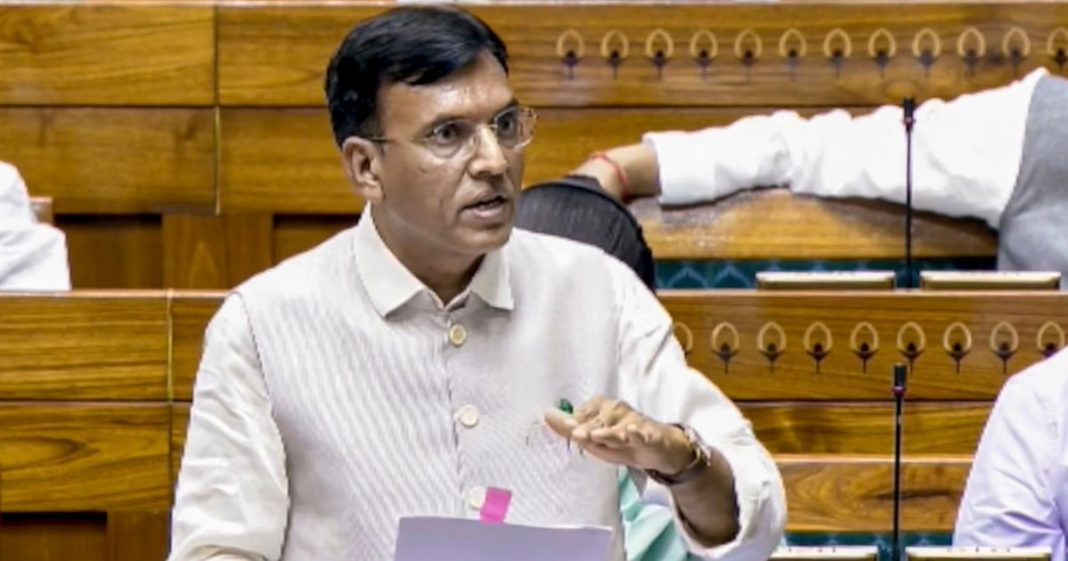

New Delhi, Jun 20: Psychological screening to catch “shifting stress levels” has been made mandatory in a new Athlete Well-being Policy unveiled on Saturday by Sports Minister Mansukh Mandaviya, who asserted that concerns of sportspersons seeking help would be addressed with “zero stigma”.
In an interaction with select media here, Mandaviya said coaching and administrative staff at the Sports Authority of India’s National Centres of Excellence (NCOEs) and Sports Training Centres (STCs) have been given strict directive that athletes’ concerns must be met with “total safety” and they should be assured that seeking psychological help is a sign of strength, not weakness.
“This mandatory policy shifts our focus from simple talent management to comprehensive, athlete-centric development. It protects our athletes in National Centres of Excellence (NCOEs) and Sports Training Centres (STCs),” he said.
“Our youth face intense pressures, from selection anxieties and injury fears to homesickness. If left unaddressed, this leads to burnout. This framework systematically acts before burnout forces a talented athlete to drop out,” he explained.
The Minister said the policy works on a Universal Acceptance model.
“Every single athlete, from the grassroots level to the elite tier, can formally or informally file concerns regarding anything impacting their peace of mind. Every regional centre will have dedicated counsellors,” he said.
“We will no longer wait for a crisis to occur. Wellness tracking begins on day one with mandatory psychological screenings immediately upon an athlete’s induction,” he added.
SAI centres will conduct regular, non-invasive Wellbeing Assessments across the annual calendar to catch “shifting stress levels early”.
“If an issue remains unresolved with primary counsellors, the policy establishes a clear pathway to transition the matter directly to the Regional Director. Athletes must feel secure.
“We have operationalised robust safeguards and independent, anonymous gateways like suggestion boxes so athletes can safely raise concerns about peers, management, or coaching staff without fear of retaliation,” he said.
In addition, the appointed counsellors across NCOEs and STCs will coordinate with sports nutritionists and sports scientists for the care of the affected athlete.
“We are also mandating frequent, core educational training regarding Sexual Harassment and POCSO regulations across all training centres,” the minister said.
Mental health has come into increased focus in Indian sports and travelling psychologists are becoming a trend during major competitions. However, there was no systemic framework in place to manage the challenges of a modern sportsperson’s life.
India’s first individual Olympic gold-medallist Abhinav Bindra has often stressed on the need for increased focus on mental health and even shared his own psychological struggles while chasing the glory.
CSR Reforms
==========
The minister also announced that sports will join health and education as a priority sector for Corporate Social responsibility funding by Central Public Sector Enterprises (CPSEs) towards national development priorities.
Earlier, sports was an eligible CSR activity under Schedule VII of the Companies Act, 2013.
As a result, CSR investments in sports remained limited and largely dependent on the individual priorities of CPSEs. The priority areas receive 60 per cent of CSR funding as per the existing rules of Department of Public Enterprises.
“Unlike sectors such as education, healthcare and nutrition, sports did not benefit from a coordinated policy push or a clearly defined set of intervention areas for CSR funding,” the minister said.
“For the first time, ‘Development of Sporting Activities’ has been notified as a Common CSR Theme for 2026-27 and 2027-28,” he added.
The notification also specifies key areas of intervention, namely development of sports infrastructure, sports equipment, access to professional coaching, promotion of sports, and nurturing of sportspersons.
“The inclusion of sports as a Common CSR Theme is expected to substantially enhance the visibility and priority of sports within CPSE CSR planning,” Mandaviya said.
“This has the potential to unlock additional investments for grassroots sports infrastructure, athlete support systems, coaching and talent development programmes across the country,” he added. (PTI)