
By Satyabrat Borah
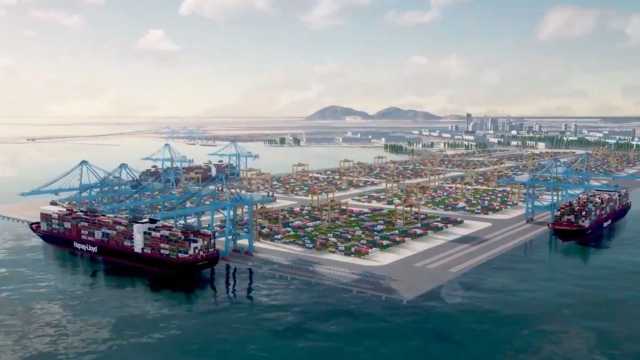
Troubled waters is an apt phrase when one looks at the Great Nicobar Project not only because it involves the sea, ports and shipping lanes, but because it reveals the uneasy currents between development and democracy, between national ambition and local survival, between urgency and wisdom. The project, envisioned as a massive transshipment port, international airport, township and power plant on Great Nicobar Island, has been presented as a bold strategic leap for India. Yet the concerns surrounding it deserved far deeper, fairer and more transparent appraisal than they have so far received.
Great Nicobar is not just another piece of land on the map waiting to be “developed”. It is India’s southernmost island, a fragile ecological treasure, and home to some of the world’s most vulnerable indigenous communities. The island sits at the mouth of the Malacca Strait, one of the busiest maritime routes in the world, which explains the strategic enthusiasm driving the project. Policymakers see opportunity in geography, envisioning a hub that can compete with Singapore, strengthen India’s naval presence, and integrate the Andaman and Nicobar Islands more tightly into the national economy. On paper, it sounds compelling. In reality, the ground tells a far more complex and unsettling story.
At the heart of the unease is the scale of the project. This is not incremental development designed to improve local livelihoods. It is a transformation so vast that it will alter the island’s landscape, coastline, forests and demography almost beyond recognition. More than 130 square kilometres of pristine rainforest are slated for diversion. These forests are not empty spaces. They are living ecosystems that buffer storms, regulate climate, store carbon and sustain countless species, many of which are endemic and found nowhere else on Earth. Once destroyed, they cannot simply be replanted or compensated for with paperwork.
Environmental concerns are not abstract fears raised by distant activists. They are grounded in scientific reality. Great Nicobar lies in a high seismic zone and is acutely vulnerable to earthquakes and tsunamis. The 2004 tsunami devastated large parts of the island, permanently altering coastlines and ecosystems. Any large infrastructure project in such a region demands extraordinary caution. Yet critics argue that environmental impact assessments have been rushed, fragmented and based on outdated or inadequate data. When risk is high, speed should not be mistaken for efficiency.
Equally troubling is the threat to biodiversity. The island is part of a global biodiversity hotspot. Its rainforests, mangroves and coral reefs form an interconnected web of life. Coral reefs protect the coastline from erosion and storm surges. Mangroves act as natural shields against rising seas. Forests stabilize soil and regulate freshwater flows. Large scale construction, dredging and shipping traffic threaten to disrupt this balance. Pollution, invasive species and increased human pressure could push delicate systems past their tipping points. These are losses that no strategic gain can truly offset.
Perhaps the most painful dimension of the project is its impact on indigenous communities, particularly the Shompen and the Nicobarese. The Shompen are a semi nomadic tribal group who live deep within the island’s forests and have limited contact with the outside world. Their survival depends entirely on the integrity of the ecosystem. Roads, ports and townships are not neutral interventions for such communities. They bring disease, displacement, cultural erosion and loss of autonomy. History across the world offers countless examples of indigenous peoples being pushed to the margins in the name of progress, often with irreversible consequences.
The Nicobarese, many of whom were resettled after the 2004 tsunami, have already experienced profound upheaval. For them, land is not merely property but memory, identity and security. Any further displacement, even if labelled voluntary or compensated, risks deepening trauma. Consent in such contexts cannot be reduced to a signature on a document. It requires time, trust and genuine dialogue, none of which appear to have been adequately ensured.
What makes the situation more concerning is the manner in which approvals have been granted. Environmental governance exists precisely to slow things down when stakes are high. It is meant to weigh costs against benefits, to amplify scientific voices, and to protect those who cannot easily protect themselves. In the case of the Great Nicobar Project, many experts feel that this process has been treated as a procedural hurdle rather than a substantive safeguard. Clearances have moved swiftly, objections have been brushed aside, and critical questions have been deferred rather than answered.
There is also the larger question of what kind of development India wants to pursue. Development is not merely about building bigger ports or airports. It is about improving human well being in a way that is sustainable, inclusive and just. The assumption that mega infrastructure automatically brings prosperity deserves scrutiny. Large ports benefit global trade, but do they meaningfully uplift local communities in remote islands. Who will the jobs go to. Who will control the land and resources. Who will bear the environmental and social costs when profits flow elsewhere.
Strategic arguments, while important, should not be used as a shield against accountability. National security is a legitimate concern, especially in a geopolitically sensitive region. But security is multidimensional. Ecological security, food security, cultural security and disaster resilience are as crucial as military positioning. Weakening natural defences in a disaster prone zone may, in the long run, undermine the very security the project claims to enhance.
Climate change adds another layer of urgency and irony. At a time when the world is grappling with rising seas, intensifying storms and biodiversity collapse, clearing primary forests and altering coastlines seems profoundly out of step with global and national climate commitments. India has spoken eloquently on international platforms about sustainable development and climate responsibility. Projects like this test whether those commitments extend beyond speeches into difficult domestic choices.
None of this means that the Andaman and Nicobar Islands should remain frozen in time or excluded from development. Islanders deserve better healthcare, education, connectivity and livelihoods. But development must be tailored to the ecological and cultural context. Smaller scale, decentralized projects rooted in local needs and knowledge are not signs of weakness. They are signs of wisdom. Eco sensitive tourism, improved disaster resilient infrastructure, renewable energy suited to island conditions and strengthened local governance could bring genuine benefits without overwhelming the land.
What is most regrettable is the missed opportunity for meaningful public debate. A project of this magnitude should have sparked wide consultation, parliamentary scrutiny and transparent sharing of information. Instead, it has often unfolded in technical language and closed rooms, leaving citizens to piece together details from scattered reports and leaks. Democracy thrives not on speed but on deliberation. When people feel unheard, distrust grows, and even well intentioned initiatives lose legitimacy.
The Great Nicobar Project forces us to confront uncomfortable questions. Are some places too precious to gamble with. Can strategic ambition coexist with humility before nature. Do we value indigenous lives and knowledge enough to let them shape decisions that affect their future. These are not anti development questions. They are pro humanity questions.
History will judge projects like this not only by what they built, but by what they destroyed and whom they silenced along the way. If concerns about the Nicobar project had received fair appraisal, the outcome might have been different. The project might have been redesigned, scaled down, relocated or even reimagined entirely. That possibility should not be closed prematurely.
Troubled waters can still be navigated if there is willingness to pause, listen and rethink. True progress lies not in conquering nature, but in learning to live within its limits. Great Nicobar, with its forests, reefs and communities, offers India a chance to demonstrate that lesson. Whether the country chooses to seize that chance remains an open and urgent question.