
By Satyabrat Borah
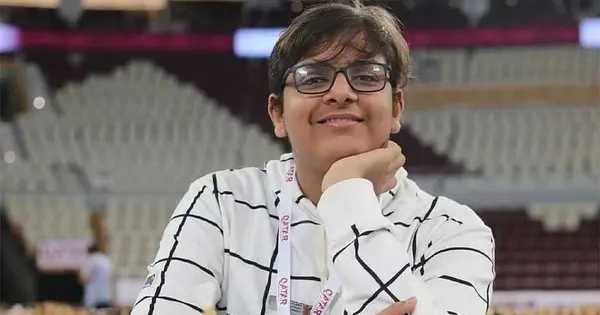
A quiet town in Assam woke up to extraordinary news when a teenager turned a lifelong dream into reality. Seventeen year old Mayank Chakraborty earned the title of Grandmaster, becoming the ninety fourth player from India to achieve that honour. The achievement carried a special meaning for an entire region because he also became the first Grandmaster from Assam and the first from the whole North East of India. For people who follow chess in the country, the announcement felt like a proud moment for Indian sport. For families and young players across Assam, it felt personal.
The journey that led to this milestone unfolded thousands of kilometres away from home. In Sweden, during the Hotel Stockholm North by First Hotels Chess Talents Tournament, Mayank produced one of the strongest performances of his career. The tournament brought together skilled players from several countries, each hoping to climb higher in the world of chess. For a young player from India, the pressure was immense. Every game carried the weight of years of preparation and expectation.
Mayank approached the tournament with calm focus. Over nine rounds he displayed remarkable consistency. Six victories, two draws and only one loss helped him finish with seven points out of nine. The performance placed him firmly at the top of the standings. More important than the tournament victory was the result that followed. With those games he secured his final Grandmaster norm and crossed the crucial rating barrier of 2500 set by the international chess federation FIDE. The result confirmed what many coaches and observers had predicted for years. India had a new Grandmaster and the North East had its first.
The decisive moment came in the eighth round of the tournament. Mayank faced Swedish International Master Philip Lindgren. The game demanded deep calculation and patience. Spectators watching the match sensed that the young Indian was in command of the board. With steady moves he built pressure until the position favoured him. When Lindgren finally resigned, Mayank moved one step closer to history. The victory pushed his score high enough to secure the final norm required for the Grandmaster title.
The final round brought another tense contest. Across the board sat English International Master Jonah B Willow. Both players fought for control during a complex game that tested endurance and concentration. The game ended in a draw after an intense struggle. For Mayank, that result sealed his place as the champion of the tournament and confirmed the most memorable achievement of his career.
News of his success travelled quickly across India. In Assam, chess enthusiasts celebrated with excitement and pride. The region has produced talented athletes in several sports such as boxing, football and athletics. Chess had never seen a Grandmaster from the region until that moment. Young players who had been quietly studying openings and tactics suddenly saw a clear path toward the top levels of the sport.
Mayank’s story carries the familiar elements of talent, dedication and family support. Born and raised in Guwahati, he developed an interest in chess during early childhood. Many parents introduce their children to chess as a hobby, hoping it will sharpen their thinking. For Mayank, the board quickly became a place of fascination. The game allowed him to explore patterns, strategies and possibilities that seemed endless.
Coaches noticed his natural understanding of the game. Even at a young age he displayed patience and creativity during competitions. Local tournaments became his training ground. Each event added experience and confidence. Soon he began competing at the national level where the competition grew stronger.
His rise through age group tournaments came quickly. He earned a national silver medal in the Under nine category, followed by a national gold medal in the Under eleven division. These early successes signalled that a remarkable career might be ahead. International competitions soon followed.
At the Asian Youth Chess Championship held in Sri Lanka, Mayank captured a silver medal in the Under ten category. Competing against talented players from several countries gave him valuable exposure. Every tournament helped him understand how top players approach the game.
A major turning point arrived in 2021 when he gained opportunities to compete in Europe. The European chess circuit is known for strong tournaments where ambitious young players test their skills against experienced opponents. For Mayank the experience was transformative. Facing international players forced him to refine his preparation and strengthen his mental resilience.
During that period his Elo rating climbed rapidly. Ratings are a crucial measure in chess because they reflect the strength of a player’s performance. Mayank’s rating jumped from the eighteen hundreds to close to twenty two hundred. Such progress within a short period drew attention from the chess community. He also reached the sixth position in the world ranking for boys born in 2009 or later. The achievement placed him among the most promising young players of his generation.
In 2024 he achieved the title of International Master. The title itself requires strong tournament results and high ratings. Many players spend years chasing that milestone. For Mayank it served as a stepping stone toward the ultimate goal of becoming a Grandmaster.
The Grandmaster title is one of the highest honours in chess. Players must achieve three Grandmaster norms in strong tournaments and cross the 2500 rating mark. Each norm demands exceptional performance against experienced opponents. Many talented players fall short of the requirements even after years of effort. Reaching that level at seventeen is a remarkable accomplishment.
His final performance in Sweden reflected maturity and composure. Observers noted his careful preparation and ability to remain calm under pressure. In several games he converted small advantages into victories with impressive precision. His style combines sharp calculation with positional understanding, qualities that often define elite chess players.
Behind his achievements stands a family that believed deeply in his dreams. His mother Monomita Chakraborty is a doctor who supported his training and studies with dedication. His father made a significant sacrifice by leaving his job so that he could accompany Mayank to tournaments around the world. Chess careers often require constant travel and intense schedules. Having family members who share the journey can make an enormous difference for a young player.
The support system around him also includes coaches and mentors who guided his development. Training sessions often involve analysing classic games, solving complex puzzles and preparing for specific opponents. Chess may appear quiet from the outside, though the mental effort behind every move is immense.
India’s chess culture has grown dramatically over the past few decades. A major influence on this growth came from legendary Grandmaster Viswanathan Anand. His world championship victories inspired an entire generation of players. Chess academies began appearing across the country. Young students started studying the game with professional seriousness.
As a result India now produces a steady stream of strong players. The number of Grandmasters has risen steadily each year. Mayank’s achievement brings the national total to ninety four. The number reflects how deeply the sport has taken root across different regions of the country.
What makes Mayank’s success unique is the region he represents. The North East of India is known for its vibrant culture and sporting spirit. Many athletes from the region have excelled in boxing, weightlifting and football. Chess development had been slower due to limited training infrastructure and fewer tournaments.
His success offers a powerful message for young players across the region. Talent can flourish anywhere with determination and support. Schools and sports organisations in Assam have already begun encouraging students to take interest in chess. The story of a local teenager reaching the highest title in the sport has sparked fresh enthusiasm.
Chess carries benefits that extend far beyond competition. The game strengthens concentration, memory and analytical thinking. Many educators believe that learning chess helps students develop patience and problem solving abilities. Each game becomes a lesson in decision making and responsibility.
Mayank’s journey reflects those values. Hours spent studying positions and analysing mistakes shaped his growth as a player. Every defeat offered a chance to improve. Every victory strengthened his belief in the path he had chosen.
As he steps into the circle of Grandmasters, new challenges will appear. The global chess scene includes many formidable opponents. Tournaments become tougher and expectations rise. For a young Grandmaster the journey is only beginning.
Observers believe that Mayank has the potential to achieve even greater heights. His age allows him time to refine his skills and gain experience in elite competitions. With continued dedication he could become a regular contender in major international events.
For the people of Assam his achievement will remain a landmark moment. It shows how dreams nurtured in quiet corners of the country can reach the world stage. A chessboard placed on a simple table in a small room can open doors to global recognition.
Stories like his remind us that success in sport often begins with curiosity and perseverance. A young boy learning the moves of the pieces gradually becomes a master of strategy. Each move carries the weight of careful thought. Each victory adds a new chapter to the journey.
Today Mayank Chakraborty stands as a symbol of possibility for thousands of aspiring players. His name joins the list of Indian Grandmasters who have shaped the country’s presence in world chess. From Guwahati to Stockholm, his journey reflects dedication, family support and the quiet power of patience.
The sixty four squares of the chessboard may appear small, though within that space countless stories unfold. One of those stories now belongs to a teenager from Assam who dared to dream and worked tirelessly to achieve it. The moment he became India’s ninety fourth Grandmaster will remain a proud memory for his state and for the entire nation.