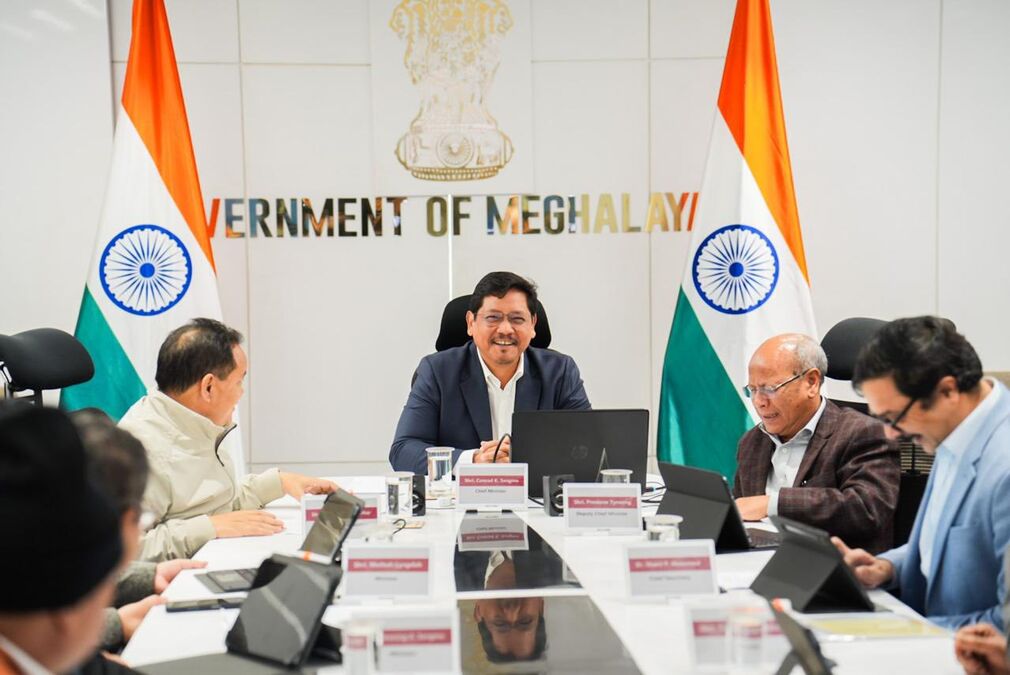

The government at that point in time did not come up with a scheme on how this particular contribution will be then given to the employees of these colleges and schools when they retire. – Conrad K Sangma, Chief Minister
Shillong, Apr 1: Employees of deficit schools and colleges will now be covered under the Provident Fund scheme, fulfilling a long pending aspiration.
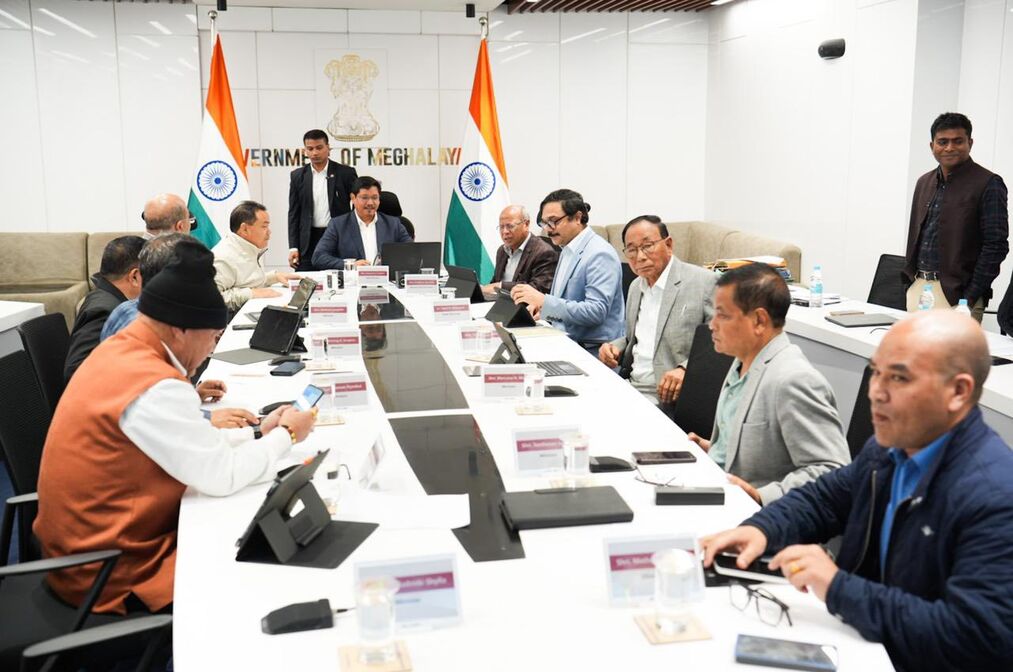
The state cabinet on Wednesday took the decision while giving its approval to the Meghalaya Non-Government Schools and College Employees Centralized Provident Funds Scheme 2026.
Informing about the cabinet decision, Chief Minister Conrad K Sangma said the government had lacked a proper scheme to process “certain contributions” made by the large number of employees of non-government schools and colleges in the state.
Now, with the approval to PF scheme, he said, “Employees of non-government schools and colleges will be getting the benefits of the Provident Fund.”
He said the measure applies mainly to deficit teachers and staff in private schools and colleges funded partly by government grants, such as St Anthony’s College, St Edmund’s College, Shillong College and others.
The government pays salary to the staff in these colleges in terms of deficit grants.
Contributions from those employees were being deducted under an Act inherited from Assam and adopted by Meghalaya, but no scheme existed to channel the funds back to them at retirement.
“The government at that point in time did not come up with a scheme on how this particular contribution will be then given to the employees of these colleges and schools when they retire,” he said.
With the cabinet approval, he said, the post-retirement benefit will be provided to the beneficiaries.
“It was pending for a very long time,” he said.
The chief minister said he did not have the exact number of beneficiaries on hand, but the scheme would now provide a formal structure for distributing accumulated contributions.
Asked about financial implications, he clarified: “The contributions have already been made.”
Through the new scheme, the benefits would now be distributed to the eligible beneficiaries.