
By Dipak Kurmi
The advent of spring heralds the arrival of one of Assam’s most anticipated and vibrant celebrations—the Bohag Bihu, also known as Rongali Bihu. This festival is not merely an agricultural observance; it is a profound cultural expression that unites the diverse communities of Assam and its neighboring North-Eastern states. Rooted in the Sanskrit word ‘Bishu,’ meaning an invocation for prosperity, Bohag Bihu serves as a joyous prayer to the divine, seeking blessings for an abundant harvest and the well-being of all. Celebrated in mid-April, it marks the beginning of the Assamese New Year, symbolizing a fresh start filled with hope, harmony, and festivity.
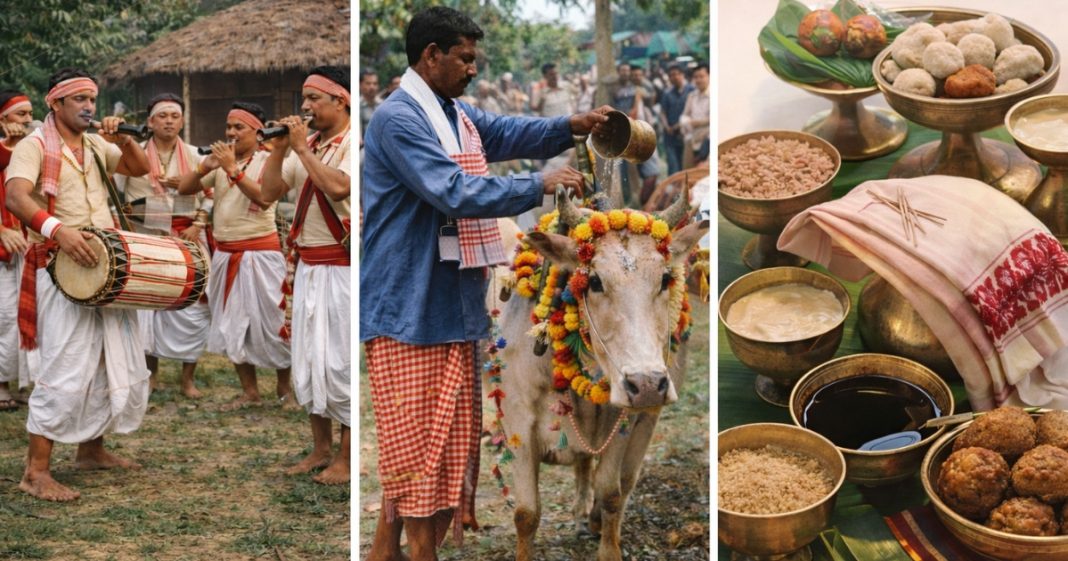
Bohag Bihu extends over seven days, each infused with distinct traditions, rituals, and celebratory elements that reflect the rich cultural heritage of the land. At its essence, the festival pays homage to the earth’s bounty and agricultural cycles, yet it also transcends mere agrarian customs. It is a festival of dance, music, games, feasting, and communal unity. The air resonates with the melodious strains of Bihu songs, the lively beats of the dhol (drum), and the soulful notes of traditional instruments like the pepa and gagana. The festival’s gastronomic delights further elevate the experience, offering a delectable range of traditional Assamese sweets and dishes that have been passed down through generations.
Assam’s Ethnic Tapestry and Bihu’s Unifying Role
Assam’s cultural landscape is woven with threads of ethnic, linguistic, and religious diversity. The state is home to a multitude of communities, including Tibeto-Burman, Indo-Aryan, Tai-Ahom, Kuki-Chin, Dravidian, the Tea Garden labor community, Muslims, and Bengalis. While each group maintains its own distinct customs, the Bihu festivals serve as a common celebratory platform that unites them all. Bihu is a shared cultural identity that transcends differences and fosters a collective spirit of festivity. However, several ethnic groups also observe their own versions of Bihu, incorporating rituals and traditions unique to their heritage.
The Ahom Community and Bohag Bihu
For the Ahom community, Bohag Bihu holds immense cultural significance. The celebrations commence with Garu Bihu, the day dedicated to the veneration of cattle, a vital aspect of agrarian life. During the seven-day festivities, Ahoms prepare and relish pitha-jalpan (traditional rice cakes and snacks) alongside an array of fresh vegetables harvested from their gardens. Pork dishes are also a staple during this period. A highlight of their celebrations is the Bihu Husori—a vibrant musical procession accompanied by rhythmic drumming, the melodic strains of the pepa, and the resonant tunes of the gagana. Ancestor worship remains a central aspect of Ahom Bihu traditions. According to a longstanding belief, neglecting to offer prayers and make ritualistic offerings to one’s forebears is considered an ill omen, potentially bringing misfortune to the family. However, in contemporary times, these deep-rooted traditions have seen a gradual decline, with modern influences reshaping the way Bihu is observed within the Ahom community.
The Bodo-Kachari’s Baisagu Celebration
Among the Bodo-Kachari community, Bohag Bihu is known as Baisagu. This week-long celebration begins with Magon, or Cow Bihu, where cattle are honored with ritualistic bathing and adorned with paddy and oil-smeared horns. The deep bond between the Bodo-Kachari people and nature is evident in these practices. The second day, known as Mansoi Domahi or Manuh Bihu, is dedicated to ancestral veneration through the Bathai Puja. The celebration peaks with community-wide dance and merrymaking. The famous Bagurumba dance, an enchanting and graceful performance exclusive to the Bodos, takes center stage. In addition, Husori teams travel from house to house, spreading cheer and festivity.
The Deuri Community’s Bohagiya Bisu
For the Deuri community, Bohag Bihu, or Bohagiya Bisu, begins on the first Wednesday of the Bohag month. Their celebrations include ritualistic animal sacrifices at the sacred gosainisal and the performance of the Ghardew Puja. On the day of Goru Bihu, members of the Deuri community don new attire and participate in Husori dance performances led by the gosainis. The grand culmination of their Bisu festival occurs over the weekend, marked by community prayers and a final Husori performance that encapsulates the spirit of joy and reverence.
The Missing People’s Unique Husori Tradition
The Missing community approaches Bohag Bihu with a distinctive focus on the tradition of Husori. Unlike other tribes that emphasize rituals, the Missing people place greater importance on cultural performances. Unmarried young men and women form Husori groups, visiting different households to perform Bihu songs and dances. The community welcomes these groups with betel nuts, leaves, and monetary offerings as a token of appreciation. The celebrations conclude with the serving of Apong, a traditional rice-based drink that holds cultural significance for the Missing people.
The Rabha, Karbi, Moran, Tiwa, and Tea-Community Observances
The Rabha community celebrates Bohag Bihu as Baikhu over three days. The first day is dedicated to Garu Bihu, followed by Bisuwa, where they honor their ancestors and deities through elaborate rituals.
The Karbi community’s Rongker festival, though not directly named Bihu, coincides with the same period. It is an all-male celebration devoted to ensuring village prosperity. This three-day festival includes rituals, feasting, and animal sacrifices.
The Moran community follows a distinct Bihu calendar, celebrating Uruka, Garu Bihu, and Manuh Bihu on the first Tuesday, Wednesday, and Thursday of Bohag, respectively. They emphasize elder-led Husori performances and culminate their celebrations with Bormagu, an event centered around traditional feasting on pitha, rice beer, and a wide variety of seasonal vegetables.
The Tiwa people mark their Bihu festivities with Baishak-Bisu, which extends for an entire week. They begin with prayers to their deities, including Bagh-Raja (the Tiger God), Mahadev, and Kubre, protector of agriculture. Their Husori performances mirror those of other ethnic communities, blending into Assam’s larger Bihu celebrations.
The Tea-community people uphold a unique springtime tradition called Chaitra Parab or Charak Puja. Spanning two days, it includes religious observances, song and dance processions, and well-wishing visits to neighbors’ homes. Adorned in traditional attire, they move from house to house, offering prayers for prosperity and harmony.
Bohag Bihu: A Festival of Unity and Cultural Legacy
Assam’s vast array of fairs and festivals serves as a unifying force, bringing together diverse ethnic groups in a shared cultural experience. Among them, Bohag Bihu holds a special place in the hearts of the Assamese people, especially those engaged in agriculture. Beyond its religious and ritualistic significance, the festival fosters a sense of gratitude, reinforcing the intrinsic connection between human communities and the land that sustains them. Farmers, irrespective of their religious or ethnic background, come together to express gratitude to the divine for past harvests while seeking blessings for future abundance.
Bohag Bihu’s enduring legacy is a testament to the resilience and adaptability of Assam’s cultural traditions. As the festival evolves to accommodate contemporary influences, its core essence remains untouched—a celebration of life, unity, and the indomitable spirit of the Assamese people. Whether through its spirited dance performances, soul-stirring music, elaborate feasts, or deep-rooted rituals, Bohag Bihu continues to stand as a beacon of Assam’s rich cultural heritage, embracing diversity while forging a collective identity.
(the writer can be reached at dipakkurmiglpltd@gmail.com)