
By Dipak Kurmi
Any nation that seriously aspires to achieve global superpower status must be backed by a resilient youth population that is both meaningfully employed and equipped with a fundamentally positive, forward-looking mindset. Indeed, India stands today as one of the youngest nations on the planet, possessing a sizable and unprecedented reservoir of youthful energy that could theoretically propel its macroeconomic trajectory for decades. However, if this immense demographic cohort is not systematically engaged in constructive, formal work, there remains a dangerously high probability of this collective energy going wayward, transforming a potential economic dividend into a volatile social liability. In recognition of his government’s stated commitment to accelerated employment generation, Prime Minister Narendra Modi recently presided over the nineteenth national edition of the Rozgar Mela, distributing appointment letters to over fifty-one thousand freshly recruited government employees across forty-seven designated locations nationwide. While the virtual ceremony was characterized by political warmth and a genuinely well-meaning administrative intent, the underlying economic arithmetic confronting the country remains absolutely brutal.
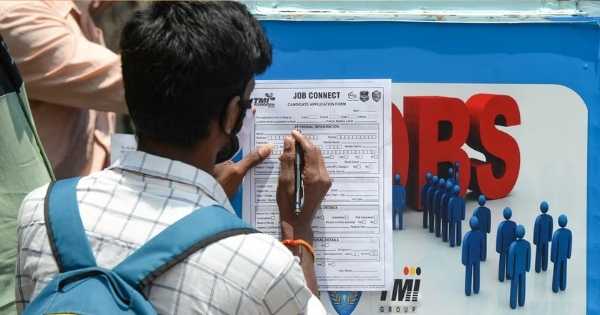
The foundational challenge of India’s contemporary labor economics is rooted in sheer scale, as the country adds roughly one million young people to its potential workforce every single month. Against this relentless demographic influx, the distribution of fifty-one thousand government posts once every few months operates as a symbolic political gesture rather than a mathematically viable macroeconomic solution. According to the Periodic Labour Force Survey monthly bulletins, youth unemployment in India among individuals aged fifteen to twenty-nine years stood at a sobering fifteen point two percent as of March 2026, marking a visible increase from the relative lows of thirteen point eight percent recorded just a year earlier. This inflationary trend in joblessness is particularly acute among young women, who fare far worse with an unemployment rate hovering near eighteen percent nationally, and climbing significantly higher within volatile urban centers. These compounding percentage points paint a picture of an economy struggling to absorb its educated cohorts, leaving millions of aspirational graduates stranded on the periphery of the formal labor market.
Compounding this empirical anxiety is a deep, institutional chasm regarding how unemployment is officially quantified versus how it is actually experienced by ordinary families. The Centre for Monitoring Indian Economy, a widely respected independent macroeconomic research body, has consistently placed India’s broader national unemployment rate between seven and eight percent, a figure that is more than double the government’s own standard survey baseline. This statistical divergence reflects a profound structural mismatch in measurement methodologies, but behind every single percentage point lies a hyper-qualified graduate sending out hundreds of unanswered digital applications, a young professional trapped in a cycling pattern of precarious gig-economy stints, and an entire family waiting anxiously on a single steady income stream that never seems to arrive. Paradoxically, over thirty lakh sanctioned vacancies continue to remain entirely unfilled across various central government departments alone, highlighting a bizarre administrative bottleneck where public sector positions remain vacant even as ceremonial hiring drives distribute letters in the mere tens of thousands.
This yawning gap between bureaucratic execution and demographic necessity inevitably casts a long shadow over the historical political landscape, making the Prime Minister’s original 2014 campaign promise of generating two crore jobs annually read as a stark reminder of the immense distance between administrative ambition and actual delivery. None of this analysis is intended to imply that the institutional mechanism of the Rozgar Mela is entirely devoid of socioeconomic value. For the fifty-one thousand specific individuals who received their formal appointment letters during the nationwide broadcast, this event represents an undeniably life-changing milestone. A secure government job in contemporary India remains an extraordinarily rare and highly coveted economic asset, offering stable salaries, long-term pension frameworks, and total insulation from the volatile chaos of the informal sector, which still ruthlessly employs the vast majority of working Indians. Every single vacancy that is systematically filled alters a family’s material circumstances for the better, providing a critical anchor of middle-class stability that ripples positively through local communities.
However, the deeper macroeconomic crisis confronting the Indian state is fundamentally structural in nature, and temporary ceremonial hiring drives simply cannot fix a systemic breakdown in private sector labor demand. India’s corporate sector—most notably the capital-intensive manufacturing ecosystem—has historically failed to absorb the nation’s unfolding demographic dividend at a meaningful, transformative scale. While the government’s flagship Production Linked Incentive scheme holds considerable long-term industrial promise, and Prime Minister Modi’s recent high-level bilateral agreements with advanced economies like the Netherlands, Sweden, Norway, and Italy in fields like semiconductor fabrication, artificial intelligence, and advanced manufacturing could eventually seed high-quality employment, the critical operational keyword remains time. India’s restive youth population simply cannot afford to wait another decade for these highly complex, technology-driven global value chains to mature and cascade into millions of entry-level domestic manufacturing opportunities.
Navigating this demographic tightrope successfully demands three immediate, highly aggressive structural shifts in India’s national economic policy. First, there must be a serious, completely transparent, and non-partisan national accounting of existing public sector vacancies, treating these empty offices not as political ammunition to be deployed during election cycles, but as a binding national obligation. If over thirty lakh sanctioned posts are sitting empty across central government departments, defense establishments, railways, and public healthcare systems, a coordinated institutional mechanism must be established to fill them systematically without the artificial delays imposed by bureaucratic inertia. Second, the state must invest massively and creatively in radical, industry-aligned quality skilling under reworked iterations of the Pradhan Mantri Kaushal Vikas Yojana and allied technical education frameworks, ensuring that the millions of youth who inevitably land outside government employment possess the future-proof, practical competencies required to compete effectively for formal private sector roles.
Third, and perhaps most importantly, the regulatory apparatus must make it genuinely and historically easier for small and medium enterprises to hire, expand, and formalize their operations, because it is within this vast decentralized segment that the bulk of India’s long-term employment must ultimately be generated. Micro, small, and medium enterprises currently face a punishing gauntlet of compliance costs, rigid labor laws, and credit access bottlenecks that disincentivize formal expansion, forcing them to remain intentionally small and reliant on temporary, informal arrangements. By radically cutting red tape, offering direct employment elasticity tax incentives, and formalizing supply chains, the government can transform these smaller enterprises into powerful engines of local job creation. Ultimately, the Rozgar Mela can remain a celebrated feature of public administration, but it must be understood as a modest epilogue to a much larger economic story. True economic self-reliance and social stability will not be achieved by the occasional distribution of parchment, but by a systemic, structural restructuring that unleashes the creative and productive power of India’s youth across a modernized, unencumbered private market.
(the writer can be reached at dipakkurmiglpltd@gmail.com)