
By Dipak Kurmi
The emerald valleys of Assam cradle secrets of dynasties that once shimmered with the brilliance of burnished gold, yet few tales resonate with the melancholic grandeur of Sati Sadhani, the last sovereign of the Chutia Kingdom. Every year, as the twenty-first of April dawns, the people of Assam pause in solemn reverence to commemorate Sati Sadhani Divas, a day etched in the collective consciousness to honor a queen whose spirit remains as unyielding as the peaks of the eastern Himalayas. Her narrative is not merely a chronicle of a fallen regime but a testament to a civilization that was technologically precocious, culturally opulent, and fiercely independent. The Chutia Kingdom, centered in the verdant expanse of Sadiya, represented a pinnacle of medieval Assamese advancement, thriving long before the tides of history turned in favor of the rising Ahom power. To understand Sadhani is to traverse the labyrinthine corridors of the sixteenth century, where the clash of empires forged the modern identity of the Brahmaputra valley.
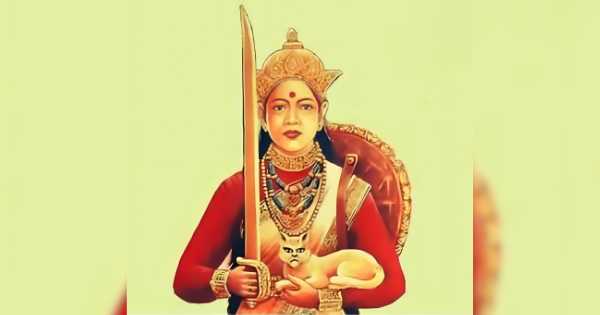
The decline of this mighty dynasty was precipitated by a vortex of political instability following the demise of King Dhirnarayan. In the ensuing vacuum of power, the Chutias found themselves besieged by the expansionist fervor of the Ahom monarch, Suhungmung Dihingia Raja, who reigned from 1497 to 1539. By 1523, the Chutia defenses crumbled under the relentless pressure of the Ahom military machinery, leading to a definitive defeat. In the face of subjugation, Queen Sadhani and her consort, King Nitipal, chose a path of ultimate defiance over the ignominy of surrender. They retreated to the heights of Chandragiri Hill, and in a final, poetic gesture of martyrdom, leaped into the rushing waters of the river below. They did not go empty-handed; they carried with them the hallowed insignias of their royalty—a sacred sword, a shield, and a meticulously crafted golden cat. This act of self-immolation marked a tragic zenith for the Chutia people, signaling the end of their independent political entity and the beginning of a forced dispersal across Assam to prevent any resurgence of their unified might.
The historiography of the Chutia community was significantly illuminated in December 1850 when William Robinson, a British Baptist missionary, published the Chutia Buranji in the periodical Arunoday, having recovered it from an ancient manuscript. This period of colonial intervention, however, was a double-edged sword. While it preserved certain historical texts, the British administration simultaneously implemented social strategies that exacerbated divisions within Assamese society. Under the guise of scientific inquiry, colonial policies revived rigid interpretations of the Hindu caste system, amplifying minute communal differences to maintain administrative control. This systemic restructuring favored Western-educated upper-caste individuals while marginalizing those existing outside the traditional Varna-Hindu hierarchy. The 1901 Census Report specifically noted that the government had adopted the functions of the twelfth-century Bengal King Ballal Sen to fix the positions of various castes, a move that codified social stratification and left many indigenous groups, including the Chutias, in a precarious socio-economic state.
Central to the Chutia identity is an enigmatic and profound spiritual connection to the feline form, a cultural trait that distinguishes them from any other community in the region. The cat was not merely a pet but a national totem, a sacred entity deeply embedded in their belief system and later diffused into broader Assamese folklore. According to legend, the Chutia royalty was bestowed upon Birpal, the kingdom’s founder, by the deity Kuber, the Hindu god of wealth. By the fourteenth century, a leader named Jai established the Deo Ghar at Joirapar in Sivasagar, a temple dedicated to Lord Shiva and the Goddess Kesaikhati. Within this sanctuary resided two statues of cats, embodying a mystical significance that persists today. In Assamese belief, the cat possesses an ethereal power; the killing of a cat, particularly one of ebony hue, is considered a profound inauspiciousness that requires atonement through the offering of a cat fashioned from pure gold. This reverence finds echoes in distant lands, from the cat insignias of the Hengduan Shan state in the Tibeto-Chinese borderlands to the veneration of felines in ancient Egypt and Persia, suggesting a primordial link between the Chutias and the trans-Himalayan cultures.
The migration patterns of the Chutia people provide a fascinating glimpse into the prehistoric movements of tribes across the Asian continent. Early historians posit that they are a branch of the great Shan family who entered Assam from the north, traversing the Subansiri River before settling in the Sadiya region. Some theories suggest a more remote origin near the Swat Lake area of the Himalayas, proposing that they followed the watercourse into Upper Assam. Interestingly, the people of Lower Assam originally referred to them as Swatiya, a term that gradually evolved into Chutia. In contemporary times, the correct Assamese pronunciation is Sutiya, yet the increasing linguistic influence of Hindi and English has led to a frequent and unfortunate mispronunciation. This linguistic drift has often subjected the community to ridicule due to the word’s phonetic similarity to an offensive Hindi term. Consequently, there is a growing advocacy to standardize the spelling as Sutiya to preserve the dignity of the community and prevent unintentional social friction in everyday life.
The nineteenth century brought further upheaval as the Chutia people were caught in the crossfire of the three Burmese invasions of Assam. These incursions resulted in the mass displacement of thousands, leading to the establishment of Assamese settlements in what are now Bangladesh and Myanmar. Within these exiled groups, the Chutias remained a significant presence, preserving their heritage despite the geographical dislocation. These diaspora communities offer untapped potential for historical research, promising to further enrich the tapestry of Assamese history. Despite their historical trials, the community began to reclaim its narrative in the early twentieth century. Led by a burgeoning Western-educated intelligentsia, the Sadou Asam Chutia Sanmilan was founded in 1925, taking the vanguard in fostering a renewed awareness of their unique identity and contributions to the building of the greater Assamese nation.
The annual celebration of Sati Sadhani Divas is more than a nostalgic look at a vanished kingdom; it is a vibrant reclamation of a legacy that refused to be silenced by the passage of time or the weight of colonial distortion. The story of the queen who leaped into the abyss with her golden cat remains a hauntingly beautiful metaphor for a culture that chose transcendence over degradation. By revisiting the history of the Chutia people, contemporary society acknowledges the diverse threads that constitute the resilient fabric of Assam. Sati Sadhani stands not as a figure of defeat, but as a beacon of patriotic fervor and cultural pride. Her life and the enduring traditions of her people serve as a poignant reminder that even when empires crumble and borders shift, the essence of a civilization—its myths, its sacrifices, and its gilded totems—continues to ripple through the currents of history like the waters of the river that claimed its last queen.
(the writer can be reached at dipakkurmiglpltd@gmail.com)