
By Satyabrat Borah
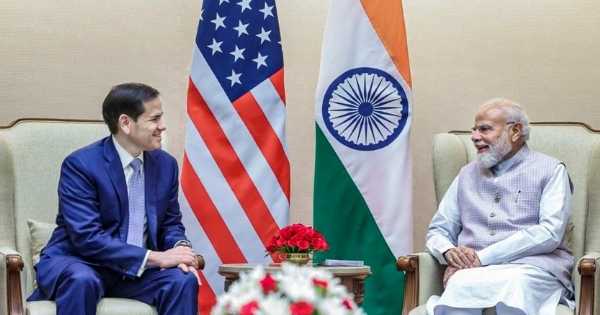
The four day visit of United States Secretary of State Marco Rubio to India was supposed to be a major turning point. Taking office in January 2025 he made this his very first official trip to New Delhi because the relationship between the two nations had hit a really rocky patch over the previous year. Everyone involved in diplomacy knew that the ties were deeply ruptured and the list of problems was growing longer by the day. We were looking at a situation where the United States had clamped down with high tariffs on Indian goods while making visas incredibly hard to get for Indian professionals. The policies coming out of Washington were squeezing immigration and cutting into the outsourcing business that so many young Indians rely on for their livelihoods. On top of that the American government had slapped heavy sanctions on India regarding its energy procurement and investments which made it very difficult for New Delhi to secure the oil and resources needed to keep its economy moving. There was also a lot of friction over how India was managing its diplomatic moves with China and Pakistan. To make matters worse the personal remarks coming from President Donald Trump and his cabinet colleagues were becoming increasingly derogatory. President Trump had even gone on social media to post messages that amplified intense anti immigrant sentiments explicitly referring to India as a hell hole. It was a massive insult that did not sit well with the public or the political circles in New Delhi.
Even though the government led by Prime Minister Narendra Modi chose not to openly criticize the United States for these harsh steps there was no hiding the immense economic worry spreading through the country. The American military action in Iran on February twenty eighth had triggered a massive regional conflict that destabilized the whole Middle East. When the Hormuz Strait was blockaded India found itself facing a massive crisis because that narrow strip of water is the main route for its energy supplies. With fuel costs threatening to skyrocket and trade routes shut down the economic pressure on India was becoming unbearable. This was the tense backdrop against which Marco Rubio arrived. His schedule was packed because he had to handle a heavy bilateral agenda with Indian leaders while also attending the crucial Quad Foreign Ministers meeting. There was a lot of hope in the air that this visit would serve as a healing touch to repair what was easily one of the worst phases in the history of Indo US relations. Most of this damage had been caused by Washington making unilateral moves without consulting its partner but people hoped Rubio would bring some reassurance.
When the journalists in New Delhi repeatedly questioned Marco Rubio about the insulting social media posts and the tense state of affairs he put on a brave face. He consistently maintained that the relationship was doing perfectly well and he kept using the phrase that President Trump loves India to brush off the controversy. He tried his best to make it sound like the bond was as strong as ever even when the reality on the ground looked completely different. For its part New Delhi did not let the political tension spoil their hospitality. They went all out and laid the red carpet for the American visitor. In a major departure from the usual strict diplomatic protocol Prime Minister Narendra Modi went himself to welcome Rubio upon his arrival. External Affairs Minister S. Jaishankar cleared his schedule and spent a massive portion of his weekend sitting in meetings with Rubio trying to find common ground. The hospitality extended to two separate receptions at the US Embassy.
On Sunday Jaishankar even joined a special celebration that combined marking the United States two hundred and fiftieth Independence Day with Rubio’s own birthday party. The visit was not just about sitting in dark conference rooms either because Rubio was taken to see the Missionaries of Charity in Kolkata and he traveled to Agra and Jaipur to do some classic sightseeing. During the official bilateral talks the two foreign ministers covered a massive range of topics trying to talk through everything from trade and energy to civil nuclear technology defense cooperation and the ongoing geopolitical conflicts shaking the world.
When the dust settled and the visit came to a close it became obvious that all the grand hospitality had not yielded much substance. Aside from a single agreement focused on critical minerals cooperation the bilateral segment of the trip ended with almost no significant outcomes. This particular agreement did not even feel new because it simply replicated a partnership that both countries were already pursuing within the framework of the Quad and the fifteen nation Pax Silica alliance. The fact that Rubio refused to even acknowledge that a problem existed in the relationship was a clear sign of a deeper disconnect. It showed that the United States, which India had long considered one of its most trusted global partners, was failing to recognize the genuine fears and complaints of New Delhi. It is a situation that leaves a bitter taste because you cannot fix a broken fence if you refuse to see the holes in it.
There is still a glimmer of hope that the Indian leadership managed to clearly communicate their worries to Rubio behind closed doors even if he did not admit it to the cameras. This is crucial because both sides are currently gearing up for a highly anticipated face to face meeting between Modi and Trump at the G7 Summit in Evian, France which is scheduled for mid June. India has been invited to this summit as a special invitee which gives it a powerful platform. This upcoming meeting will be the very first time that the two leaders will look each other in the eye since Modi’s visit to Washington in February 2025. A lot of damaging events have taken place since that winter visit and the June summit represents a critical window to mend a relationship that has frayed in the most vital areas. If they want to get things back on track they will have to focus heavily on repairing their economic cooperation, sorting out the energy crisis and finding common ground on regional security.
The economic friction is perhaps the hardest part to ignore because it directly impacts millions of ordinary citizens and businesses. When a country like the United States raises tariffs it tells its partners that trade is no longer a two way street. For India, a growing economy that relies on global markets to create jobs for its massive youth population, these trade barriers are a direct hit to its growth story. The visa restrictions make it feel like the human bridge between the two nations which was built over decades by brilliant students and tech workers is being dismantled. When you call a partner country a hell hole while simultaneously relying on its top minds to run your biggest tech companies it creates a massive sense of disrespect. You cannot expect a nation to stand by you as a strategic ally in Asia while you actively undermine its economic stability and insult its people on global platforms.
The energy situation is another massive wedge that needs urgent attention from both sides. India is a country that has to import the vast majority of its oil to keep its factories running and its cities moving. When Washington decides to impose sanctions on nations like Iran or blocks investment paths it forces India into a corner. New Delhi has to look out for its own people first and ensuring affordable fuel is a matter of national survival. If the United States wants India to align with its geopolitical goals in the region it must offer viable alternatives instead of just throwing threats and penalties around. The conflict in the Middle East and the vulnerability of shipping lanes like the Hormuz Strait show that India cannot afford to let its energy security be dictated by the shifting whims of a government in Washington.
The security dynamics in Asia are changing rapidly and this is where the partnership matters most for the United States. With China expanding its footprint across the Indo Pacific region Washington desperately needs a strong reliable democratic counterweight in Asia. India fits that role perfectly but it cannot be a one sided deal where India takes all the risks while the United States reaps the benefits. The relationship has to be built on mutual respect and shared benefits. If the American administration keeps playing a double game by making nice statements during visits but passing hostile laws at home the trust will completely erode. The Quad alliance is a good step but it cannot survive on empty statements and repetitive agreements about critical minerals. It needs real economic backing and an understanding that India’s security concerns regarding Pakistan and China are just as important as America’s global ambitions.
As the preparations for the June meeting in France begin the diplomats in both Washington and New Delhi have their work cut out for them. They need to look past the grand receptions, the birthday cakes and the protocol breaks to address the real bitterness that has crept into the system. The Modi Trump meeting cannot just be another photo opportunity filled with hugs and speeches because the stakes are far too high this time. The economic ties need a complete reset with a clear path toward reducing tariffs and making immigration smoother. Energy cooperation needs to be insulated from political sanctions so that India can plan its growth without constant fear of American intervention. Most importantly the language used by top American leaders needs to change because a lasting partnership can only be built on a foundation of dignity.
Marco Rubio’s trip might have been a missed opportunity to deliver immediate results but it served as a very clear reality check for New Delhi. It showed that the old assumptions about the United States being a reliable friend need a careful rethink. India is realizing that it has to navigate this relationship with a lot more caution and self reliance. The upcoming G7 Summit is the perfect stage to see if the two nations can genuinely fix the bad fences that have grown between them or if they will let the walls grow higher and separate them even further. The future of regional security and global trade depends heavily on which path these two giants choose to walk together.