
By Dipak Kurmi
Speaking on the anniversary of the landmark Pokhran nuclear tests conducted in absolute defiance of severe American warnings, Prime Minister Narendra Modi declared with characteristic fortitude that India will not bow down to anyone. This assertion was intended as a public heralding of the successful execution of its long-standing policy of strategic autonomy, celebrating a sovereign nation’s capacity to navigate global currents strictly on its own terms. Yet, the historical and contemporary evolution of this doctrine reveals a trajectory marked by considerably more downs than ups, characterized by profound systemic bruising rather than unhindered ascendance. The current geopolitical landscape, shaped in large part by a highly turbulent Trumpian era in Washington, has tested India’s diplomatic resilience to its absolute limits. New Delhi has been forced to constantly navigate a minefield of punitive economic tariffs, multiple financial sanctions, and the grueling, uncertain pursuit of American legislative waivers for its acquisition of Russian military platforms, cheap Russian crude oil, and the development of the strategically vital Chabahar Port in Iran.
The deepening friction within this foundational doctrine became impossible to ignore during the recent BRICS Foreign Ministers’ meeting hosted in New Delhi. External Affairs Minister S. Jaishankar abandoned traditional diplomatic euphemisms to sharply criticize unilateral, non-United Nations sanctions imposed on India, explicitly characterizing them as entirely unjustified. Even as Jaishankar delivered these remarks, Indian diplomats were behind the scenes anxiously awaiting crucial sanctions waivers from the United States regarding their ongoing engagement with Russian energy markets and Iranian infrastructure. Later in the summit proceedings, the External Affairs Minister expanded his critique, noting that the unnecessary and aggressive resort to unilateral coercive measures and economic sanctions is fundamentally inconsistent with the tenets of international law and the core principles of the United Nations Charter. He pointedly emphasized that these economic weapons disproportionately affect developing countries, crippling their growth and undermining global stability. For an Indian establishment that historically preferred quiet bilateral lobbying, this overt, public denunciation marked a dramatic shift, though some seasoned analysts observed that it resembled the futile act of closing the stable door long after the horse had already bolted.
Despite a heavily publicized slew of advanced defense and technology deals signed with European partners and France, the structural integrity of India’s strategic autonomy has been severely compromised. The historic 2016 purchase of thirty-six French Rafale fighter jets, followed by subsequent contracts for eighteen naval versions, alongside the deliberate rejection of competing American, Russian, and Swedish fighter offers, was globally heralded as a masterful combination of acquiring high technology while cementing deep civilisational trust. However, the transactional nature of the second Trump administration quickly shattered this complacency, as Washington deployed coercive tariffs and issued severe warnings over potential de-dollarization initiatives championed within the expanding BRICS bloc, ultimately forcing a more compliant stance from New Delhi. This narrative of diminished regional authority worsened dramatically in the maritime domain when a United States Navy attack submarine torpedoed and sank the Iranian naval frigate IRIS Dena in the international waters of the Indian Ocean, just after the warship had completed its participation in the prestigious Indian International Fleet Review and Exercise Milan. The sudden, violent sinking of a foreign state guest vessel almost immediately after leaving Indian waters dealt a devastating blow to India’s carefully cultivated image as the preeminent, undisputed net security provider in the Indian Ocean Region.
The word strategic has arguably become the most exhausted and overused adjective in the entire modern diplomatic lexicon, lazily attached to everything from restraint and patience to sovereignty and national interest, while the accompanying term partnership remains highly variable, dynamic, and transactional. In sharp contrast, the concept of strategic autonomy—the art of hedging, balancing, and preserving sovereign choices through complex multi-alignment—has stubbornly endured as the guiding philosophy of Indian statecraft. Its historical lineage originates directly from the policy of non-alignment adopted immediately after independence, a period when a materially weak New Delhi successfully punched far above its economic and military weight on the global stage. As the Cold War progressed and adversarial relations with an aggressive United States intensified, India was gradually pulled into the orbit of the Soviet Union. Confronted with simultaneous existential threats from Pakistan, China, and the hostile deployment of the US Navy’s Seventh Fleet in 1971, India was compelled to sign the historic Treaty of Peace and Friendship with the USSR. Even then, Prime Minister Indira Gandhi fiercely guarded India’s sovereign identity, insisting that the specific phrase declaring India as a non-aligned country be explicitly inserted into the text, though the treaty functioned de facto as a potent security alliance.
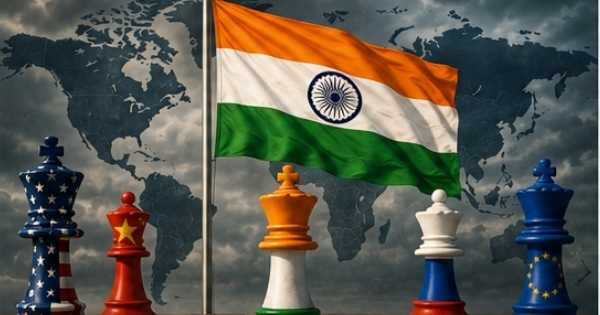
In the decades succeeding the Cold War, India’s foreign policy vocabulary evolved elegantly from non-alignment to multi-alignment, multi-engagement, and a commitment to global multipolarity, all culminating in the modern pursuit of strategic autonomy. However, the practical utility of this abstract concept appears to be rapidly diminishing within a fundamentally disrupted and fractured global order. Because successive governments have failed to produce an official, codified national security policy or a comprehensive white paper on strategy, strategic autonomy has remained something of an immaculate conception in Indian intellectual circles, despite reports that six distinct institutional drafts continue to gather dust in the corridors of power. This lack of structural definition complicates India’s graded bilateral ties, where its relationship with its oldest ally, Russia, is still sentimentally described as a Special, Privileged and Strategic partnership, while its bond with the United States has transitioned from an Estranged Democracy into a Comprehensive, Global and Strategic partnership. Simultaneously, relations with China fluctuate dangerously between total economic interdependence and militarized border skirmishes, signifying a deep, permanent structural mistrust. While the European Union has emerged as a newer entrant into India’s strategic club, its engagement remains largely restricted to trade and commerce, contrasted against Southeast Asia, where relations with Vietnam were recently elevated to an Enhanced Comprehensive Strategic Partnership during the high-profile state visit of President To Lam.
The necessity of a thorough reevaluation of this dynamic policy has been driven home by the rapid, stunning pace of contemporary superpower diplomacy. The recent summit between Xi Jinping and Donald Trump in Beijing confirmed a massive, structural shift in the American approach toward China, migrating away from the Biden-era doctrine of unyielding rivalry and competition toward an era of stable and respectful relations. This summit contributed a new phrase to the diplomatic lexicon when Xi introduced the concept of constructive strategic stability, an organizing principle that Trump warmly embraced. In a subsequent interview with Fox News, Trump went so far as to describe the Beijing meeting as resembling a functional G2, echoing the highly controversial remarks made by President Barack Obama years prior that had caused immense consternation in New Delhi. Trump displayed an unusual, highly conspicuous level of restraint and deference toward Xi, extensively praising his autocratic leadership. This pivotal encounter was immediately followed by a Xi-Putin summit in Beijing, which was characterized by the two leaders as a meeting between dear friends locked in an everlasting strategic partnership. Crucially, across both historic summits, Xi Jinping conceded virtually nothing of substance to either Trump or Putin, demonstrating that China has effectively become the central gravity well of Eurasian geopolitics and forcing a severe reassessment of India’s traditional balancing act.
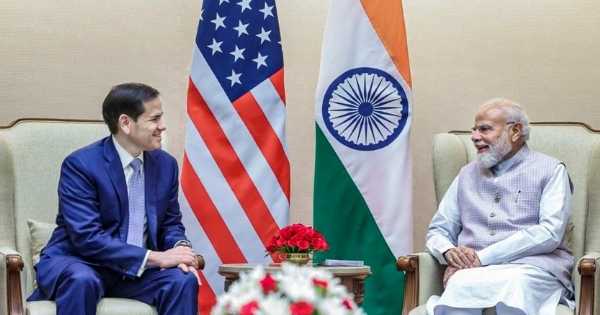
This geopolitical shift has triggered an intense, polarized debate within India’s defense and foreign policy establishment. At a recent security conference in Chennai, the majority of attendees supported the government’s current posture, defending it as an entirely pragmatic and necessary response to an unpredictable world. Conversely, a vocal opposing faction argued that New Delhi had deferred excessively to the mercurial whims of Donald Trump, a submissive trend that they trace back to Modi’s early visit to Washington in February 2025. Critics pointed out that during the two recent kinetic assaults on Iran by Western forces, India had effectively abandoned its neutrality and taken sides before the conflict had even reached its peak. New Delhi appeared fully aligned with the strategic objectives of the United States and Israel, a perception solidified when Modi delivered a historic address to the Israeli Knesset a mere forty-eight hours before the Iranian Supreme Leader was assassinated in a precision strike. It appears that both American and Indian intelligence agencies operated under the flawed assumption that the conflict would end swiftly and cleanly. Instead, India’s protracted silence throughout the unfolding humanitarian crisis severely undermined Modi’s earlier, globally celebrated assertions that this is not an era of war. India’s desperate attempt to balance its relationships simultaneously with the United States, Russia, China, Israel, the European Union, and Vietnam has resulted in an unmanageable clutter of competing priorities, with its unchecked alignment with Israel increasingly transforming into a massive diplomatic liability among the nations of the Global South.
Some of India’s most damaging recent diplomatic setbacks might have been successfully avoided with a more skillful, less rigid handling of Washington’s public narratives. When Donald Trump loudly claimed that the United States single-handedly facilitated the critical ceasefire during Operation Sindoor—the intense 2025 military confrontation triggered by the terrorist massacre in Pahalgam—the assertion was not entirely untrue. Acknowledging Washington’s behind-the-scenes backchannel diplomacy would not have automatically undermined India’s sovereign image. Yet, New Delhi’s hyper-nationalistic insistence that there was absolutely no third-party mediation appeared difficult to sustain on the global stage, given the historical reality that the United States has played a critical mediating role in nearly every major South Asian security crisis since 1971. Pakistan, by contrast, managed its diplomacy with exceptional dexterity, utilizing its proximity to the Trump administration to completely transform its international image from a state sponsor of terrorism into a responsible, indispensable mediator in conflict resolution. Islamabad can now credibly claim to have helped facilitate the impending ceasefire between the United States and Iran, a diplomatic triumph from which Israel was conspicuously excluded. Consequently, Pakistan’s international profile has risen significantly, allowing it to escape its traditional, restrictive re-hyphenation with India and enter an entirely separate diplomatic category of regional relevance.
This reality was driven home at a recent diplomatic seminar when Ambassador Jawed Ashraf remarked emphatically that silence is not strategic autonomy, delivering a scathing critique of India’s passive refusal to condemn what much of the world considers entirely illegitimate, unilateral actions by the United States and Israel against Iran. For India to truly transcend its current limitations and realize its stated ambition of becoming a fully developed Viksit Bharat, it must abandon its reactionary crouch and adopt a proactive, principled role in global governance. The nation’s foundational credibility among its immediate neighbors and across the wider Global South is currently at a dangerous crossroads. Strategic autonomy cannot function as a static, nostalgic shield to justify geopolitical paralysis; it must be treated as a dynamic, evolving strategy that demands an immediate and thorough institutional reset if India is to truly fulfill its promise to never bow down to anyone.
(the writer can be reached at dipakkurmiglpltd@gmail.com)