
By Satyabrat Borah
The historic town of Jorhat, widely revered across Assam as a glowing epicenter of education, literature, and refined culture, finds itself trapped in a deep and unsettling social crisis. A space that once nurtured intellectual discourse and provided moral direction to the region is now struggling under the suffocating grip of an expanding illegal drug trade. Over the last five to six years, the situation across the urban landscape has deteriorated to an alarming degree. The younger generation appears increasingly held hostage by an invisible network of narcotics syndicates, whose pervasive reach into neighborhoods and alleys threatens to tear apart the delicate social framework of the entire district.
The devastating impact of this crisis is most painfully felt in the repeated loss of young, promising lives. In 2021, the brutally violent killing of student leader Animesh Bhuyan in the heart of Jorhat town by an aggressive group of drug-addicted individuals sent shockwaves across Assam. That tragedy exposed the raw volatility lurking beneath the surface of the town. Regrettably, the systemic response failed to match the urgency of the moment. By 2025, another bright youth, Bedanga Bhushan Baruah, was beaten to death by drug-dependent assailants while returning home after attending Bihu celebrations.
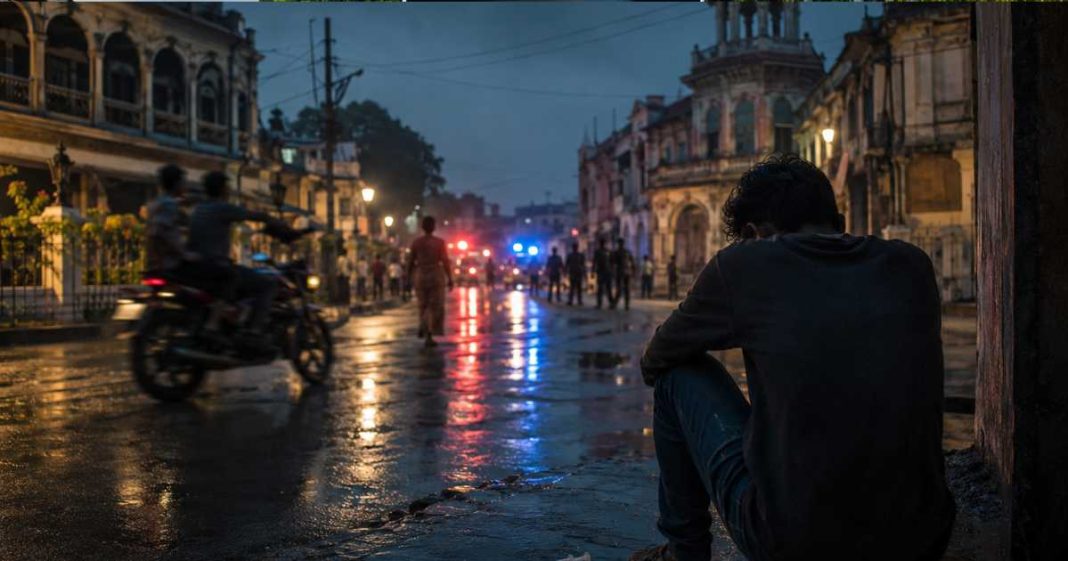
Entering 2026, the tragic and premature death of Anwesha Saikia has once again brought the shadowy menace of narcotics back to the center of public outrage. When innocent citizens are repeatedly targeted and killed on public streets, it signals a breakdown in safety that no civil society can afford to normalize. The grim realities unfolding on the ground bear a disturbing resemblance to the cinematic tragedy depicted in Udta Punjab, turning a cultural capital into a cautionary tale of systemic neglect.
This epidemic is not confined to Jorhat alone. In neighboring Golaghat district, the roots of the drug trade have struck equally deep, while Nagaon has emerged as a major operational base for regional traffickers. Illicit substances flowing through interstate corridors and international borders find their way into the interior pockets of Upper and Middle Assam with terrifying ease. The consequence of widespread addiction is a sharp rise in petty and violent crime. To sustain their daily dependency, many individuals turn to opportunistic theft, transforming into snatches who target pedestrians on motorcycles to grab gold chains and personal belongings in broad daylight.
Public frustration is increasingly directed at the law enforcement machinery and administrative bodies responsible for maintaining order. While police drives against drugs are frequently announced with significant fanfare, operations often focus primarily on low-level peddlers and vulnerable consumers. The crucial question remains unaddressed: who is actually running these lucrative drug cartels across the state? The failure to dismantle the financial backbones and apprehend the high-level kingpins behind these syndicates allows the trade to regenerate rapidly after every minor crackdown. At the same time, the institutional framework designed to rehabilitate victims of addiction is suffering from serious operational flaws. Many private rehabilitation centers function as purely commercial enterprises, where systematic therapy and professional counseling are replaced by physical mistreatment and extortionate fees levied on desperate families.
Jorhat and its surrounding districts stand at a critical crossroads. Preserving the heritage and future of this cultural center requires immediate, decisive action that moves past superficial measures. Law enforcement agencies must demonstrate the political and operational will to target the masterminds of the drug trade, while the state government must establish strict regulatory oversight over rehabilitation facilities. Only a coordinated effort involving rigorous policing, genuine medical rehabilitation, and active community mobilization can break the hold of narcotics and restore lasting peace to the region.